
Building a LinkedIn profile as a graduate means presenting degree, skills, projects, and goals — honestly, completely, and professionally — so recruiters and contacts can find and trust you. This guide covers graduate LinkedIn profiles specifically, distinct from the CV guides (which cover CV content) and the networking guide (which covers professional networking).
LinkedIn profile sections
- Photo and headline — professional photo, and headline (degree, field, target roles), as the platform states, for first impressions.
- About section — 2–3 paragraphs, on degree, skills, projects, and goals, as the CV profile guide covers, honestly, not inflated.
- Experience — internships, SIWES, volunteer work, and projects, with responsibilities and results, as the CV guides cover.
- Education — degree, institution, and year, with relevant coursework or projects, as the CV guides cover.
- Skills and endorsements — skills with evidence, as the CV skills guide covers, not long unproven lists.
- Activity — posts, comments, and shares, professional and relevant, as the platform states, for visibility, not controversy.
How graduates should build profiles
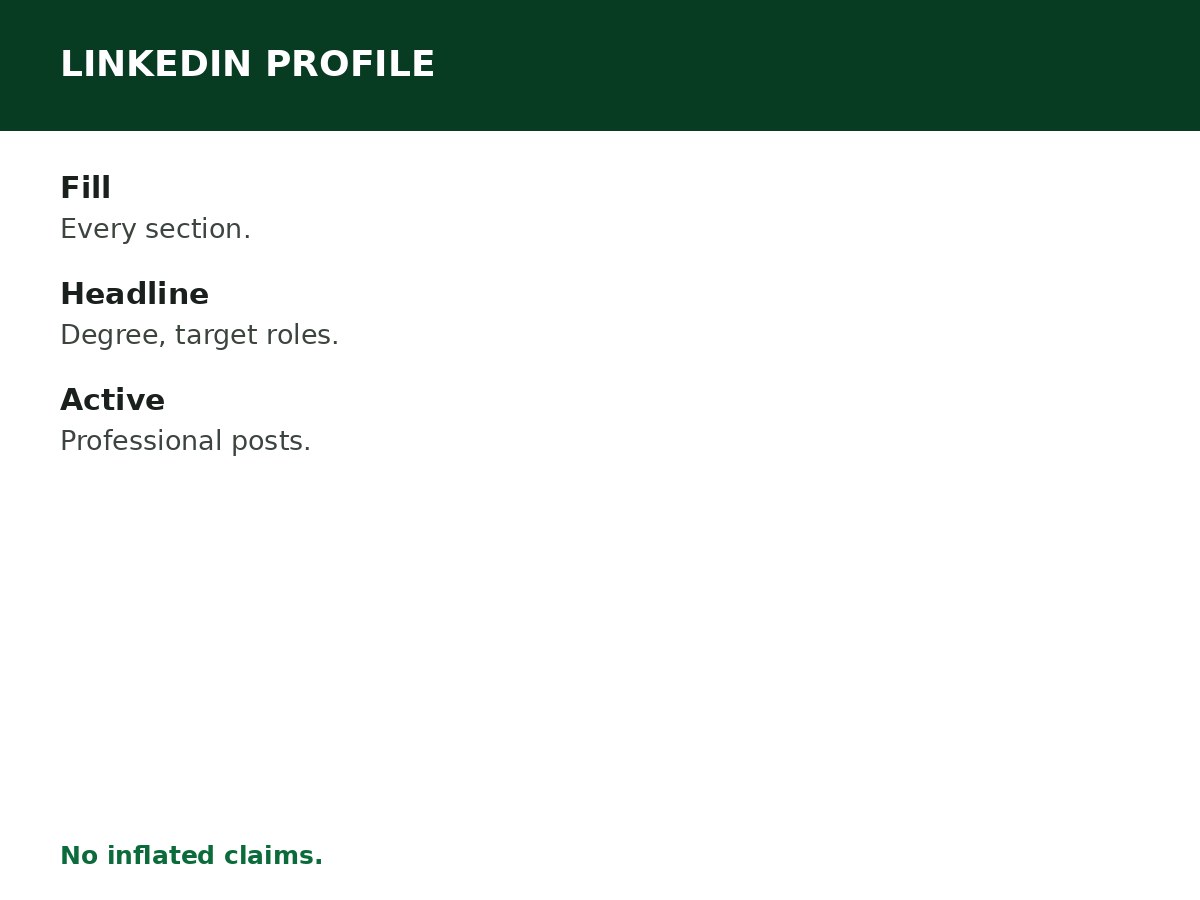
- Complete every section — complete profiles, with photo, headline, about, experience, education, and skills, rank higher in recruiter searches, as the platform states.
- Honest, not inflated — skills, experience, and qualifications, stated honestly, not inflated, since recruiters and reference checks expose gaps.
- Keywords naturally — role and skill keywords, from target job descriptions, included naturally, where genuinely held, for recruiter searches, not stuffed.
- Professional activity — posts and comments, professional and relevant, building reputation, not controversy, as the platform states.
LinkedIn mistakes
- Incomplete profiles — empty sections, missing photos, and vague headlines, losing recruiter attention, as the platform states.
- Inflated claims — inflated titles, skills, and experience, failing recruiter checks and interviews.
- Unprofessional activity — controversial, offensive, or careless posts, harming professional reputation, as employers state.
- Generic connection requests — generic requests, without personal notes, losing acceptance, as the platform states. Personalise requests, briefly, per contact, as the networking guide covers.
LinkedIn plus job search
- Open to work, where appropriate — ‘Open to Work’ settings, as the platform states, for recruiter visibility, where job searching.
- Follow employers and sectors — employers, sectors, and professional groups, followed, for news and roles, as the platform states.
- Apply through LinkedIn, plus directly — LinkedIn applications, plus direct employer applications, as the Jobs cluster covers, for coverage, not LinkedIn alone.
Related Guides & Next Steps
- How to Write a CV With No Work Experience
- How to Network as a Young Professional
- How to Find a Mentor in Nigeria
- How to Write a Professional Email
Frequently asked questions
How do I build a LinkedIn profile as a graduate? By completing every section (photo, headline, about, experience, education, skills) honestly, with keywords naturally, and professional activity — so recruiters can find and trust you.
What should my LinkedIn headline say? Degree, field, and target roles, as the platform states, for first impressions — not vague headlines (‘Student’, ‘Seeking opportunities’).
Should I inflate my LinkedIn profile? No — inflated titles, skills, and experience, fail recruiter checks and interviews. State honestly, with evidence, as the CV guides cover.
Should I post on LinkedIn as a graduate? Yes, professionally — posts and comments, professional and relevant, building reputation and visibility, not controversy, as the platform states.
Should I use ‘Open to Work’ on LinkedIn? Yes, where job searching — ‘Open to Work’ settings, as the platform states, for recruiter visibility, where appropriate.
Sources and last update
- No salary figure, vacancy count, or hiring outcome is asserted anywhere in this article, deliberately — employer career pages and reputable boards, checked at application time, govern.
- No company is named as currently hiring anywhere in this article, deliberately — hiring windows open and close; employer career pages govern.
- Scam patterns: fees for jobs, payment to personal accounts, guaranteed jobs or placements, and mentorship or networking schemes selling access are red flags — verify every employer and programme on official channels before applying or paying anything.
- No job, salary, placement, or hiring outcome is promised anywhere in this article.
Last updated: 24 October 2026. Guide — review every 6–12 months, and on every major hiring-platform change.

Written by Olaitan Ilori
Olaitan Ilori is the founder and lead researcher at CareerMedal. He provides verified, practical guides on Nigerian tertiary admissions (JAMB, CAPS, Post-UTME), NELFUND student finance, NYSC service-year survival, and early-career job placement.
View all guides by Olaitan Ilori →