
Networking as a young professional means building genuine professional relationships — with colleagues, seniors, alumni, and sector contacts — through value, consistency, and follow-up, not collecting contacts. This guide covers networking specifically, distinct from the LinkedIn guide (which covers online profiles) and the mentor guide (which covers mentorship).
What networking is
- Genuine relationships, not transactions — professional relationships, built on mutual value, respect, and consistency, as the market states, not contact collecting.
- Long-term, not event-only — relationships, maintained over time, through follow-up and value, not event-only exchanges.
- Value first — help, insights, and introductions, offered, before asking, for trust, as the market states.
How young professionals should network
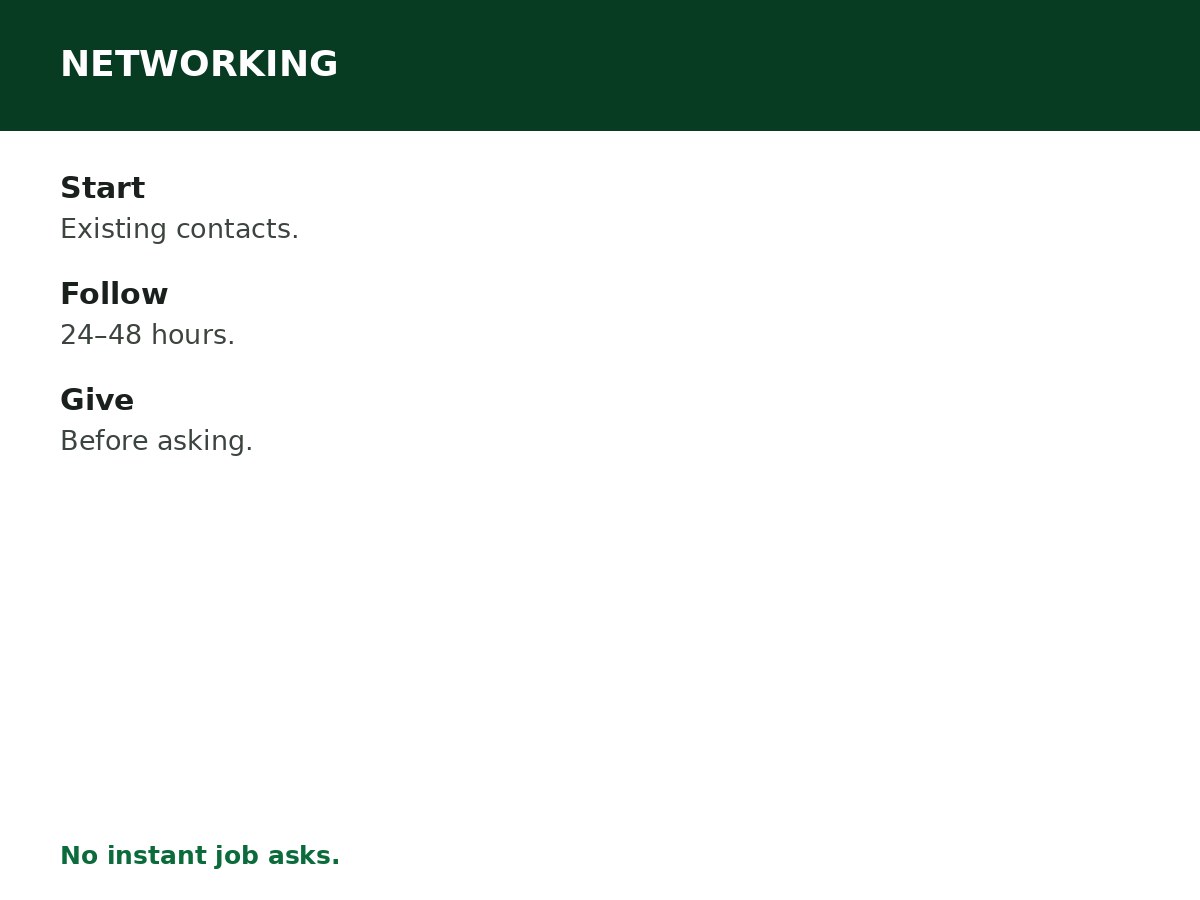
- Start with existing contacts — classmates, lecturers, internship colleagues, and alumni, as the starting network, before strangers.
- Attend sector events — conferences, workshops, and professional gatherings, as the market states, for sector contacts.
- Prepare introductions — brief self-introductions (name, field, interests), prepared before events, for confident meeting.
- Follow up promptly — follow-up messages, within 24–48 hours, after meeting, as the market states, for relationship building.
- Offer value consistently — articles, introductions, and help, shared, over time, for trust, not one-off asks.
Networking mistakes
- Asking before giving — immediate job requests, from new contacts, harming trust, as the market states. Build relationships, offer value, then ask, where appropriate.
- Collecting contacts, not relationships — many contacts, without follow-up, wasting networking effort, as the market states.
- No follow-up — meeting contacts, without follow-up, losing relationships, as the market states. Follow up within 24–48 hours, after meeting.
- Unprofessional conduct — pushiness, oversharing, and inappropriate requests, harming reputation, as the market states.
Networking channels
- In-person events — conferences, workshops, and alumni gatherings, for face-to-face relationships.
- Online platforms — LinkedIn, and professional groups, as the platform states, for maintained contact, as the LinkedIn guide covers.
- Workplace networking — colleagues, managers, and cross-team contacts, for internal relationships and growth.
Related Guides & Next Steps
- How to Write a CV With No Work Experience
- How to Find a Mentor in Nigeria
- How to Build a Professional Portfolio
- How to Build a LinkedIn Profile as a Graduate
Frequently asked questions
How do I network as a young professional? By building genuine relationships, with existing contacts first, attending sector events, preparing introductions, following up within 24–48 hours, and offering value consistently — not collecting contacts.
Should I ask new contacts for jobs immediately? No — immediate job requests, from new contacts, harm trust, as the market states. Build relationships, offer value, then ask, where appropriate.
How quickly should I follow up after meeting contacts? Within 24–48 hours, after meeting, as the market states, for relationship building.
Where should young professionals network? In-person events (conferences, workshops, alumni gatherings), online platforms (LinkedIn, professional groups), and workplaces (colleagues, managers, cross-team contacts).
Is networking just collecting contacts? No — many contacts, without follow-up, waste networking effort, as the market states. Networking is genuine relationships, maintained over time, through value and follow-up.
Sources and last update
- No salary figure, vacancy count, or hiring outcome is asserted anywhere in this article, deliberately — employer career pages and reputable boards, checked at application time, govern.
- No company is named as currently hiring anywhere in this article, deliberately — hiring windows open and close; employer career pages govern.
- Scam patterns: fees for jobs, payment to personal accounts, guaranteed jobs or placements, and mentorship or networking schemes selling access are red flags — verify every employer and programme on official channels before applying or paying anything.
- No job, salary, placement, or hiring outcome is promised anywhere in this article.
Last updated: 24 October 2026. Guide — review every 6–12 months, and on every major hiring-platform change.

Written by Olaitan Ilori
Olaitan Ilori is the founder and lead researcher at CareerMedal. He provides verified, practical guides on Nigerian tertiary admissions (JAMB, CAPS, Post-UTME), NELFUND student finance, NYSC service-year survival, and early-career job placement.
View all guides by Olaitan Ilori →