

Avoiding procrastination as a student means starting work on time, in small steps, despite the urge to delay — through structure, not willpower alone. This guide covers procrastination specifically, distinct from the study-timetable guide (which covers scheduling) and the stay-organized guide (which covers systems).
Why students procrastinate
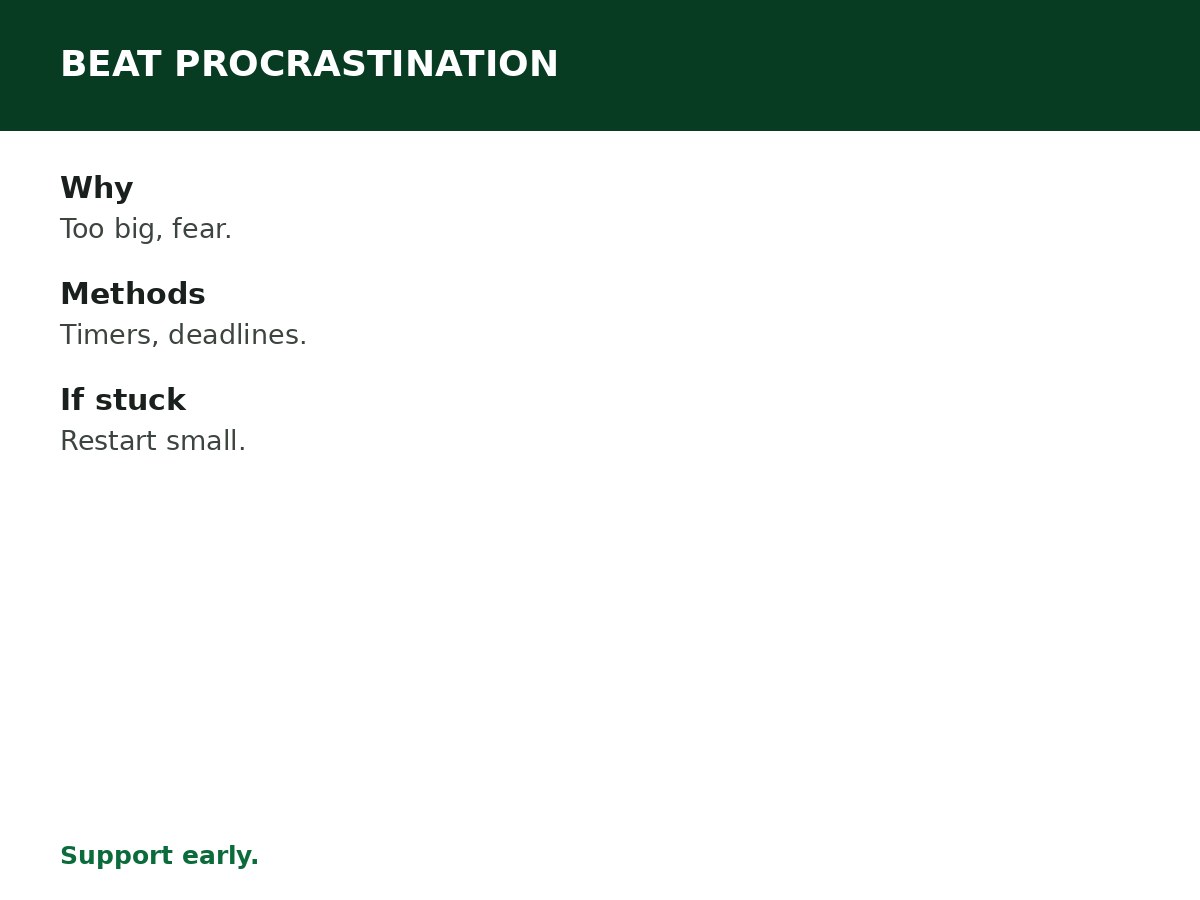
- Tasks feel too big — large assignments, feeling overwhelming, delayed, as students report. Breaking tasks, into small steps, reduces delay.
- No clear start — vague tasks, without a first step, delayed, as the method states. A clear first step, starts work.
- Distraction available — phones, social media, and entertainment, available instantly, as students report. Distraction, removed during study blocks, helps.
- Fear of failure — fear, of poor results, delaying starts, as students report. Imperfect starts, beat perfect delays.
Anti-procrastination methods
- Small first steps — tasks, broken into 15–30 minute first steps, as the method states. Starting small, beats waiting for motivation.
- Timed blocks — study blocks, timed (45–90 minutes), with breaks, as the study-timetable guide covers. Timers, make starts concrete.
- Distraction control — phones, silenced or kept away, during study blocks, as students report. Willpower, against instant distraction, usually loses.
- Deadlines, self-imposed — personal deadlines, before official deadlines, as the method states. Official deadlines, alone, invite last-minute work.
- Accountability — study partners, or check-ins, for progress, as students report. Shared goals, sustain starts.
If procrastination persists
- Check the cause — overwhelm, fear, or burnout, identified, as the method states. Different causes, need different fixes.
- Seek support — counselling, or student affairs, where procrastination links to stress or health, as institutions state. Support, sought early, helps more than late.
- Restart small — after delays, restart with a small step, not a heroic catch-up, as students report. Heroic catch-ups, abandoned fast.
Related Guides & Next Steps
- Cost of Living for Nigerian University Students
- How to Take Better Lecture Notes
- How to Study While Working Part-Time
- How to Prepare for University Exams
Frequently asked questions
How do I avoid procrastination as a student? By breaking tasks into 15–30 minute first steps, using timed study blocks, controlling distraction (phones away), setting self-imposed deadlines before official ones, and using accountability partners.
Why do students procrastinate? Because tasks feel too big, no clear first step exists, distraction is instantly available, or fear of failure delays starts — as students report.
Does willpower alone beat procrastination? Usually not — structure (small steps, timers, distraction control, deadlines, accountability) beats willpower alone, as the method states.
What if I have already delayed badly? Restart small — a small step, not a heroic catch-up, as students report. Heroic catch-ups, abandoned fast, help nobody.
When should I seek support for procrastination? Where procrastination links to stress or health, counselling or student affairs, sought early, as institutions state, help more than late.
Sources and last update
- No grade, admission, or academic outcome is promised anywhere in this article — results depend on study, department standards, and assessment, as institutions state.
- No paid study service, leaked material, or impersonation route is recommended anywhere in this article — leaked questions are usually fake, and impersonation is fraud, as institutions state.
- Study advice here is general method, not department-specific requirements — department notices and course outlines govern for each course.
Last updated: 24 October 2026. Guide — review every 6–12 months, and at the start of each academic session.

Written by Olaitan Ilori
Olaitan Ilori is the founder and lead researcher at CareerMedal. He provides verified, practical guides on Nigerian tertiary admissions (JAMB, CAPS, Post-UTME), NELFUND student finance, NYSC service-year survival, and early-career job placement.
View all guides by Olaitan Ilori →