
Studying while working part-time means fitting study around work shifts — through timetables, prioritisation, and employer communication — without letting either collapse. This guide covers study-plus-work, distinct from the balance-school-and-side-hustles guide (which covers self-employment) and the study-timetable guide (which covers scheduling).
How to fit study around work
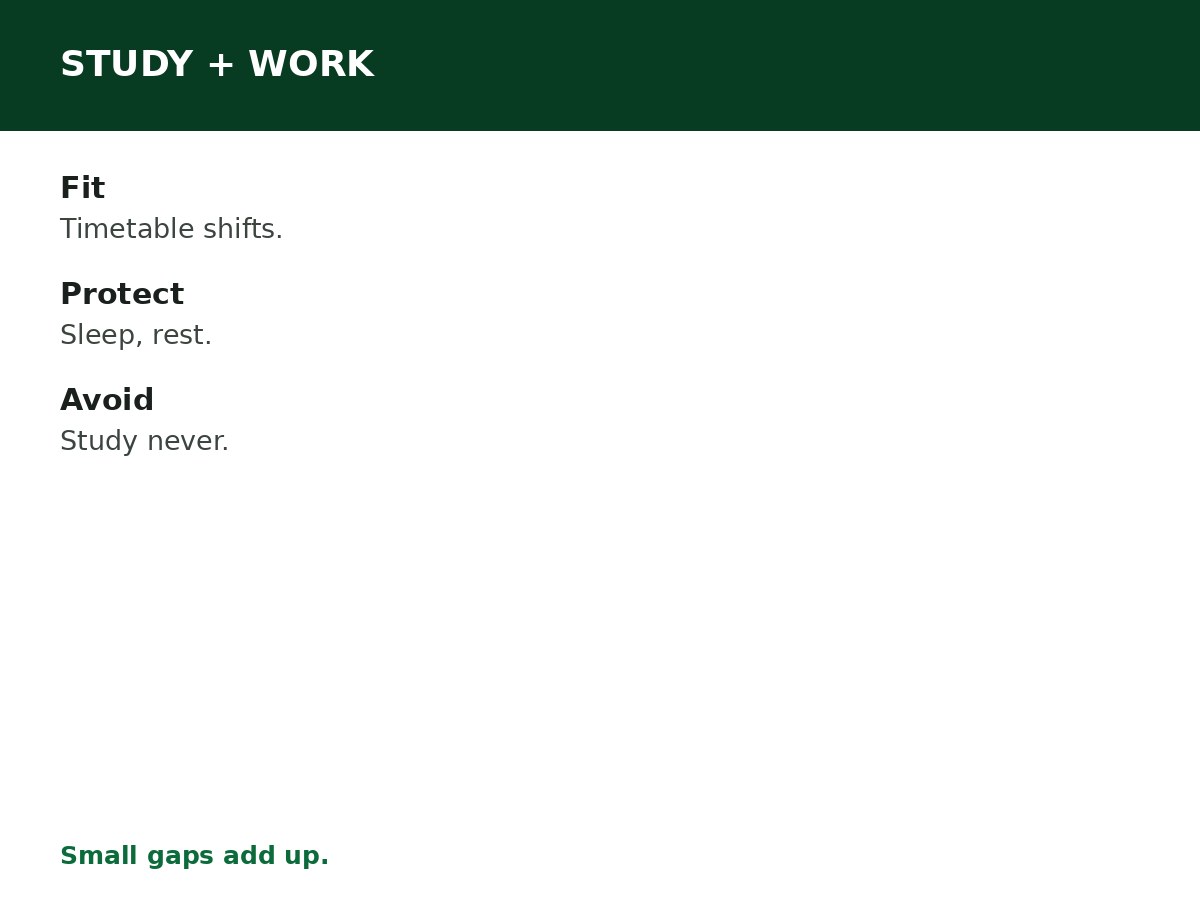
- Timetable around shifts — study blocks, placed around fixed work shifts, as the study-timetable guide covers. Study, fitted around work, not instead of work or lectures.
- Prioritise ruthlessly — courses and deadlines, prioritised, with weak topics first, as the method states. Everything, treated as equal, overwhelms.
- Use small gaps — short gaps (commutes, breaks), used for review (flashcards, summaries), as students report. Small gaps, accumulated, add hours weekly.
- Communicate with employers — exam periods, communicated early, where employers allow flexibility, as workplaces state. Early communication, beats last-minute requests.
Protecting study and health
- Protect sleep — sleep, protected, even with work, as students report. Sleep loss, harming grades and health, as the method states.
- Limit work hours — work hours, limited where possible, during exam periods, as students report. Excessive work, during exams, harms results.
- Rest scheduled — rest, scheduled, not squeezed, as the study-timetable guide covers. Timetables without rest, collapse.
Work-study mistakes
- Work first, study never — work, consuming all time, with study postponed indefinitely, as students report. Study blocks, scheduled, not left to chance.
- No employer communication — exam needs, hidden from employers, until crises, as workplaces state. Early communication, helps more.
- Ignoring health — sleep and health, sacrificed for work and study, as students report. Health collapse, harms both work and study.
Related Guides & Next Steps
- Cost of Living for Nigerian University Students
- How to Balance School and Side Hustles
- How to Stay Organized in University
- How to Take Better Lecture Notes
Frequently asked questions
How do I study while working part-time? By timetabling study around fixed work shifts, prioritising courses and deadlines ruthlessly, using small gaps for review, and communicating exam periods to employers early.
Should I tell my employer about exams? Yes, early — where employers allow flexibility, as workplaces state. Early communication beats last-minute requests.
How can I use small gaps for study? Short gaps (commutes, breaks), used for review (flashcards, summaries), as students report. Small gaps, accumulated, add hours weekly.
Should I limit work hours during exams? Where possible, yes — excessive work, during exams, harms results, as students report. Limit hours, during exam periods, where possible.
What is the biggest work-study mistake? Work consuming all time, with study postponed indefinitely, as students report. Study blocks, scheduled, not left to chance, prevent this.
Sources and last update
- No grade, admission, or academic outcome is promised anywhere in this article — results depend on study, department standards, and assessment, as institutions state.
- No paid study service, leaked material, or impersonation route is recommended anywhere in this article — leaked questions are usually fake, and impersonation is fraud, as institutions state.
- Study advice here is general method, not department-specific requirements — department notices and course outlines govern for each course.
Last updated: 24 October 2026. Guide — review every 6–12 months, and at the start of each academic session.

Written by Olaitan Ilori
Olaitan Ilori is the founder and lead researcher at CareerMedal. He provides verified, practical guides on Nigerian tertiary admissions (JAMB, CAPS, Post-UTME), NELFUND student finance, NYSC service-year survival, and early-career job placement.
View all guides by Olaitan Ilori →