

Staying organized in university means keeping courses, deadlines, notes, and materials in systems you can find — through simple, consistent habits, not complex tools. This guide covers organization systems, distinct from the study-timetable guide (which covers scheduling) and the procrastination guide (which covers starting work).
Organization systems
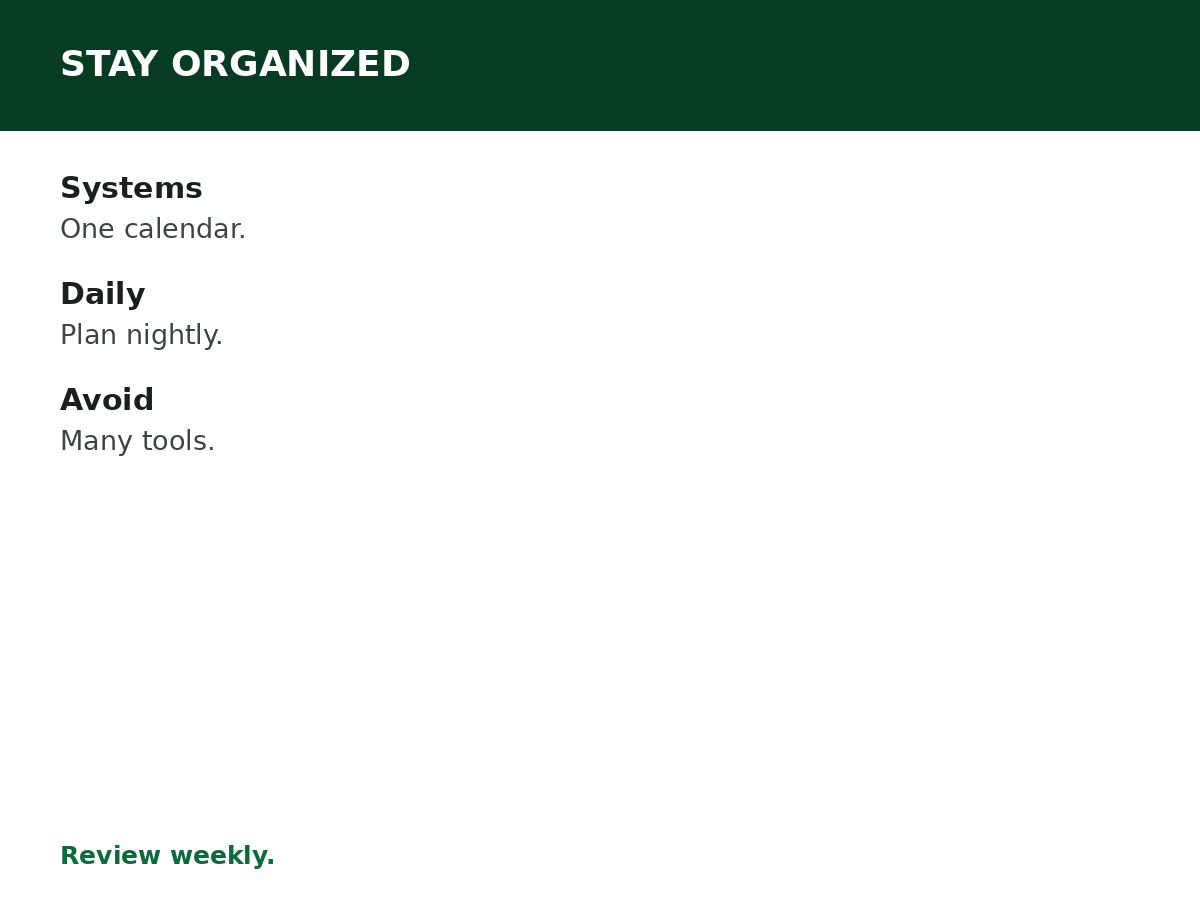
- One calendar — deadlines, exams, and commitments, in one calendar (phone or paper), as the method states. Scattered deadlines, missed deadlines.
- Notes by course — notes, organised by course and topic, as the lecture-notes guide covers, for exam revision.
- Materials in one place — course materials, in folders (physical or digital), by course, as the method states. Materials, scattered across chats, lost before exams.
- Weekly review — systems, reviewed weekly, as the method states. Systems, never reviewed, drift useless.
Daily organization habits
- Capture immediately — deadlines and tasks, captured immediately, when announced, as the method states. Memory, for deadlines, fails fast.
- Plan tomorrow, nightly — tomorrow’s tasks, planned nightly, as students report. Morning planning, wastes morning energy.
- Tidy weekly — notes and materials, tidied weekly, as the method states. Weekly tidying, beats end-of-semester chaos.
Organization mistakes
- Too many tools — many apps and systems, none used consistently, as students report. One simple system, used consistently, beats many abandoned tools.
- No weekly review — systems, built once, never reviewed, drifting from reality, as the method states. Weekly review, keeps systems honest.
- Memory reliance — deadlines, trusted to memory, forgotten, as students report. Capture immediately, always.
Related Guides & Next Steps
- Cost of Living for Nigerian University Students
- How to Use Google Scholar for Assignments
- How to Find Reliable Academic Sources Online
- How to Balance School and Side Hustles
Frequently asked questions
How do I stay organized in university? By keeping one calendar for deadlines, organising notes by course and topic, keeping materials in folders by course, capturing tasks immediately, and reviewing systems weekly.
Should I use many organization apps? No — many apps, none used consistently, as students report. One simple system, used consistently, beats many abandoned tools.
When should I capture deadlines? Immediately — when announced, as the method states. Memory, for deadlines, fails fast.
How often should I review my organization systems? Weekly — systems, reviewed weekly, as the method states. Systems, never reviewed, drift useless.
Should I plan tomorrow’s tasks when? Nightly — tomorrow’s tasks, planned nightly, as students report. Morning planning wastes morning energy.
Sources and last update
- No grade, admission, or academic outcome is promised anywhere in this article — results depend on study, department standards, and assessment, as institutions state.
- No paid study service, leaked material, or impersonation route is recommended anywhere in this article — leaked questions are usually fake, and impersonation is fraud, as institutions state.
- Study advice here is general method, not department-specific requirements — department notices and course outlines govern for each course.
Last updated: 24 October 2026. Guide — review every 6–12 months, and at the start of each academic session.

Written by Olaitan Ilori
Olaitan Ilori is the founder and lead researcher at CareerMedal. He provides verified, practical guides on Nigerian tertiary admissions (JAMB, CAPS, Post-UTME), NELFUND student finance, NYSC service-year survival, and early-career job placement.
View all guides by Olaitan Ilori →