

Preparing for university exams means revising systematically — notes reviewed, past questions practised, and weak topics strengthened — in the weeks before exams, not the night before. This guide covers exam preparation, distinct from the study-techniques guide (which covers methods) and the study-timetable guide (which covers scheduling).
Weeks before exams
- Revision plan — a revision plan, from the study timetable, covering all topics, with weak topics given more time, as the method states.
- Notes consolidated — lecture notes, consolidated and summarised, as the lecture-notes guide covers, before revision starts.
- Past questions practised — past questions, where departments provide them, answered under timed conditions, as departments state. Past questions reveal patterns; they do not guarantee repeats.
- Weak topics first — weak topics, studied first, while energy is high, as students report. Strong topics, reviewed later, need less time.
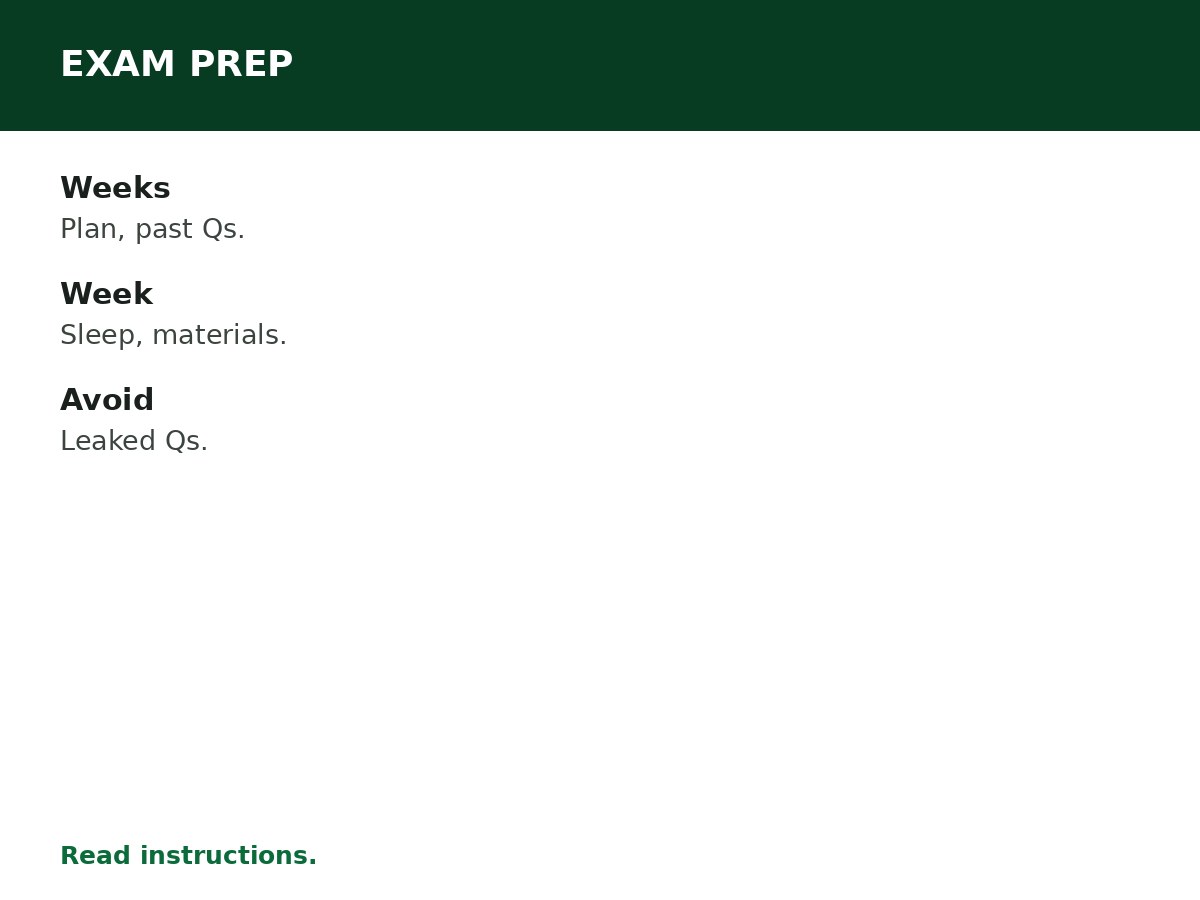
Exam week
- Sleep protected — sleep, protected, especially the night before exams, as students report. All-night cramming, harming recall, as the method states.
- Materials ready — ID, pens, calculators (where allowed), and stationery, packed the night before, as institutions state. Exam rules, checked from department notices.
- Arrival early — exam venues, arrived at early, as institutions state, with time for seating and instructions.
Exam mistakes
- Night-before cramming — cramming, the night before, fading recall and harming sleep, as the method states. Systematic revision, over weeks, works better.
- Leaked questions — leaked questions, usually fake, and using them, risking disqualification, as institutions state. Practise legitimate past questions, not leaks.
- Ignoring instructions — exam instructions, unread, costing marks, as students report. Read instructions, before answering, always.
Related Guides & Next Steps
- Cost of Living for Nigerian University Students
- How to Avoid Procrastination as a Student
- How to Take Better Lecture Notes
- Best Study Techniques for Nigerian Students
Frequently asked questions
How do I prepare for university exams? By building a revision plan covering all topics, consolidating notes, practising past questions under timed conditions, studying weak topics first, and protecting sleep in exam week.
Should I cram the night before exams? No — night-before cramming fades recall and harms sleep, as the method states. Systematic revision, over weeks, works better.
Are leaked exam questions reliable? No — leaked questions are usually fake, and using them risks disqualification, as institutions state. Practise legitimate past questions, not leaks.
What should I do in exam week? Protect sleep, pack materials the night before (ID, pens, calculators where allowed), check exam rules from department notices, and arrive early.
Should weak topics get more revision time? Yes — weak topics, studied first, while energy is high, as students report. Strong topics, reviewed later, need less time.
Sources and last update
- No grade, admission, or academic outcome is promised anywhere in this article — results depend on study, department standards, and assessment, as institutions state.
- No paid study service, leaked material, or impersonation route is recommended anywhere in this article — leaked questions are usually fake, and impersonation is fraud, as institutions state.
- Study advice here is general method, not department-specific requirements — department notices and course outlines govern for each course.
Last updated: 24 October 2026. Guide — review every 6–12 months, and at the start of each academic session.

Written by Olaitan Ilori
Olaitan Ilori is the founder and lead researcher at CareerMedal. He provides verified, practical guides on Nigerian tertiary admissions (JAMB, CAPS, Post-UTME), NELFUND student finance, NYSC service-year survival, and early-career job placement.
View all guides by Olaitan Ilori →