

Fake recruitment shortlinks are shortened URLs hiding fake portals — bit.ly, tinyurl, and similar links, or custom short domains, spreading in groups and messages, designed to hide the destination until clicked. This guide covers shortlink defence specifically, distinct from the fake-portal guide (which covers portal identification) and the shortlist-verification guide (which covers fake lists).
How fake shortlinks work
- Hidden destinations — shortlinks hide the real domain, so lookalike or unrelated domains pass unnoticed until after the click.
- Group distribution — shortlinks spread through groups, forwarded messages, and SMS, with urgent language (‘apply before it closes’, ‘limited slots’).
- Fee and document harvesting — clicked shortlinks lead to fake portals harvesting applications, documents, and fees.
- Urgency pressure — fake shortlinks pair with deadlines (‘closes tonight’) to rush clicks past verification.
Spotting fake shortlinks
- Never trust a shortlink alone — a shortlink is not evidence of legitimacy, whatever the sender claims. Genuine recruitments are announced on official channels, not distributed as shortlinks alone.
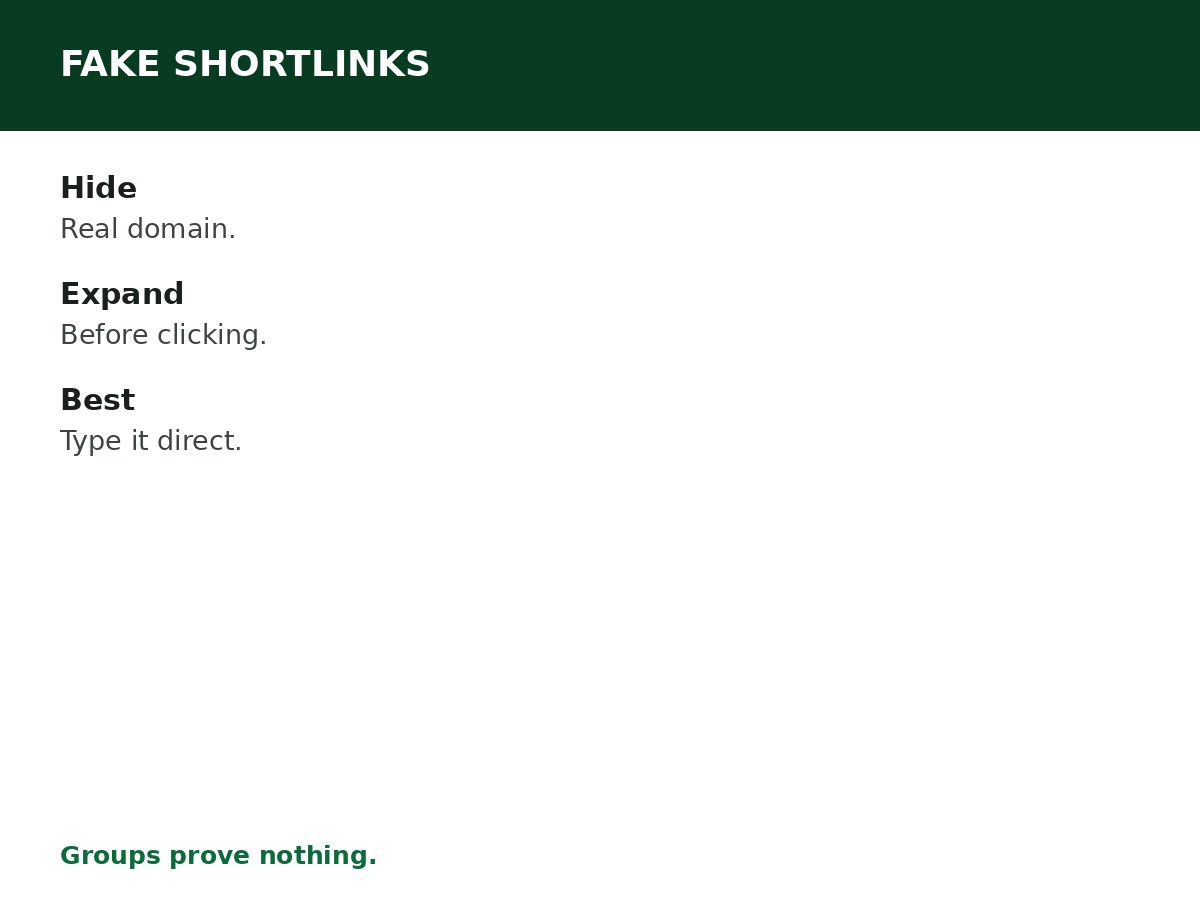
- Expand before clicking — use a URL expander, or long-press and preview, to reveal the destination domain, before clicking. Compare the revealed domain with the agency’s official domain, character by character.
- Go direct instead — type the agency’s official website directly, and follow its recruitment link, rather than clicking any shortlink. Direct navigation beats shortlink verification, every time.
- Check the announcement — confirm the recruitment exists in an official announcement, on official channels, before applying through any link.
- Refuse fees and urgency — fee demands and ‘closes tonight’ pressure are scam markers, whatever the link.
If you clicked a fake shortlink
- Do not submit documents or pay fees — close the page, and do not enter personal or financial details.
- If you submitted details, protect them — monitor for misuse, change reused passwords, and report identity theft where it occurs.
- Report the shortlink — report to the impersonated agency through its official contact, and to relevant authorities, so others are warned.
- Apply properly — through the genuine portal, typed directly from the agency’s official website, if the window is still open.
Related Guides & Next Steps
- Federal Government Recruitment 2026: How to Verify Openings
- Government Recruitment FAQs for Nigerian Applicants
- Recruitment Portal vs Official Government Website
- How Government Recruitment Applications Usually Work
- How to Avoid Fake Government Recruitment Portals
Frequently asked questions
How do I spot a fake recruitment shortlink? Never trust a shortlink alone — expand it to reveal the destination domain before clicking, compare the domain with the agency’s official domain, and prefer direct navigation: type the agency’s official website directly and follow its recruitment link.
Should I click recruitment shortlinks in groups? No — go direct instead. Type the agency’s official website directly and follow its recruitment link, rather than clicking any shortlink.
How do I expand a shortlink safely? Use a URL expander, or long-press and preview, to reveal the destination domain before clicking. Compare the revealed domain with the agency’s official domain, character by character.
Are urgent shortlinks (‘closes tonight’) real? Urgency pressure is a scam marker — genuine recruitments are announced on official channels with defined timelines, not rushed through shortlinks.
What if I clicked a fake shortlink? Do not submit documents or pay fees. If you submitted details, protect them, monitor for misuse, report the shortlink, and apply through the genuine portal if the window is still open.
Sources and last update
- No agency is named as currently recruiting anywhere in this article, deliberately — recruitment windows open and close, and a frozen list misleads readers within months. Official portals and announcements, checked at application time, govern.
- No salary figure, vacancy count, or recruitment outcome is asserted anywhere in this article, deliberately. Official announcements and portals, checked at application time, govern.
- Scam patterns: ‘slot’ sellers, application fees, payment to personal accounts, and guaranteed appointments are red flags — government recruitment is free, and runs through official portals only.
- No appointment, shortlisting, or recruitment outcome is promised anywhere in this article.
Last updated: 24 October 2026. Guide — review every 3–6 months, and on every official recruitment announcement.

Written by Olaitan Ilori
Olaitan Ilori is the founder and lead researcher at CareerMedal. He provides verified, practical guides on Nigerian tertiary admissions (JAMB, CAPS, Post-UTME), NELFUND student finance, NYSC service-year survival, and early-career job placement.
View all guides by Olaitan Ilori →