
Saving money as a student means keeping part of what comes in, deliberately, before it gets spent — through habits, not windfalls. This guide covers saving habits, distinct from the budget guide (which covers planning) and the cost-of-living guide (which covers what costs exist).
Saving habits that work
- Save first, spend after — a small amount, set aside at the start of the month, before spending, as the method states. Saving what remains after spending usually saves nothing.
- Cook more, buy less — cooking, in groups where possible, costing less than buying every meal, as the affordable-meals guide covers.
- Share costs — shared rooms, shared data, shared transport, and shared materials, splitting costs, where practical, as students report.
- Buy second-hand where sensible — second-hand textbooks, materials, and equipment, where condition allows, as the market states, checked before paying.
- Use free campus resources — libraries, campus Wi-Fi, and student services, where available, instead of paying for equivalents, as institutions state.
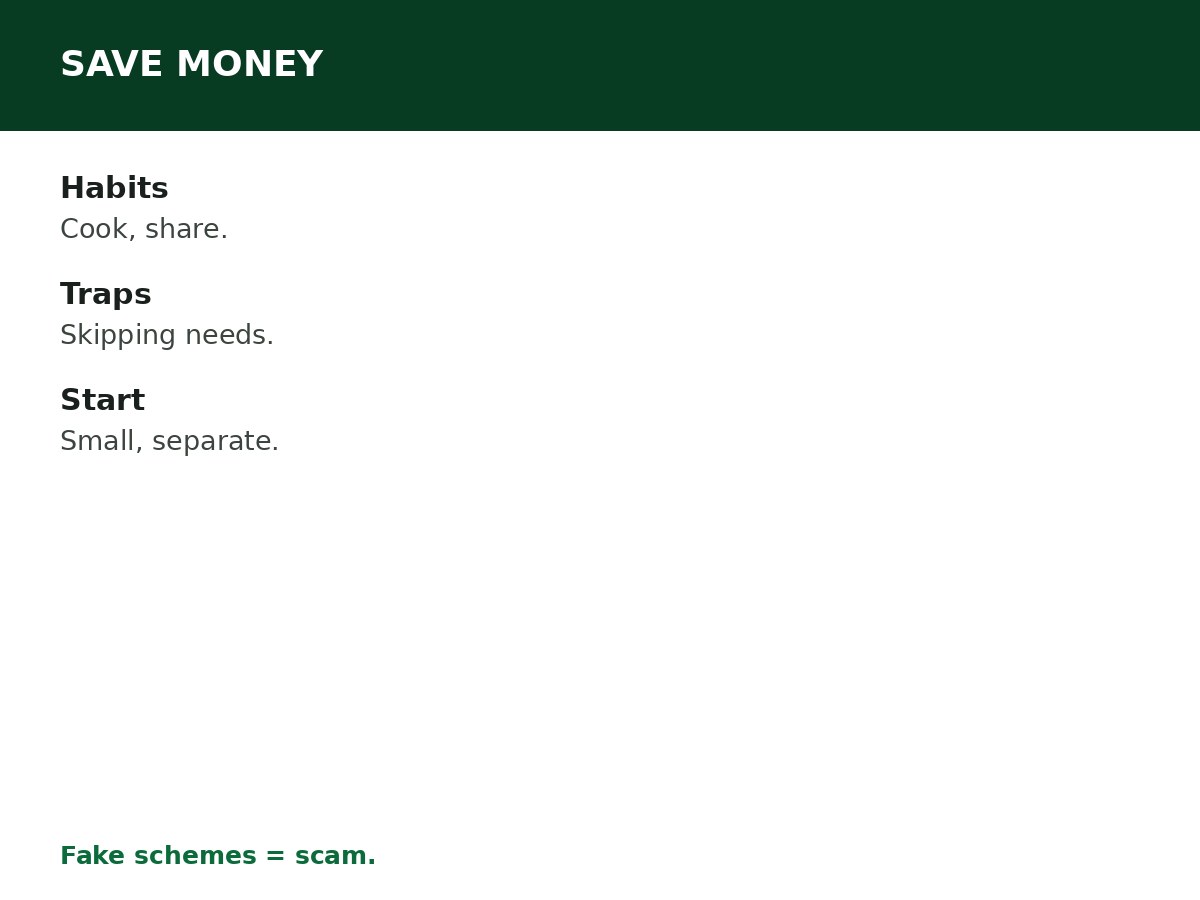
Saving traps
- Saving by skipping needs — skipping meals, materials, or healthcare, to save, harming health and grades, as students report. Save from wants, not needs.
- Impulse spending — unplanned purchases, driven by sales, peers, or trends, draining budgets, as students report. A waiting period, before non-essential purchases, helps.
- Fake savings schemes — schemes promising multiplied returns, or requiring deposits for ‘savings’, are scams, as the market states. Save in accounts you control, never in schemes promising returns.
- Lending without records — lending money without records or repayment dates, losing savings, as students report. Lend only what you can afford to lose, with records.
Building a savings habit
- Start small — a small, regular amount, sustainable monthly, not a large amount abandoned in week two.
- Keep it separate — savings, kept apart from spending money, where possible, as the method states.
- Set a purpose — a purpose (emergencies, projects, holidays), motivating consistency, as students report.
- Review monthly — savings, reviewed with the budget, monthly, as the budget guide covers.
Related Guides & Next Steps
- Cost of Living for Nigerian University Students
- Affordable Meals for Nigerian Students
- How to Find Affordable Student Accommodation
- How to Budget as a University Student
Frequently asked questions
How can I save money as a student? By saving first before spending, cooking more, sharing costs, buying second-hand where sensible, and using free campus resources — through habits, not windfalls.
Should I save before or after spending? Before — a small amount, set aside at the start of the month, before spending. Saving what remains after spending usually saves nothing.
Is skipping meals a good way to save? No — skipping meals, materials, or healthcare, to save, harms health and grades, as students report. Save from wants, not needs.
What savings schemes should students avoid? Schemes promising multiplied returns, or requiring deposits for ‘savings’, are scams, as the market states. Save in accounts you control, never in schemes promising returns.
How do I start a savings habit? Start small and regular, keep savings separate from spending money, set a purpose (emergencies, projects, holidays), and review monthly with your budget.
Sources and last update
- No cost figure, price, or fee is asserted anywhere in this article, deliberately — prices vary by institution, location, and session, and change often. Institution notices, hostel offices, and market prices at the time govern.
- No specific accommodation, vendor, or seller is recommended anywhere in this article — students verify each option in person before paying anything.
- Scam patterns: advance payment for rooms never seen, agents demanding fees before viewing, and sellers collecting payment for goods never delivered are red flags — verify in person, get receipts, and never pay for what you have not seen.
- No admission, accommodation, or financial outcome is promised anywhere in this article.
Last updated: 24 October 2026. Guide — review every 6–12 months, and at the start of each academic session.

Written by Olaitan Ilori
Olaitan Ilori is the founder and lead researcher at CareerMedal. He provides verified, practical guides on Nigerian tertiary admissions (JAMB, CAPS, Post-UTME), NELFUND student finance, NYSC service-year survival, and early-career job placement.
View all guides by Olaitan Ilori →