
Using Google Scholar for assignments means finding credible academic sources — journal articles, theses, and books — through Scholar’s search, and citing them properly, instead of relying on blogs and random web pages. This guide covers Scholar use, distinct from general assignment advice, and from the study-techniques guide (which covers revision methods).
How to search Scholar
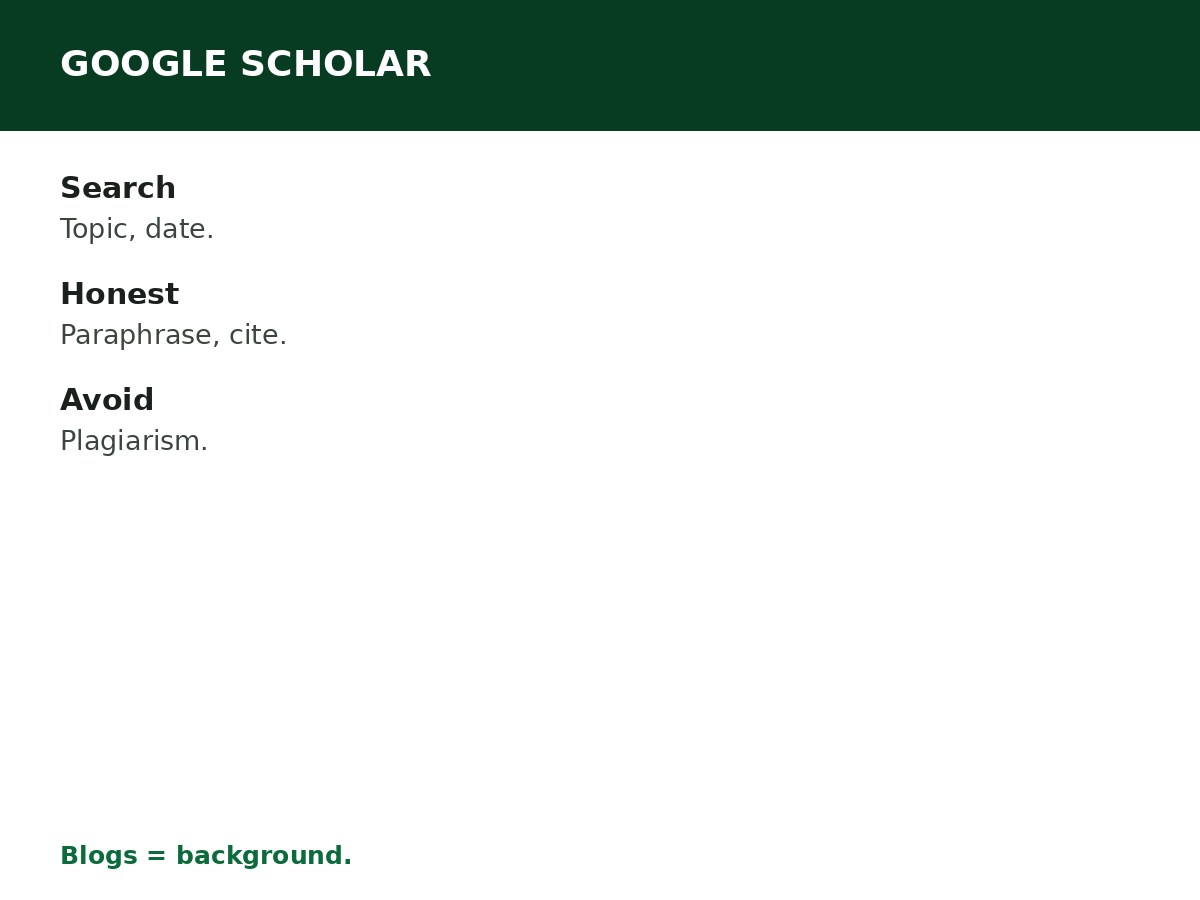
- Search by topic and author — topics, authors, and key terms, searched, as the method states. Specific terms, returning specific sources, as Scholar states.
- Filter by date — recent sources, filtered by date, where assignments require current research, as lecturers state. Date filters, in Scholar’s sidebar, as Scholar states.
- Check citations — citation counts, checked, for influence, as the method states. Highly cited sources, usually foundational, as Scholar states.
- Access full text — full text, accessed via institution library links, where available, as institutions state. Abstracts alone, insufficient for assignments, as lecturers state.
How to use sources honestly
- Read before citing — sources, read, before citing, as the method states. Citing unread sources, risks misrepresentation, as lecturers state.
- Cite properly — citations, in the style lecturers require (APA, MLA, or department style), as departments state. Citation styles, checked from department notices.
- Paraphrase, don’t copy — sources, paraphrased in your own words, with citations, as the method states. Copying, without citation, is plagiarism, as institutions state.
- Balance sources — multiple sources, compared, not one source copied, as lecturers state. Single-source assignments, weak assignments.
Scholar mistakes
- Blogs as academic sources — blogs and random web pages, cited as academic sources, where lecturers require scholarly sources, as departments state. Scholar, for scholarly sources; blogs, for background only.
- Plagiarism — copying, without citation, risking discipline, as institutions state. Paraphrase, cite, and write originally.
- Abstract-only citations — abstracts, cited without reading full text, misrepresenting sources, as lecturers state. Read full text, before citing.
Related Guides & Next Steps
- Cost of Living for Nigerian University Students
- How to Find Reliable Academic Sources Online
- How to Avoid Plagiarism in University
- How to Stay Organized in University
Frequently asked questions
How do I use Google Scholar for assignments? By searching by topic and author, filtering by date where current research is required, checking citation counts, accessing full text via institution library links, and citing properly.
Should I cite blogs as academic sources? No, where lecturers require scholarly sources, as departments state. Scholar, for scholarly sources; blogs, for background only.
Is copying without citation allowed? No — copying, without citation, is plagiarism, risking discipline, as institutions state. Paraphrase, cite, and write originally.
Should I read full text before citing? Yes — sources, read, before citing, as the method states. Citing unread sources, or abstracts alone, risks misrepresentation.
How do I cite Scholar sources? In the style lecturers require (APA, MLA, or department style), as departments state. Citation styles, checked from department notices.
Sources and last update
- No grade, admission, or academic outcome is promised anywhere in this article — results depend on study, department standards, and assessment, as institutions state.
- No paid study service, leaked material, or impersonation route is recommended anywhere in this article — leaked questions are usually fake, and impersonation is fraud, as institutions state.
- Study advice here is general method, not department-specific requirements — department notices and course outlines govern for each course.
Last updated: 24 October 2026. Guide — review every 6–12 months, and at the start of each academic session.

Written by Olaitan Ilori
Olaitan Ilori is the founder and lead researcher at CareerMedal. He provides verified, practical guides on Nigerian tertiary admissions (JAMB, CAPS, Post-UTME), NELFUND student finance, NYSC service-year survival, and early-career job placement.
View all guides by Olaitan Ilori →