

Learning cybersecurity in Nigeria means learning to protect systems — with networking, security fundamentals, and hands-on labs, practised legally, in that order, before jobs. This guide covers beginner cybersecurity specifically, distinct from the free digital-skills guide (which covers digital literacy broadly) and the certification honesty in the Jobs cluster (advanced certifications typically require years of experience, not entry-level).
What beginner cybersecurity covers
- Security fundamentals — networking, operating systems, and security principles, as good courses state, before advanced tools and specialisation.
- Tools and labs — security tools, practised in legal lab environments, not on real systems without authorisation, as the law and ethics state.
- Security areas — network security, system hardening, and incident response, as the market states, for beginner analyst work.
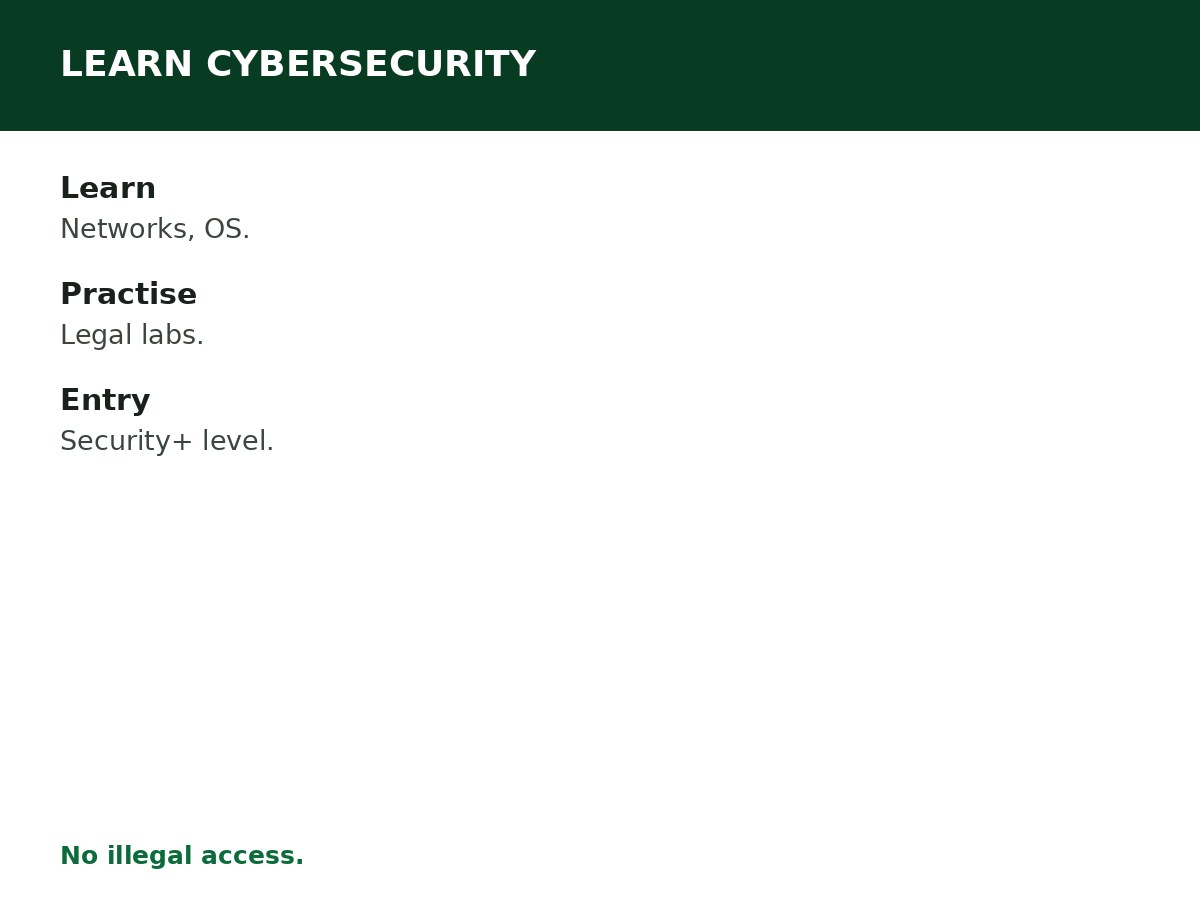
How beginners should learn
- Fundamentals first — networking, operating systems, and security principles, before advanced tools and specialisation. Fundamentals decide security competence; tools do not.
- Practise in legal labs — home labs, capture-the-flag platforms, and authorised environments, for months, toward working competence. Unauthorised access to real systems is illegal, whatever the learning excuse.
- Entry certification honestly — entry-level certifications (Security+-level) and home-lab practical skill, as the market states, are the entry bar. Advanced certifications (CISSP and similar) typically require years of experience — not entry-level, whatever bootcamps claim.
- Build lab projects — lab reports, security assessments, and hardening projects, demonstrating skill, for employer trust. See the portfolio guide for the full method.
Finding beginner work
- Entry roles first — security operations, support, and analyst roles, as the market states, for beginner work, building experience toward specialisation.
- Platforms and communities — security communities, bug-bounty platforms (authorised only), and freelance platforms, as each platform states, for practice and visibility.
- Pricing honestly — beginner rates, priced sustainably, rising with portfolio and experience, not by undercutting to unsustainable levels.
Beginner security scams
- Unpaid ‘exposure’ work — large unpaid security work, or ‘exposure’ offers, exploiting beginners. Small, paid trials are legitimate; large unpaid work is not.
- Hacking-for-hire promises — ‘hacking’ courses promising illegal access skills, or hacking services, are illegal and fraudulent. Learn security legally, in labs, for defensive work.
- Advanced-certification shortcuts — bootcamps promising advanced certifications without experience are misleading. Advanced certifications typically require years of experience, as the bodies state.
Related Guides & Next Steps
- Federal Government TVET Programme 2026
- How to Learn UI/UX Design
- How to Build a Portfolio With No Experience
- How to Learn Data Analysis in Nigeria
Frequently asked questions
How do I learn cybersecurity in Nigeria? By learning security fundamentals (networking, operating systems, security principles), practising in legal labs, and building lab projects, before jobs.
What should beginners learn first in cybersecurity? Networking, operating systems, and security principles, before advanced tools and specialisation. Fundamentals decide competence; tools do not.
Can I practise hacking on real systems to learn? No — unauthorised access to real systems is illegal, whatever the learning excuse. Practise in home labs, capture-the-flag platforms, and authorised environments only.
Do advanced security certifications suit beginners? No — advanced certifications (CISSP and similar) typically require years of experience, not entry-level, whatever bootcamps claim. Entry bar = Security+-level + home-lab practical skill.
How do beginner security analysts find work? Through entry roles (security operations, support, analyst), security communities, and authorised bug-bounty platforms, with lab projects as portfolio.
Sources and last update
- No programme is named as currently open anywhere in this article, deliberately — training windows open and close, and a frozen list misleads readers within months. Official programme channels, checked at application time, govern.
- No fee, stipend, or income figure is asserted anywhere in this article, deliberately. Official programme pages, checked at application time, govern.
- Scam patterns: training fees demanded for ‘free’ programmes, payment to personal accounts, and guaranteed jobs or income are red flags — verify every programme on official channels before applying or paying anything.
- No job, income, certification, or training outcome is promised anywhere in this article.
Last updated: 24 October 2026. Guide — review every 3–6 months, and on every official programme announcement.

Written by Olaitan Ilori
Olaitan Ilori is the founder and lead researcher at CareerMedal. He provides verified, practical guides on Nigerian tertiary admissions (JAMB, CAPS, Post-UTME), NELFUND student finance, NYSC service-year survival, and early-career job placement.
View all guides by Olaitan Ilori →