

Improving your academic writing means writing clearly, precisely, and with evidence — in formal, structured prose — through practice, feedback, and revision. This guide covers writing style, distinct from the assignment guide (which covers structure) and the referencing guide (which covers citations).
Academic writing principles
- Clarity first — simple, precise sentences, as the method states. Complex sentences, hiding weak arguments, as lecturers state.
- Formal tone — formal tone, without slang or contractions, where departments require it, as departments state. Tone, checked from department notices.
- Evidence for claims — claims, supported by sources, as the method states. Unsourced claims, weak writing, as lecturers state.
- Logical flow — paragraphs, linked logically, as the method states. Jumps, confusing readers, as lecturers state.
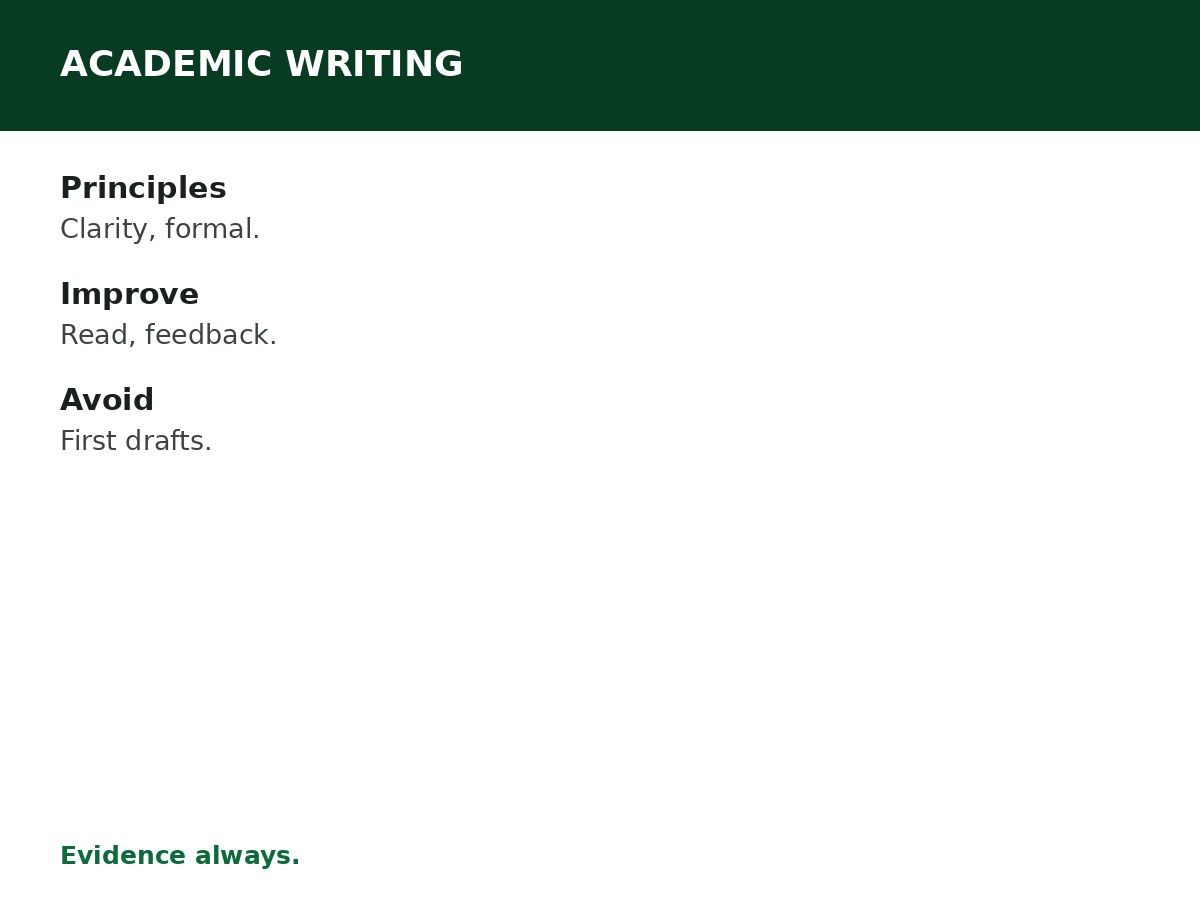
How to improve
- Read academic work — journal articles and books, read regularly, as the method states, absorbing style and structure.
- Write regularly — writing, practised regularly, not only for deadlines, as students report. Regular writing, improving faster.
- Seek feedback — feedback, from lecturers, tutors, or mates, sought, as the method states. Feedback, acted on, improving writing.
- Revise, don’t just proofread — revision, for argument and flow, before proofreading, as the method states. Proofreading alone, missing argument gaps.
Writing mistakes
- Informal tone — slang, contractions, and casual language, where departments require formality, as departments state, costing marks.
- No evidence — claims, without sources, as lecturers state, weak writing.
- No revision — first drafts, submitted as final, as students report, with argument gaps. Revise, then proofread, always.
Related Guides & Next Steps
- Cost of Living for Nigerian University Students
- How to Use Referencing Styles Correctly
- How to Recover After Failing a Course
- How to Prepare for Oral Presentations
Frequently asked questions
How do I improve my academic writing? By writing clearly and precisely, in formal tone where departments require it, supporting claims with evidence, ensuring logical flow, reading academic work regularly, writing regularly, seeking feedback, and revising before proofreading.
Should academic writing be complex? No — simple, precise sentences, as the method states. Complex sentences, hiding weak arguments, as lecturers state, weaken writing.
Should I revise or just proofread? Revise first — for argument and flow, before proofreading, as the method states. Proofreading alone misses argument gaps.
How does feedback improve writing? Feedback, from lecturers, tutors, or mates, sought and acted on, as the method states, improves writing faster than writing alone.
What is the biggest academic writing mistake? Submitting first drafts as final, as students report — or claims without sources, as lecturers state. Revise, then proofread, always.
Sources and last update
- No grade, admission, or academic outcome is promised anywhere in this article — results depend on study, department standards, and assessment, as institutions state.
- No plagiarism, impersonation, or bought-work route is recommended anywhere in this article — copying without citation, and submitting bought work, risk discipline, as institutions state.
- Department notices, course outlines, and supervisor guidance govern for each course and project — this guide is general method, not department-specific requirements.
Last updated: 24 October 2026. Guide — review every 6–12 months, and at the start of each academic session.

Written by Olaitan Ilori
Olaitan Ilori is the founder and lead researcher at CareerMedal. He provides verified, practical guides on Nigerian tertiary admissions (JAMB, CAPS, Post-UTME), NELFUND student finance, NYSC service-year survival, and early-career job placement.
View all guides by Olaitan Ilori →