

Free tech training programmes teach technology skills — coding, data, design, cybersecurity, and digital marketing — at no training cost to the learner, funded by government, NGOs, tech companies, or foundations. This guide covers free tech training broadly, distinct from the free coding guide (which covers coding specifically) and the free digital-skills guide (which covers digital literacy broadly).
What free tech training covers
- Coding and software — web development, mobile development, and software engineering, as each programme states.
- Data — data analysis, data science, and related fields, as each programme states.
- Design — UI/UX design, graphic design, and product design, as each programme states.
- Cybersecurity and infrastructure — security, networking, and cloud skills, as each programme states.
- Digital marketing and product — marketing, product management, and related roles, as each programme states.
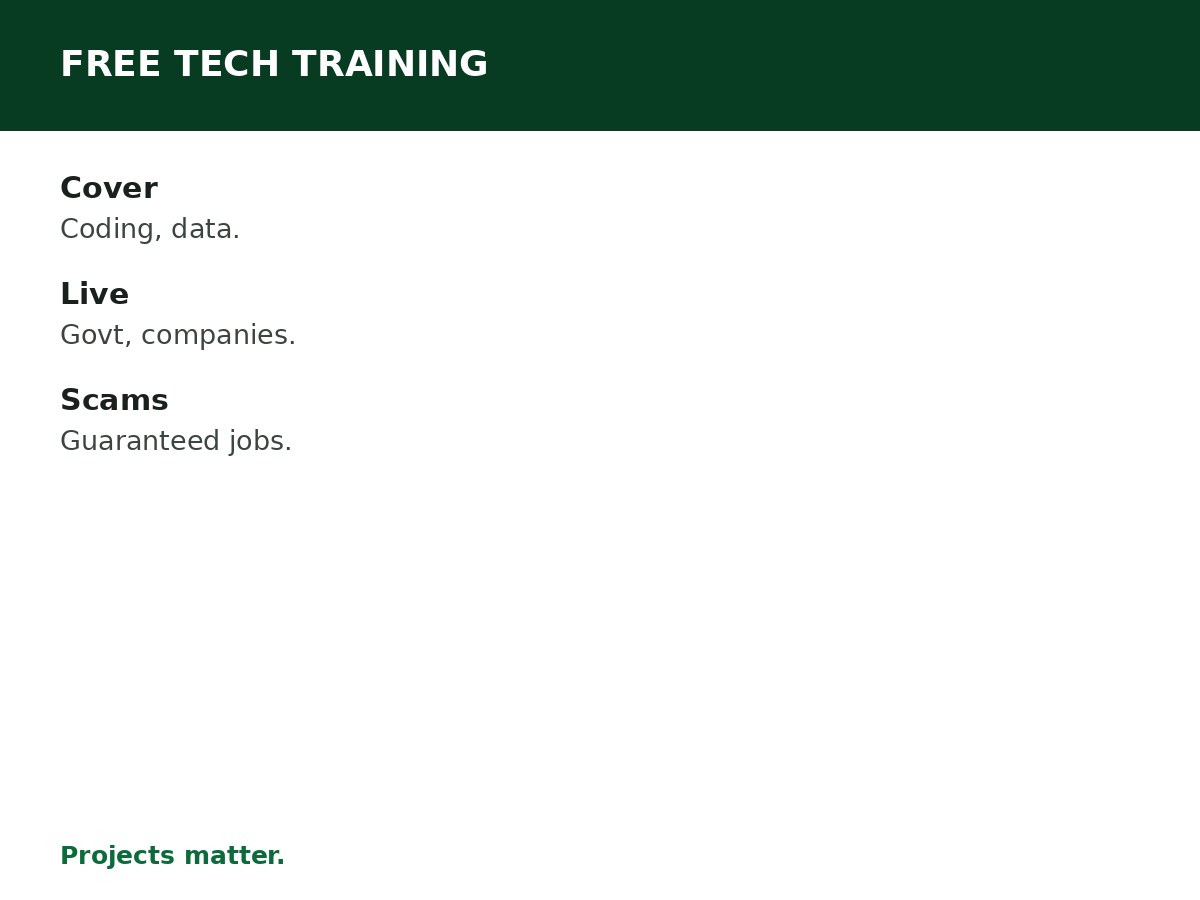
Where free tech training lives
- Government tech programmes — federal and state tech training initiatives, announced on official channels, per cycle.
- Tech company programmes — tech companies and foundations running training, often tied to hiring or freelance pipelines, as each provider states.
- NGO and community programmes — non-governmental and community tech training, with their own eligibility and windows, as each organisation states.
- Online platforms — free online tech courses, from platforms and providers, with certificates where stated, as each provider states. Verify certificate value before relying on it.
How to choose and verify
- Choose by goal and market — a tech skill with local or remote demand, that you will practise daily, beats a trending skill you abandon. See the skill-choice guide for the full method.
- Verify ‘free’ claims — confirm training cost, materials, and any other charges, in writing, before enrolling. Some ‘free’ tech programmes charge for certificates, exams, or advanced tracks — confirm the full cost picture.
- Check structure — curriculum, duration, mentorship, projects, and assessment, as the programme states, in writing, before enrolling. Programmes without projects or assessment teach less than they promise.
- Check outcomes honestly — no genuine programme guarantees employment. Placement claims should be checked against independent trainee references, not programme marketing.
Free tech training scams
- Fees for ‘free’ training — any fee demanded for a programme advertised as free is a scam, unless the official programme page states a fee.
- Fake programmes — programmes advertised only in groups, demanding payment or documents, are fake until verified on official channels.
- Guaranteed tech jobs — no genuine programme guarantees employment. Guaranteed-job claims are scams.
Related Guides & Next Steps
- Federal Government TVET Programme 2026
- Free Coding Training for Nigerians
- Free Digital Skills Training in Nigeria
- Free Skills Acquisition Programmes in Nigeria
Frequently asked questions
What is free tech training? Technology skills training — coding, data, design, cybersecurity, digital marketing — at no training cost to the learner, funded by government, NGOs, tech companies, or foundations.
What is the difference between tech training, coding training, and digital skills training? Tech training is broadest (coding, data, design, security, marketing). Coding training covers programming specifically. Digital skills training covers digital literacy broadly, including non-technical digital skills.
Where can I find free tech training in Nigeria? Through government tech programmes (official channels), tech company programmes, NGO and community programmes, and online platforms — verified before enrolling.
Should a free tech programme charge fees? No — any fee demanded for a programme advertised as free is a scam, unless the official programme page itself states a fee. Confirm the full cost picture, including certificates and exams, in writing.
Do free tech programmes guarantee jobs? No — no genuine programme guarantees employment. Placement claims should be checked against independent trainee references, not programme marketing.
Sources and last update
- No programme is named as currently open anywhere in this article, deliberately — training windows open and close, and a frozen list misleads readers within months. Official programme channels, checked at application time, govern.
- No fee, stipend, or income figure is asserted anywhere in this article, deliberately. Official programme pages, checked at application time, govern.
- Scam patterns: training fees demanded for ‘free’ programmes, payment to personal accounts, and guaranteed jobs or certificates are red flags — verify every programme on official channels before applying or paying anything.
- No job, certificate, or training outcome is promised anywhere in this article.
Last updated: 24 October 2026. Guide — review every 3–6 months, and on every official programme announcement.

Written by Olaitan Ilori
Olaitan Ilori is the founder and lead researcher at CareerMedal. He provides verified, practical guides on Nigerian tertiary admissions (JAMB, CAPS, Post-UTME), NELFUND student finance, NYSC service-year survival, and early-career job placement.
View all guides by Olaitan Ilori →