
Free solar installation training teaches solar system installation — panels, inverters, batteries, and wiring, for homes and businesses — at no training cost to the learner, funded by government, NGOs, or industry. This guide covers solar installation specifically, the first trade-specific guide in the TVET cluster, with the trade’s own safety, certification, and market notes.
What solar installation training covers
- Solar fundamentals — how solar systems work: panels, charge controllers, inverters, batteries, and loads, as the programme states.
- Installation practice — panel mounting, wiring, inverter and battery installation, and system testing, hands-on, as the programme states.
- Sizing and design — sizing systems for homes and businesses, from load assessment, as the programme states.
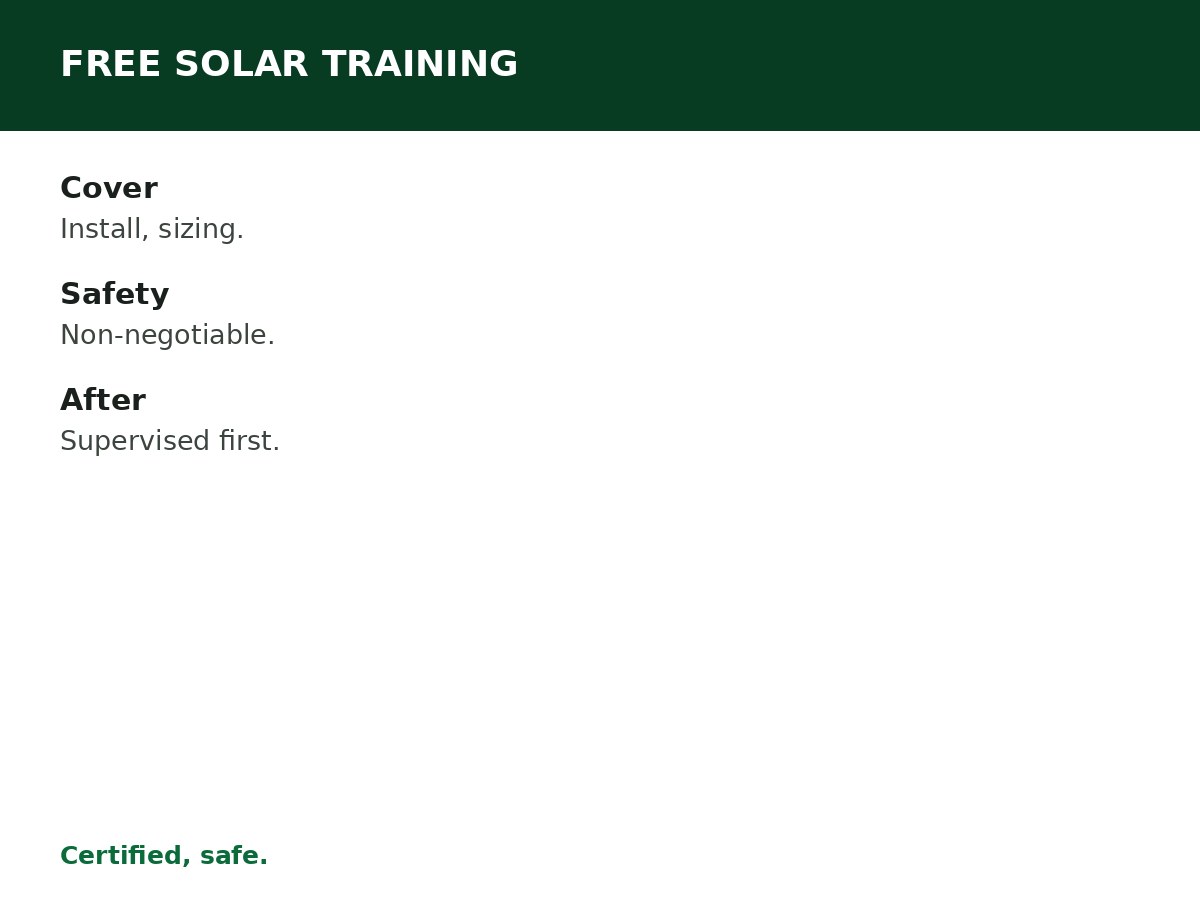
- Safety — electrical safety, roof safety, and battery safety, as the programme states. Safety training is non-negotiable for solar work; programmes skipping safety are unsafe, whatever they promise.
Where free solar training lives
- Government programmes — federal and state solar and renewable-energy programmes, announced on official channels, per cycle.
- Industry programmes — solar companies running training, often tied to installer pipelines, as each employer states.
- NGO programmes — non-governmental organisations running solar training, with their own eligibility and windows, as each organisation states.
Certification and safety
- Certification as the programme states — what certificate, from which body, on what assessment, in writing, before enrolling. Vague certification promises are red flags.
- Safety certification matters — solar work involves electricity and heights. Certified, safety-trained installers are preferred by customers and employers, as the market states.
- Practice before paid work — supervised installations, before independent paid work, for safety and quality. Independent work without supervised practice risks customers, property, and reputation.
Free solar training scams
- Fees for ‘free’ training — any fee demanded for a programme advertised as free is a scam, unless the official programme page states a fee.
- Fake programmes — programmes advertised only in groups, demanding payment or documents, are fake until verified on official channels.
- Certificate mills — programmes selling solar certificates without training or assessment are fraud, and dangerous, where certificates are used for electrical work.
Related Guides & Next Steps
- Federal Government TVET Programme 2026
- Free Welding Training in Nigeria
- Free Plumbing Training in Nigeria
- Free Digital Skills Training in Nigeria
Frequently asked questions
What is free solar installation training? Solar system installation training — panels, inverters, batteries, and wiring, for homes and businesses — at no training cost to the learner, funded by government, NGOs, or industry.
What does solar installation training cover? Solar fundamentals, installation practice, sizing and design, and safety (electrical, roof, battery), as the programme states.
Is safety training important for solar work? Yes — solar work involves electricity and heights. Safety training is non-negotiable; programmes skipping safety are unsafe, whatever they promise.
Should a free solar programme charge fees? No — any fee demanded for a programme advertised as free is a scam, unless the official programme page itself states a fee.
Can I work independently after solar training? After supervised installations, for safety and quality — independent work without supervised practice risks customers, property, and reputation.
Sources and last update
- No programme is named as currently open anywhere in this article, deliberately — training windows open and close, and a frozen list misleads readers within months. Official programme channels, checked at application time, govern.
- No fee, stipend, or income figure is asserted anywhere in this article, deliberately. Official programme pages, checked at application time, govern.
- Scam patterns: training fees demanded for ‘free’ programmes, payment to personal accounts, and guaranteed jobs or certificates are red flags — verify every programme on official channels before applying or paying anything.
- No job, certificate, or training outcome is promised anywhere in this article.
Last updated: 24 October 2026. Guide — review every 3–6 months, and on every official programme announcement.

Written by Olaitan Ilori
Olaitan Ilori is the founder and lead researcher at CareerMedal. He provides verified, practical guides on Nigerian tertiary admissions (JAMB, CAPS, Post-UTME), NELFUND student finance, NYSC service-year survival, and early-career job placement.
View all guides by Olaitan Ilori →