
Best technical skills for young Nigerians are technical skills — trades and technology — that young people can learn without degrees, practise daily, and turn into employment or self-employment. This guide groups technical skills by type, without ranking them, since ‘best’ depends on interests, aptitude, and local markets, not on any official ranking.
Skills grouped by type
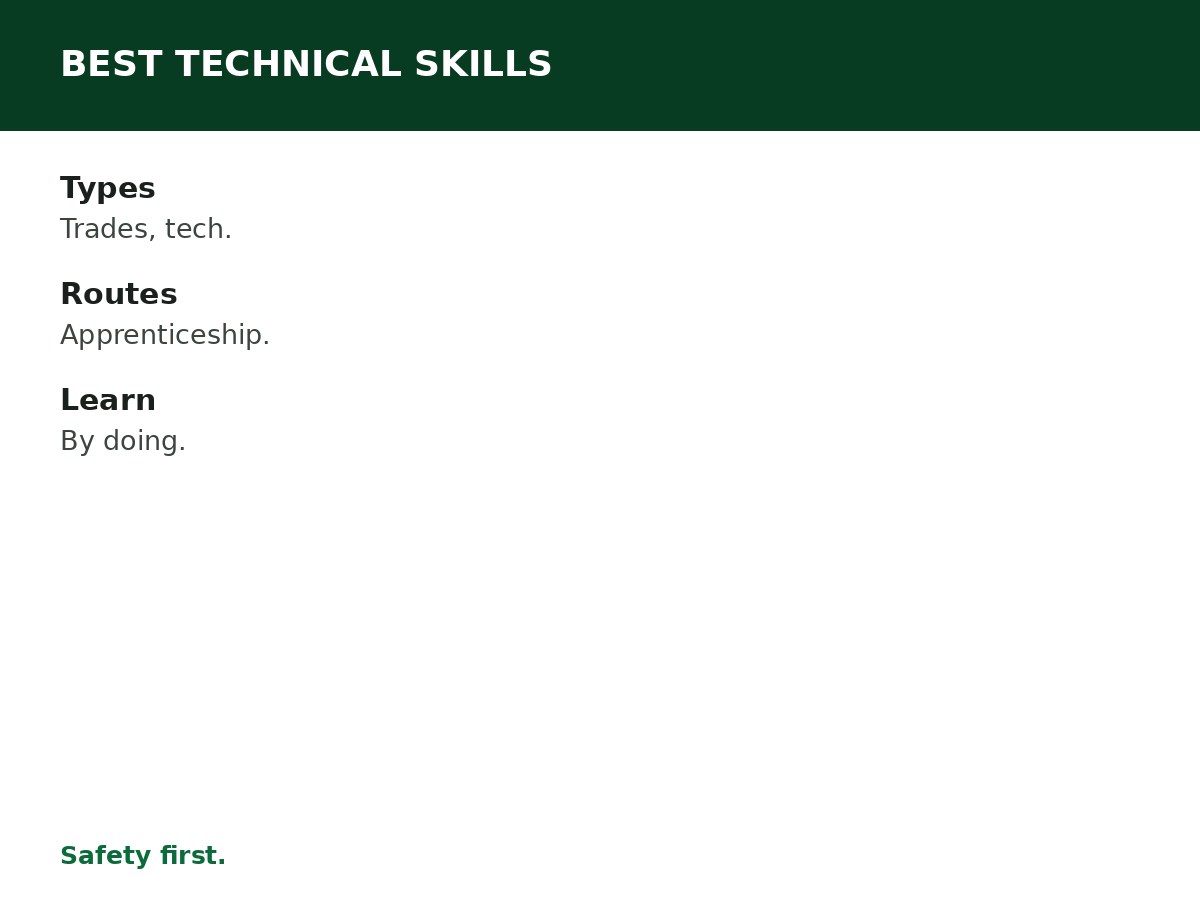
- Construction trades — welding, plumbing, electrical installation, and related trades, with hands-on workshop training, as the trade guides cover.
- Technology — coding, data analysis, cybersecurity, and design, with portfolio projects, as the digital guides cover.
- Energy and environment — solar installation, and related renewable skills, with safety training, as the solar guide covers.
- Automobile and agriculture — automobile repair, agricultural skills, and related practical trades, as the trade guides cover.
- No ranking asserted — skills are grouped by type, not ranked. ‘Best’ depends on interests, aptitude, and local markets, not on any official ranking.
Why these skills fit young Nigerians
- Degree-free paths — most technical skills are judged by proof (finished work, portfolio, reputation), not by degrees, as the market states.
- Apprenticeship routes — masters, workshops, and training centres, offering hands-on learning, without university entry, as the market states.
- Self-employment routes — trades and tech skills support workshops, services, and freelance work, built on reputation, as the market states.
- Local and remote markets — trades serve local markets; tech skills serve local and remote markets, as the market states.
How young Nigerians should learn
- Choose by aptitude and market — a skill you enjoy practising, for a market you can reach, beats a trending skill you abandon. See the skill-choice guide for the full method.
- Learn by doing — daily hands-on practice, supervised work, and projects, for months, toward working competence.
- Build proof deliberately — finished work, portfolio, references, and supervised jobs, from the first month, for employment and self-employment.
- Safety first — safety training, for trades and energy work, is non-negotiable, whatever the programme promises.
Related Guides & Next Steps
- Federal Government TVET Programme 2026
- Best Vocational Skills for Self-Employment
- How to Choose a Skill to Learn
- Best Digital Skills for Nigerian Students
Frequently asked questions
What are the best technical skills for young Nigerians? Construction trades, technology, energy and environment, and automobile and agriculture — grouped by type, not ranked, since ‘best’ depends on interests, aptitude, and local markets.
Why do technical skills fit young Nigerians? They offer degree-free paths, apprenticeship routes, self-employment routes, and local and remote markets, as the market states.
How should young Nigerians learn technical skills? By choosing by aptitude and market, learning by doing daily, building proof deliberately, and prioritising safety training for trades and energy work.
Do technical skills require degrees? No — most technical skills are judged by proof (finished work, portfolio, reputation), not by degrees, as the market states.
Are technical skills ranked? No — this guide groups skills by type, not by rank. No official technical-skills ranking exists.
Sources and last update
- No programme is named as currently open anywhere in this article, deliberately — training windows open and close, and a frozen list misleads readers within months. Official programme channels, checked at application time, govern.
- No fee, stipend, or income figure is asserted anywhere in this article, deliberately. Official programme pages, checked at application time, govern.
- Scam patterns: training fees demanded for ‘free’ programmes, payment to personal accounts, and guaranteed jobs or income are red flags — verify every programme on official channels before applying or paying anything.
- No job, income, or training outcome is promised anywhere in this article.
Last updated: 24 October 2026. Guide — review every 3–6 months, and on every official programme announcement.

Written by Olaitan Ilori
Olaitan Ilori is the founder and lead researcher at CareerMedal. He provides verified, practical guides on Nigerian tertiary admissions (JAMB, CAPS, Post-UTME), NELFUND student finance, NYSC service-year survival, and early-career job placement.
View all guides by Olaitan Ilori →