

Affordable meals for Nigerian students are meals that are cheap, filling, and reasonably nutritious — built from local staples, cooked in bulk, and shared where possible. This guide covers student feeding specifically, distinct from the cost-of-living guide (which maps all costs) and the budget guide (which covers planning).
Affordable meal principles
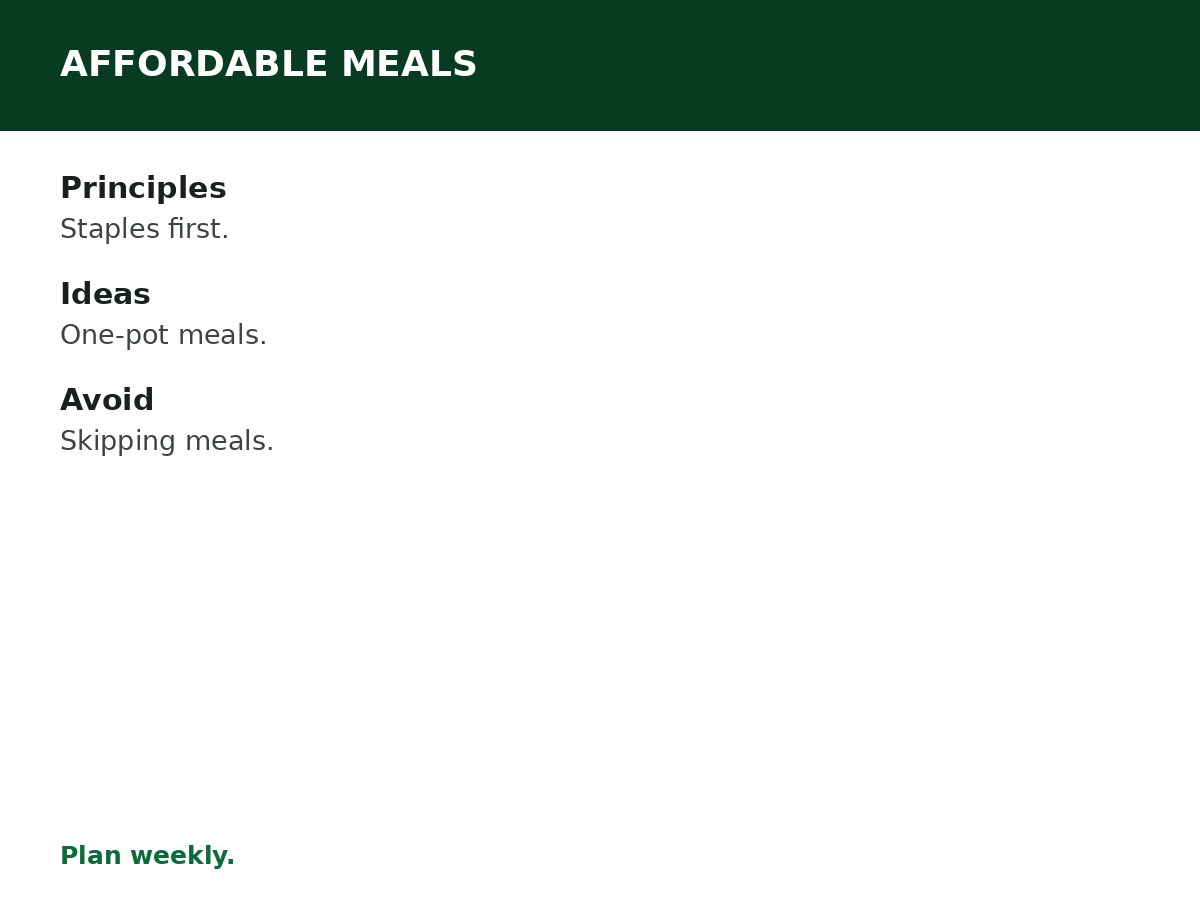
- Staples first — rice, beans, garri, yam, plantain, and local staples, as markets state, forming cheap, filling bases, with protein and vegetables added.
- Cook in bulk — large pots, cooked once, eaten across days, saving time, fuel, and money, as students report.
- Cook in groups — group cooking, splitting ingredient costs and fuel, where housemates or friends agree, as students report.
- Buy in season — seasonal produce, costing less than out-of-season equivalents, as markets state.
- Carry food — packed meals, for long lecture days, instead of buying every meal on campus, as students report.
Affordable meal ideas by type
- Staple + protein — rice and beans, garri and soup, yam and egg, as markets state, cheap and filling, with vegetables where affordable.
- One-pot meals — jollof rice, beans porridge, and yam porridge, cooked in bulk, as students report, saving fuel and time.
- Breakfast simply — akara and pap, bread and egg, or oats, as markets state, cheap starts, before long lecture days.
- Snacks wisely — groundnuts, bananas, and roasted corn, as markets state, cheaper than packaged snacks, where available.
Feeding mistakes
- Buying every meal — buying every meal, daily, costing more than cooking, as students report, especially near campus.
- Skipping meals to save — skipping meals, harming concentration and health, as students report. Affordable meals beat skipped meals.
- No food planning — no meal plan, leading to daily impulse purchases, as students report. A weekly meal plan, even simple, saves money.
Related Guides & Next Steps
- Cost of Living for Nigerian University Students
- How to Find Affordable Student Accommodation
- What to Check Before Renting Student Accommodation
- How to Save Money as a Student
Frequently asked questions
What are affordable meals for Nigerian students? Meals that are cheap, filling, and reasonably nutritious — built from local staples, cooked in bulk, and shared where possible, as this guide covers.
Is cooking cheaper than buying food as a student? Usually yes — cooking, especially in bulk and in groups, costs less than buying every meal, as students report, especially near campus.
What staples make affordable student meals? Rice, beans, garri, yam, plantain, and local staples, as markets state, forming cheap, filling bases, with protein and vegetables added.
Should students skip meals to save money? No — skipping meals harms concentration and health, as students report. Affordable meals beat skipped meals.
How can students plan affordable meals? With a simple weekly meal plan — staples first, bulk cooking, group cooking where possible, seasonal produce, and packed meals for long lecture days.
Sources and last update
- No cost figure, price, or fee is asserted anywhere in this article, deliberately — prices vary by institution, location, and session, and change often. Institution notices, hostel offices, and market prices at the time govern.
- No specific accommodation, vendor, or seller is recommended anywhere in this article — students verify each option in person before paying anything.
- Scam patterns: advance payment for rooms never seen, agents demanding fees before viewing, and sellers collecting payment for goods never delivered are red flags — verify in person, get receipts, and never pay for what you have not seen.
- No admission, accommodation, or financial outcome is promised anywhere in this article.
Last updated: 24 October 2026. Guide — review every 6–12 months, and at the start of each academic session.

Written by Olaitan Ilori
Olaitan Ilori is the founder and lead researcher at CareerMedal. He provides verified, practical guides on Nigerian tertiary admissions (JAMB, CAPS, Post-UTME), NELFUND student finance, NYSC service-year survival, and early-career job placement.
View all guides by Olaitan Ilori →