

Writing a research proposal means presenting a research plan — topic, problem, questions, method, and significance — convincingly, for supervisor or department approval, before the full project starts. This guide covers proposals, distinct from the final-year-project guide (which covers the full project) and the choose-topic guide (which covers topic selection).
Proposal structure
- Title and introduction — topic, introduced, with background, as the method states. Introductions, leading to the research problem, not just general background.
- Problem statement — the gap or problem, stated clearly, as departments state. Vague problems, weak proposals, as supervisors state.
- Objectives and questions — objectives, and research questions, stated precisely, as the method states. Objectives, matching questions, matching method.
- Literature review (brief) — existing research, summarised briefly, showing the gap, as the method states. Proposals, showing familiarity, not exhaustive reviews.
- Methodology — design, data, and analysis, described, as departments state. Method, matching questions, as supervisors state.
- Significance and scope — why the research matters, and its limits, stated, as the method states.
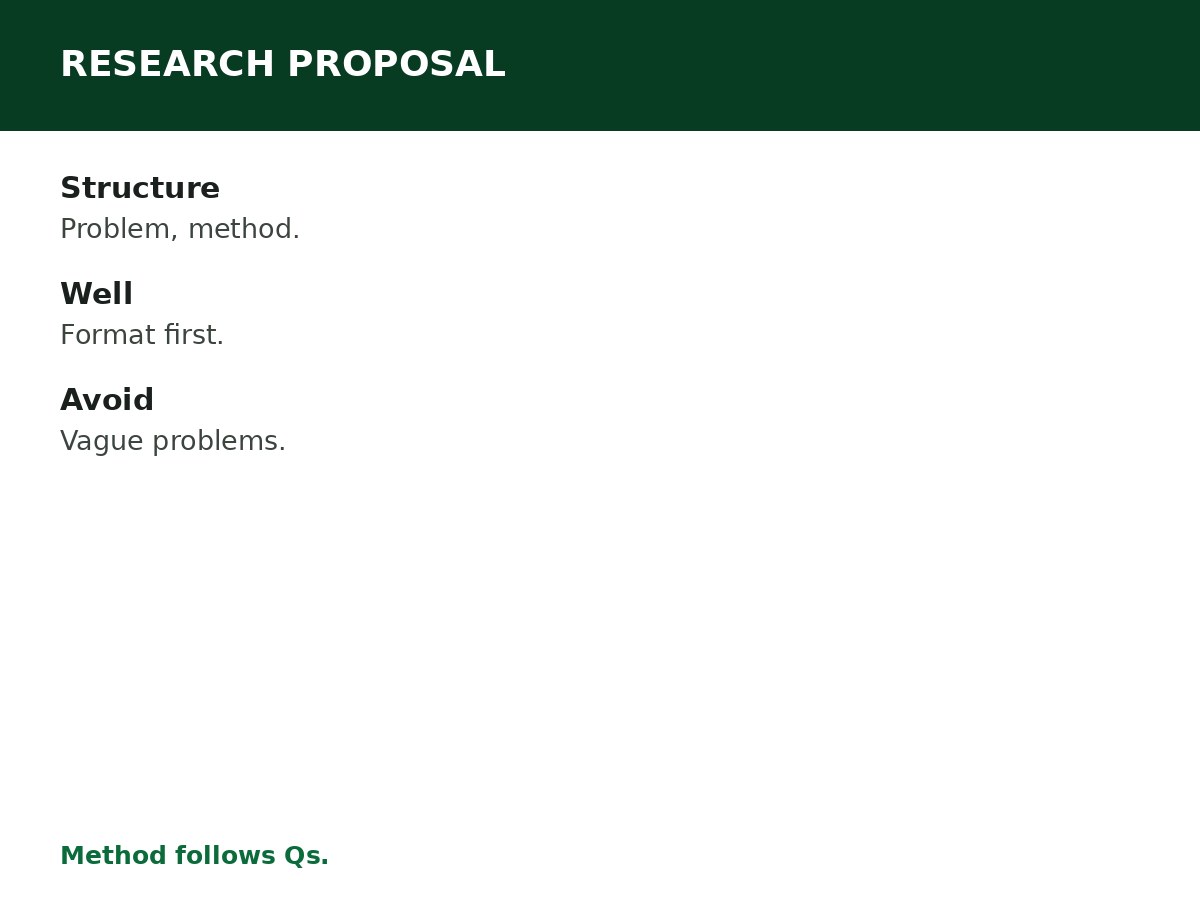
Writing proposals well
- Supervisor guidance first — supervisor and department formats, followed, as departments state. Formats, varying by department, as institutions state.
- Feasible scope — scope, feasible within time and resources, as supervisors state. Over-ambitious proposals, rejected or unfinishable, as supervisors state.
- Clear language — precise language, as the academic-writing guide covers. Jargon, hiding vague plans, as supervisors state.
Proposal mistakes
- Vague problems — problems, stated vaguely, as supervisors state, weak proposals. State gaps, specifically.
- Method mismatch — methods, not matching questions, as supervisors state, rejected proposals. Method, following questions, always.
- Ignoring format — department formats, ignored, as departments state, costing approval. Formats, checked first, always.
Related Guides & Next Steps
- Cost of Living for Nigerian University Students
- How to Write a Final-Year Project
- How to Choose a Final-Year Project Topic
- How to Write a Good Assignment
Frequently asked questions
How do I write a research proposal? By structuring title/introduction, problem statement, objectives and questions, brief literature review, methodology, and significance/scope — following supervisor and department formats, with feasible scope.
What makes a strong research proposal? A clear problem statement (specific gap), precise objectives matching questions matching method, brief literature showing familiarity, and feasible scope within time and resources, as supervisors state.
Should I follow department proposal formats? Yes — supervisor and department formats, followed, as departments state. Formats, varying by department, as institutions state.
What is the biggest proposal mistake? Vague problems, or methods not matching questions, as supervisors state. State gaps specifically, and let method follow questions.
How much literature should a proposal review? Briefly — existing research, summarised, showing the gap, as the method states. Proposals show familiarity, not exhaustive reviews.
Sources and last update
- No grade, admission, or academic outcome is promised anywhere in this article — results depend on study, department standards, and assessment, as institutions state.
- No plagiarism, impersonation, or bought-work route is recommended anywhere in this article — copying without citation, and submitting bought work, risk discipline, as institutions state.
- Department notices, course outlines, and supervisor guidance govern for each course and project — this guide is general method, not department-specific requirements.
Last updated: 24 October 2026. Guide — review every 6–12 months, and at the start of each academic session.

Written by Olaitan Ilori
Olaitan Ilori is the founder and lead researcher at CareerMedal. He provides verified, practical guides on Nigerian tertiary admissions (JAMB, CAPS, Post-UTME), NELFUND student finance, NYSC service-year survival, and early-career job placement.
View all guides by Olaitan Ilori →