
Negotiating salary as a graduate means discussing pay, calmly and professionally, after an offer — with research, flexibility, and full-package thinking — not accepting instantly, or demanding aggressively. This guide covers graduate salary negotiation specifically, distinct from the expected-salary guide (which covers interview salary questions) and the common-questions guide (which covers interview questions broadly).
When to negotiate
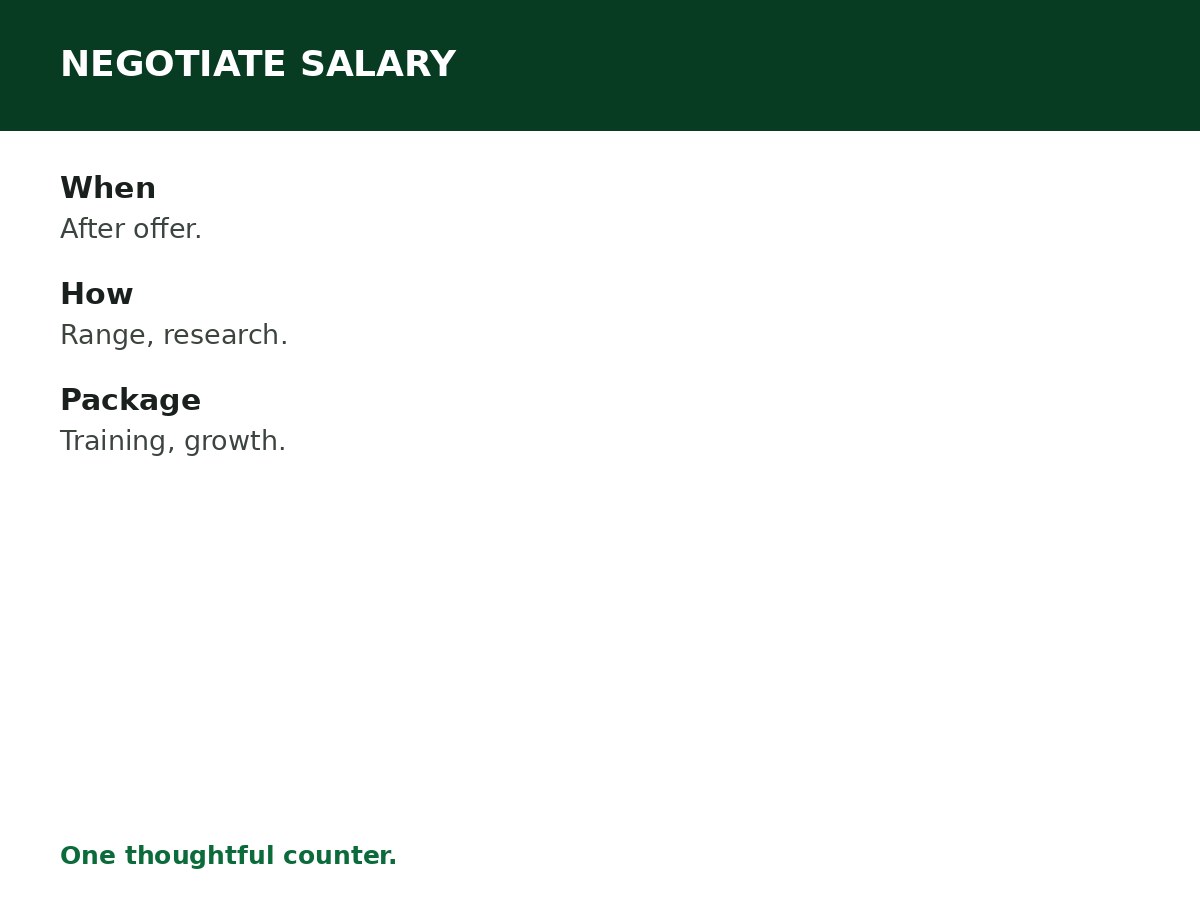
- After an offer, not before — negotiation, after a formal offer, as employers state, not during early interviews, where salary discussion is premature.
- One negotiation round, typically — one thoughtful counter, as the market states, not repeated rounds, which exhaust employer goodwill.
- Full package, not salary alone — benefits, training, growth, and working conditions, considered alongside salary, as employers state, for total value.
How to negotiate
- Thank and express enthusiasm — thanks for the offer, and enthusiasm for the role, before negotiation, for professional tone.
- State research briefly — role, level, and market research, cited briefly, for credibility, not bare demands.
- Propose a range, not a demand — a range, with your target near the top, showing flexibility, as employers state.
- Listen and consider — employer response, heard fully, before replying, for professional conduct.
- Decide calmly — offer, accepted, declined, or countered once, calmly, without pressure, as the market states.
Graduate negotiation realities
- Limited leverage, real room — graduates have limited leverage, as the market states, but employers often have some flexibility, especially on package, training, and start dates.
- No figure asserted here — no specific salary figure is asserted in this guide, deliberately, since pay varies by role, sector, location, and experience. Research, at offer time, governs.
- Package levers — training, certifications, reviews, and growth paths, negotiable where salary is fixed, as employers state, for total value.
Negotiation mistakes
- Accepting instantly without thought — instant acceptance, without considering the package, losing negotiation room, as the market states. Take time, where offered, before deciding.
- Aggressive demands — demands, ultimatums, and threats, harming employer relationships, as employers state, especially for graduates.
- Lying about competing offers — invented competing offers, discovered, ending offers and reputation. State competing offers honestly, or not at all.
- Negotiating before an offer — salary demands, before formal offers, signalling presumption, as employers state. Wait for offers, then negotiate.
Related Guides & Next Steps
- How to Write a CV With No Work Experience
- How to Ask for a Salary Increase
- How to Write a Resignation Letter
- How to Follow Up After an Interview
Frequently asked questions
How do I negotiate salary as a graduate? Calmly and professionally, after a formal offer: thank and express enthusiasm, state research briefly, propose a flexible range, listen fully, and decide calmly — one thoughtful counter, typically, not repeated rounds.
When should I negotiate salary? After a formal offer, as employers state, not during early interviews, where salary discussion is premature.
Should graduates negotiate salary? Yes, professionally — graduates have limited leverage, as the market states, but employers often have some flexibility, especially on package, training, and start dates.
What salary should I ask for as a graduate? No specific figure is asserted here, deliberately — pay varies by role, sector, location, and experience. Research, at offer time, through reputable salary surveys, job boards, and professional contacts, governs.
Should I lie about competing offers to negotiate? No — invented competing offers, discovered, end offers and reputation. State competing offers honestly, or not at all.
Sources and last update
- No salary figure, vacancy count, or hiring outcome is asserted anywhere in this article, deliberately — employer career pages and reputable boards, checked at application time, govern.
- No company is named as currently hiring anywhere in this article, deliberately — hiring windows open and close; employer career pages govern.
- Scam patterns: fees for jobs, payment to personal accounts, guaranteed jobs or shortlisting, and interview coaching selling fake experience are red flags — verify every employer on official channels before applying or paying anything.
- No job, shortlisting, salary, or hiring outcome is promised anywhere in this article.
Last updated: 24 October 2026. Guide — review every 6–12 months, and on every major hiring-platform change.

Written by Olaitan Ilori
Olaitan Ilori is the founder and lead researcher at CareerMedal. He provides verified, practical guides on Nigerian tertiary admissions (JAMB, CAPS, Post-UTME), NELFUND student finance, NYSC service-year survival, and early-career job placement.
View all guides by Olaitan Ilori →