

Learning UI/UX design means learning to design products people can use — with user research, interface design, and usability testing, practised on real projects, in that order, before jobs. This guide covers beginner UI/UX design specifically, distinct from the beginner graphic-design guide (which covers visual design) and the portfolio guide (which covers portfolio building).
What beginner UI/UX design covers
- Design fundamentals — user research, information architecture, and interaction design, as good courses state, before tools and visual polish.
- Tools — design and prototyping tools, learned through projects, not tutorials alone.
- Design types — mobile apps, websites, and web applications, as the market states, for beginner designer work.
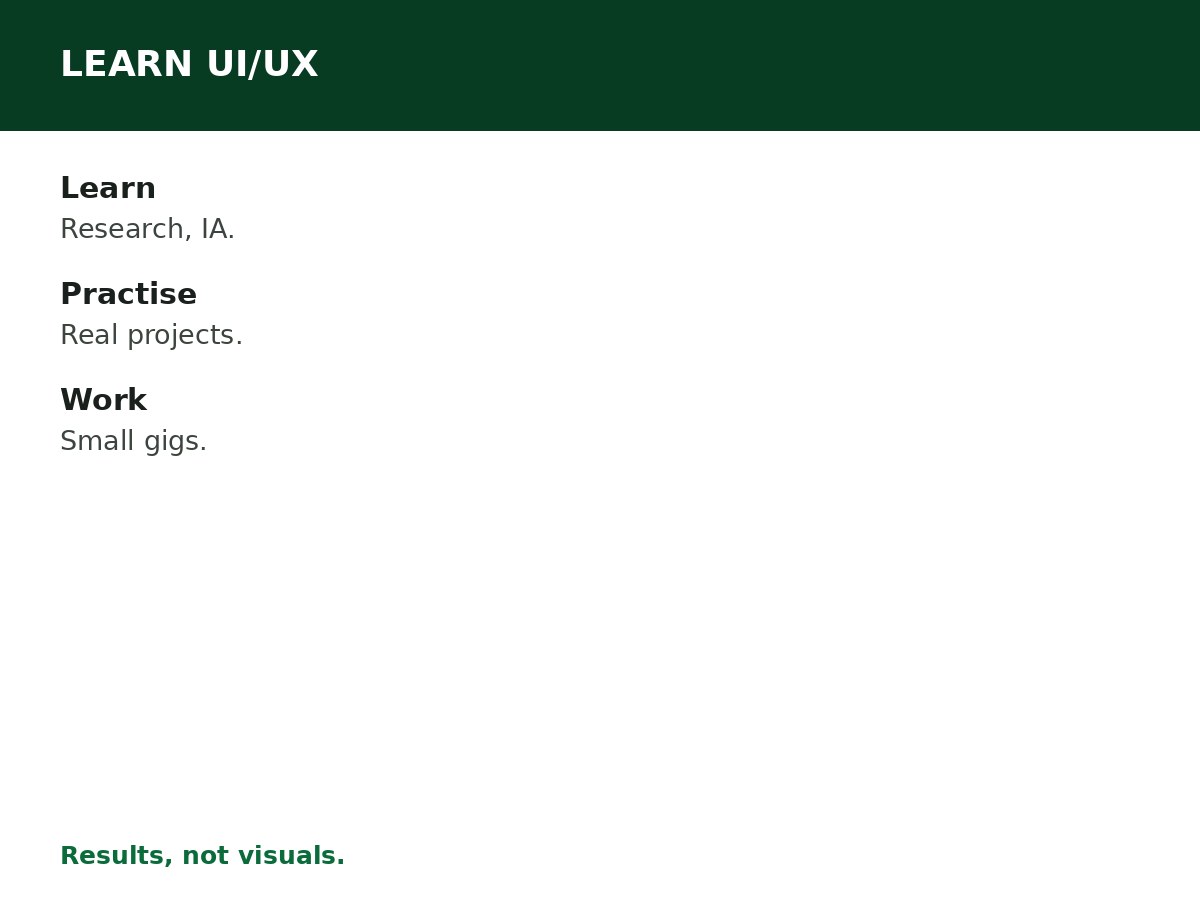
How beginners should learn
- Fundamentals first — user research, information architecture, and interaction design, before visual polish and tools. Usability decides design quality; visuals alone do not.
- Design real projects daily — app and website redesigns, personal projects, and case studies, for months, toward working competence. Design is learned by designing, not by watching courses alone.
- Test with users — usability testing, feedback, and iteration, on every project, for quality and learning. Untested designs are guesses, not solutions.
- Build case studies — project case studies, showing problem, process, and results, demonstrating skill, for employer trust. See the portfolio guide for the full method.
Finding beginner work
- Small gigs first — landing pages, app screens, and small product designs, for local businesses and referrals, building portfolio and reputation.
- Platforms — freelance platforms, as each platform states, with portfolio, skills, and rates, for remote clients.
- Pricing honestly — beginner rates, priced sustainably, rising with portfolio and results, not by undercutting to unsustainable levels.
- Results over visuals — clients pay for usable products (conversions, retention, satisfaction), not for pretty screens alone. Report results, not visuals, on every job.
Beginner UI/UX scams
- Unpaid ‘exposure’ work — large unpaid design work, or ‘exposure’ offers, exploiting beginners. Small, paid trials are legitimate; large unpaid work is not.
- Copied portfolios — passing off others’ designs as your own is fraud, and discovered copying ends design careers. Build original case studies, through practice.
Related Guides & Next Steps
- Federal Government TVET Programme 2026
- How to Build a Portfolio With No Experience
- Free Certifications Nigerians Can Earn Online
- How to Learn Cybersecurity in Nigeria
Frequently asked questions
How do I learn UI/UX design? By learning design fundamentals (user research, information architecture, interaction design), designing real projects daily, and testing with users, before jobs.
What should beginners learn first in UI/UX design? User research, information architecture, and interaction design, before visual polish and tools. Usability decides quality; visuals alone do not.
How do beginner UI/UX designers find work? Through small gigs (landing pages, app screens, small product designs) for local businesses and referrals, and freelance platforms, with case studies as portfolio.
Should beginners work for ‘exposure’? No — small, paid trials are legitimate; large unpaid work, or ‘exposure’ offers, exploit beginners.
Can I copy designs for my UI/UX portfolio? No — passing off others’ designs as your own is fraud, and discovered copying ends design careers. Build original case studies, through practice.
Sources and last update
- No programme is named as currently open anywhere in this article, deliberately — training windows open and close, and a frozen list misleads readers within months. Official programme channels, checked at application time, govern.
- No fee, stipend, or income figure is asserted anywhere in this article, deliberately. Official programme pages, checked at application time, govern.
- Scam patterns: training fees demanded for ‘free’ programmes, payment to personal accounts, and guaranteed jobs or income are red flags — verify every programme on official channels before applying or paying anything.
- No job, income, certification, or training outcome is promised anywhere in this article.
Last updated: 24 October 2026. Guide — review every 3–6 months, and on every official programme announcement.

Written by Olaitan Ilori
Olaitan Ilori is the founder and lead researcher at CareerMedal. He provides verified, practical guides on Nigerian tertiary admissions (JAMB, CAPS, Post-UTME), NELFUND student finance, NYSC service-year survival, and early-career job placement.
View all guides by Olaitan Ilori →