
Building a professional portfolio means presenting your best work — projects, results, and testimonials — in one clear, accessible place, so employers and clients can judge your skill. This guide covers professional portfolios specifically, distinct from the no-experience portfolio guide (which covers portfolios without experience) and the beginner skill guides (which cover learning).
What a professional portfolio is
- Best work, curated — strongest projects, with process and results, curated, not every project listed, for employer and client trust.
- Accessible and clear — one portfolio page, document, or link, easy for employers to navigate, as the market states.
- Field-specific proof — design = portfolio pieces, web dev = deployed projects, marketing = measured results, trades = finished work and references, data = analyses and dashboards, as the market states.
How to build a professional portfolio
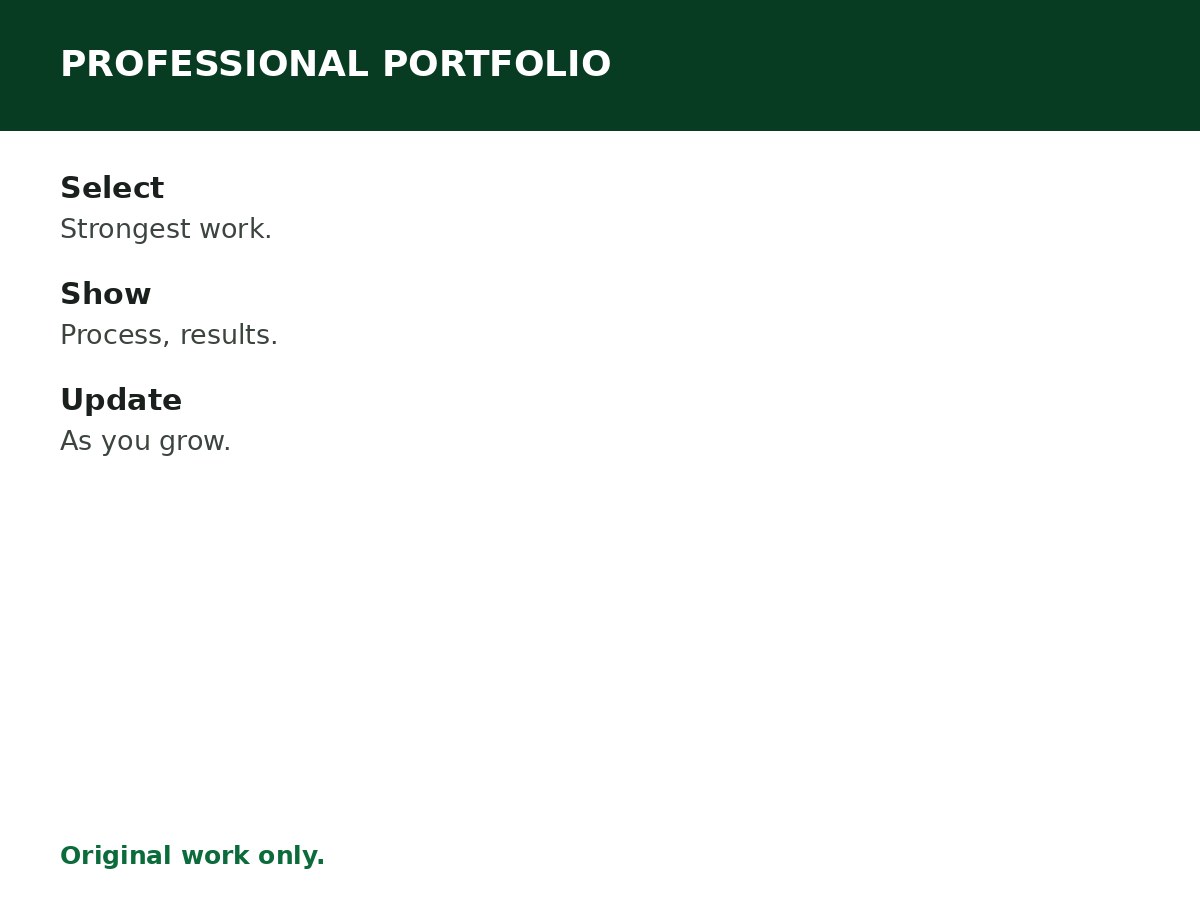
- Select best work — 5–10 strongest projects, with process and results, selected, not every project listed.
- Document process and results — problem, process, decisions, and results, for each project, showing thinking, not just output.
- Add testimonials, where available — client, employer, and supervisor testimonials, with permission, for trust, as the market states.
- Present clearly — one page, clear navigation, best work first, for employer scanning, as the portfolio guide covers.
- Keep updating — new projects, replacing old ones, as skill grows, so portfolios reflect current competence, not past learning.
Portfolio mistakes
- Copied work — passing off others’ work as your own is fraud, and discovered copying ends careers. Build original work, through practice.
- Quantity over quality — many weak projects, hiding strong ones, wasting employer attention. Few strong projects, well presented, win.
- No process, only results — results without process, hiding thinking, for employers judging approach, not just output.
- Outdated portfolios — old projects, reflecting past competence, not current skill, losing employer trust, as the market states.
Portfolio plus CV and LinkedIn
- Portfolio linked from CV — portfolio links, on CVs and LinkedIn, as the CV and LinkedIn guides cover, for employer access.
- Portfolio tailored per role — relevant projects, highlighted first, per application, for employer relevance.
- Portfolio as interview evidence — portfolio projects, referenced in interviews, with STAR structure, for competency answers, as the interview guides cover.
Related Guides & Next Steps
- How to Write a CV With No Work Experience
- How to Get Your First Internship
- How to Get Your First Remote Job
- How to Find a Mentor in Nigeria
Frequently asked questions
What is a professional portfolio? Best work, curated — strongest projects, with process and results — in one clear, accessible place, so employers and clients can judge your skill.
How many projects should a professional portfolio have? 5–10 strongest projects, with process and results, selected, not every project listed, for employer and client trust.
Should I include testimonials in my portfolio? Yes, where available — client, employer, and supervisor testimonials, with permission, for trust, as the market states.
Can I use others’ work in my portfolio? No — passing off others’ work as your own is fraud, and discovered copying ends careers. Build original work, through practice.
Should I link my portfolio from my CV? Yes — portfolio links, on CVs and LinkedIn, as the CV and LinkedIn guides cover, for employer access.
Sources and last update
- No salary figure, vacancy count, or hiring outcome is asserted anywhere in this article, deliberately — employer career pages and reputable boards, checked at application time, govern.
- No company is named as currently hiring anywhere in this article, deliberately — hiring windows open and close; employer career pages govern.
- Scam patterns: fees for jobs, payment to personal accounts, guaranteed jobs or placements, and mentorship or networking schemes selling access are red flags — verify every employer and programme on official channels before applying or paying anything.
- No job, salary, placement, or hiring outcome is promised anywhere in this article.
Last updated: 24 October 2026. Guide — review every 6–12 months, and on every major hiring-platform change.

Written by Olaitan Ilori
Olaitan Ilori is the founder and lead researcher at CareerMedal. He provides verified, practical guides on Nigerian tertiary admissions (JAMB, CAPS, Post-UTME), NELFUND student finance, NYSC service-year survival, and early-career job placement.
View all guides by Olaitan Ilori →