
Government recruitment tests are aptitude and knowledge screens — numerical reasoning, verbal reasoning, current affairs, agency knowledge, and sometimes subject knowledge — passed with practice, not cramming. This guide explains test formats, preparation, and test-day practice, distinct from the screening-preparation guide (which covers physical screening, interviews, and documentation).
What government recruitment tests look like
- Aptitude tests — numerical reasoning, verbal reasoning, abstract reasoning, and logical reasoning, timed, multiple-choice, as the agency states.
- Current affairs and general knowledge — Nigerian and world affairs, government structure, and agency mandate, as the test states.
- Agency knowledge — mandate, functions, history, and values of the recruiting agency, for agency-specific tests.
- Subject tests — professional or technical knowledge, for specialist cadres, as the announcement states.
- Formats vary — computer-based, paper-based, or online proctored, as the agency states. Confirm format, venue, and timing from the official invitation, not group messages.
How to prepare
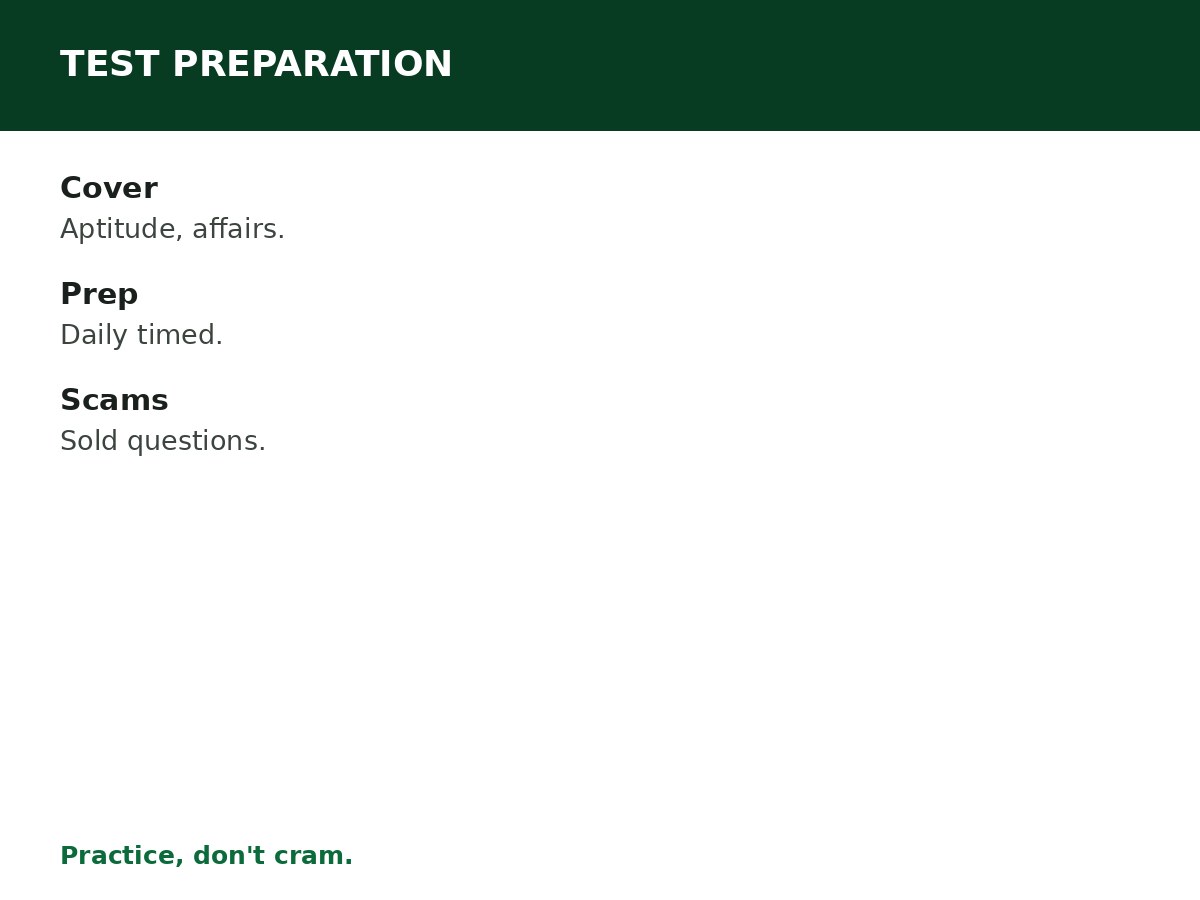
- Practice timed aptitude questions daily — before applying, not after shortlisting. Timed practice is the highest-return preparation: accuracy under time, not knowledge alone, decides most tests.
- Study the agency — mandate, functions, recent news, and values, for agency-knowledge and interview stages.
- Follow current affairs weekly — Nigerian government, economy, and major events, from reputable news sources, not group summaries.
- Revise subject basics — for specialist cadres, core professional knowledge, as the cadre requires, not advanced specialisation.
- Simulate test conditions — timed, quiet, no phone, no notes, to build test-day composure.
Test-day practice
- Arrive early, with required documents — ID, invitation, and documents, as the invitation states. Late arrival forfeits places, as the agency states.
- Read instructions first — section timing, marking, and negative-marking rules, where stated, before starting.
- Answer easy questions first — secure marks, then return to hard questions, within the time limit.
- Never pay for test questions — leaked or sold ‘test questions’ are usually fake, and bought questions are fraud where genuine. Practice openly available aptitude questions instead.
Test scams
- Sold questions and answers — usually fake, and fraud where genuine. Do not buy them.
- Fake test venues — venues published only in groups, or demanding payment, are fake. Confirm venues on official channels.
- Impersonation offers — anyone offering to sit your test for a fee is offering fraud, and discovered impersonation ends applications and invites prosecution.
Related Guides & Next Steps
- Federal Government Recruitment 2026: How to Verify Openings
- Government Recruitment FAQs for Nigerian Applicants
- How to Prepare for Recruitment Screening
- How to Avoid Fake Government Recruitment Portals
- Common Government Recruitment Application Mistakes
Frequently asked questions
What do government recruitment tests cover? Aptitude (numerical, verbal, abstract, logical), current affairs and general knowledge, agency knowledge, and sometimes subject knowledge, as the agency states.
How should I prepare for government recruitment tests? With daily timed aptitude practice before applying, agency study, weekly current affairs from reputable news, subject basics for specialist cadres, and simulated test conditions.
Should I buy leaked test questions? No — leaked or sold ‘test questions’ are usually fake, and bought questions are fraud where genuine. Practice openly available aptitude questions instead.
What should I bring to a recruitment test? ID, invitation, and documents, as the invitation states. Arrive early — late arrival forfeits places, as the agency states.
Are there fake recruitment test venues? Yes — venues published only in groups, or demanding payment, are fake. Confirm venues on official channels.
Sources and last update
- No agency is named as currently recruiting anywhere in this article, deliberately — recruitment windows open and close, and a frozen list misleads readers within months. Official portals and announcements, checked at application time, govern.
- No salary figure, vacancy count, or recruitment outcome is asserted anywhere in this article, deliberately. Official announcements and portals, checked at application time, govern.
- Scam patterns: ‘slot’ sellers, application fees, payment to personal accounts, and guaranteed appointments are red flags — government recruitment is free, and runs through official portals only.
- No appointment, shortlisting, or recruitment outcome is promised anywhere in this article.
Last updated: 24 October 2026. Guide — review every 3–6 months, and on every official recruitment announcement.

Written by Olaitan Ilori
Olaitan Ilori is the founder and lead researcher at CareerMedal. He provides verified, practical guides on Nigerian tertiary admissions (JAMB, CAPS, Post-UTME), NELFUND student finance, NYSC service-year survival, and early-career job placement.
View all guides by Olaitan Ilori →