

Cybersecurity jobs hire fresh graduates into security operations, network security, and compliance support roles, through companies, banks, telecoms, and government, on certification and practical skill more than on certificates alone. This guide explains the security pipeline, the certification routes, and how fresh graduates enter cybersecurity honestly — without the hype.
How security hiring works
- Companies, banks, and telecoms — direct hiring, on each employer’s timetable, with practical tests and interviews.
- Security firms and consultancies — specialist firms hiring junior analysts and consultants, serving client companies.
- Government and agencies — security roles in government agencies, through official recruitment.
- Internships and trainee roles — fixed-term placements, often converting to permanent roles, and the best route in for fresh graduates.
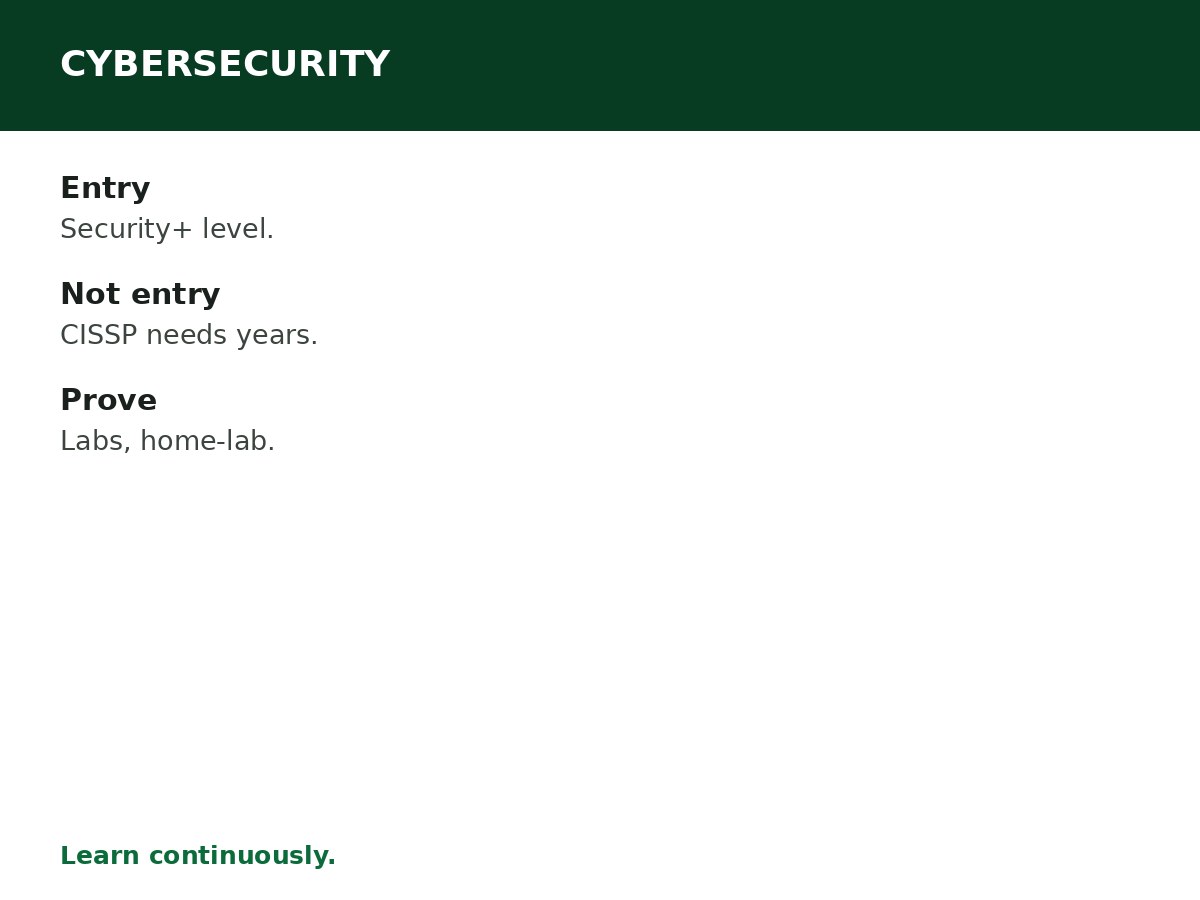
Certification routes — the honest picture
- Entry certifications — CompTIA Security+, and similar entry-level certifications, as each employer states, strengthen junior candidacies and structure learning.
- Intermediate certifications — CEH, and similar certifications, as each employer states, for analysts with some experience.
- Advanced certifications — CISSP, and similar certifications, as each employer states, typically require years of experience — they are not entry-level, whatever bootcamps claim.
- What certifications do not do — a certificate without practical skill does not get hired. Employers test hands-on ability: labs, home-lab projects, and practical exercises matter as much as certificates.
What security employers screen for
- Practical skill — labs, home-lab projects, capture-the-flag participation, and practical exercises, demonstrated, not claimed.
- Degree or HND, plus NYSC status where applicable — the baseline for structured pipelines, with computer science, IT, or related degrees preferred for many roles, as each employer states.
- Integrity — security roles carry privileged access. Employers screen for trustworthiness, with background and reference checks standard.
- Continuous learning — threats change constantly. Employers screen for candidates who learn continuously, not candidates who stopped at one certificate.
Cybersecurity recruitment scams
- Fees for security roles or ‘job guarantees’ — scams. Legitimate employers charge nothing.
- Bootcamps promising jobs — bootcamps sell training, not jobs. Any bootcamp guaranteeing employment, or charging placement fees, is suspect.
- Fake security firms — verify the firm’s registration, clients, and team before accepting a role.
Related Guides & Next Steps
- Graduate Jobs in Nigeria 2026
- Digital Marketing Jobs in Nigeria
- Jobs That Accept NYSC Graduates
- Data Analyst Jobs in Nigeria
Frequently asked questions
How do I get a cybersecurity job as a fresh graduate? Through companies, security firms, government agencies, or internships — with entry certifications, home-lab projects, and practical-test preparation as the main assets.
Do cybersecurity jobs require a computer science degree? No — employers screen mainly on practical skill and certifications, though computer science, IT, or related degrees are preferred for many roles, as each employer states.
What certifications do cybersecurity jobs need? Entry certifications such as CompTIA Security+, as each employer states, strengthen junior candidacies — but practical skill (labs, home-lab projects) matters as much as certificates.
Is CISSP an entry-level certification? No — CISSP and similar advanced certifications typically require years of experience. They are not entry-level, whatever bootcamps claim.
Are there fake cybersecurity jobs? Yes — fees, bootcamps guaranteeing employment, and fake security firms are scams. Verify the firm before accepting.
Sources and last update
- No company is named as currently hiring anywhere in this article, deliberately — hiring windows open and close, and a frozen company list misleads readers within months. Employer career pages, checked at application time, govern.
- No salary figure, vacancy count, or hiring outcome is asserted anywhere in this article, deliberately. Employer career pages and reputable job boards, checked at application time, govern.
- Scam patterns: application fees, training fees, payment to personal accounts, and guaranteed jobs are red flags — legitimate employers do not charge to apply.
- No job outcome is promised anywhere in this article.
Last updated: 24 October 2026. Guide — review every 3–6 months, and on major labour-market shifts.

Written by Olaitan Ilori
Olaitan Ilori is the founder and lead researcher at CareerMedal. He provides verified, practical guides on Nigerian tertiary admissions (JAMB, CAPS, Post-UTME), NELFUND student finance, NYSC service-year survival, and early-career job placement.
View all guides by Olaitan Ilori →