
Malaysia is a lower-cost study-abroad destination for Nigerians — English-taught programmes are common, living costs run lower than the UK or Canada, and Malaysian universities offer scholarships to international students. This guide names the established Malaysia routes, explains how they select, and tells you how to verify each one for the current cycle — because amounts, deadlines, and eligibility change every year, and no amount or deadline is asserted anywhere in this article, deliberately. No admission, award, or visa outcome is promised anywhere in this article.
Established Malaysia routes
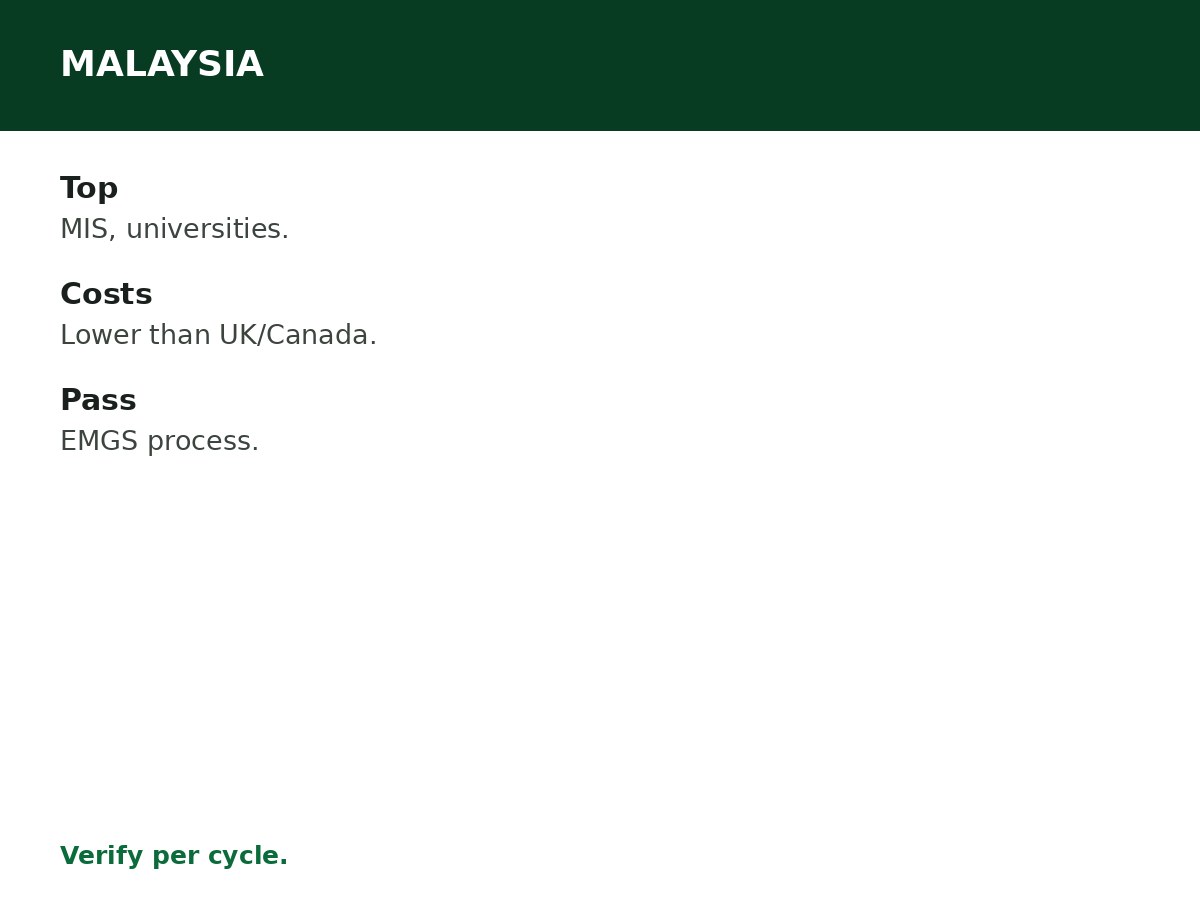
- Malaysia International Scholarship (MIS) — Malaysian government scholarship for international students, including Nigerians, for postgraduate study, as its terms state.
- University scholarships — many Malaysian universities offer merit scholarships to international students, including Nigerians, at undergraduate and postgraduate levels; check each university’s funding page.
- Commonwealth Scholarships — for study in Malaysia, where offered for the current cycle, as its terms state.
- PTDF Overseas Scholarships — where the approved-university list for the cycle includes Malaysian institutions, as the PTDF page for the cycle states.
How Malaysia programmes select
- Academic record — grades and transcripts, as the programme or university states.
- Field match — your field must match the programme’s list, where the programme states one.
- Language proof — English-taught programmes require English proof (IELTS, alternative test, or MOI letter where the programme accepts it). Check each programme’s requirement for the current cycle.
Malaysia costs and student pass, honestly
- Living costs — run lower than the UK, Canada, or Australia, but vary by city (Kuala Lumpur runs higher than smaller cities). Compare full costs against coverage.
- Student pass — decided by the Malaysian immigration authorities (via EMGS, the Education Malaysia Global Services process, where required) on its own criteria (admission, funding proof, as the rules state). A scholarship does not guarantee a student pass.
- Work during study — student passes typically allow limited part-time work, as the rules state for the current cycle. Check the current rules; do not plan funding on assumed work.
How to apply, in order
- Shortlist universities and programmes by level, field, and funding.
- Secure admission (or apply in parallel, as the programme requires).
- Check the official programme and university funding pages for the current cycle — amounts, deadlines, eligibility, coverage.
- Prepare documents early — transcripts, certificates, references, study plan, language proof, passport.
- Apply for the student pass only after admission and funding are confirmed, through the official process.
Related Guides & Next Steps
- Scholarships for Nigerian Students in 2026/2027
- PTDF Scholarship 2026/2027: Requirements and Application
- PTDF In-Country Scholarship Guide
- Scholarships for Nigerian Students in France
Frequently asked questions
Which Malaysia scholarships exist for Nigerians? Malaysia International Scholarship (MIS), university scholarships, Commonwealth where offered, and PTDF Overseas where the cycle’s approved list includes Malaysian institutions. Check each programme’s level and current-cycle terms.
Is Malaysia cheaper than the UK or Canada? Yes, on living costs — but compare full costs (tuition, living, travel, insurance) against what each award covers, not living costs alone.
Do Malaysia programmes require IELTS? English-taught programmes require English proof (IELTS, alternative test, or MOI letter where the programme accepts it). Check each programme’s requirement for the current cycle.
Does a Malaysia scholarship guarantee a student pass? No. The student pass is decided by the Malaysian immigration authorities (via EMGS, where required) on its own criteria. No scholarship guarantees a student pass.
Can I work while studying in Malaysia? Student passes typically allow limited part-time work, as the rules state for the current cycle. Check the current rules; do not plan funding on assumed work.
Sources and last update
- Scholarship programmes named here are established programmes as reported; amounts, deadlines, and eligibility change every cycle — the official programme page for the current cycle governs, and no amount or deadline is asserted anywhere in this article, deliberately.
- Scholarship-vs-loan distinction from the NELFUND cluster guides (Batches 6–10): a scholarship is not repaid; NELFUND is a loan, repayable from 2 years after NYSC at 10% of income.
- Scam patterns from the fake-agents guide (Batch 12): application fees, guaranteed awards, and payment to personal accounts are red flags.
- No admission, award, or visa outcome is promised anywhere in this article.
Last updated: 24 October 2026. Guide — review every 3–6 months and on every scholarship-cycle update.

Written by Olaitan Ilori
Olaitan Ilori is the founder and lead researcher at CareerMedal. He provides verified, practical guides on Nigerian tertiary admissions (JAMB, CAPS, Post-UTME), NELFUND student finance, NYSC service-year survival, and early-career job placement.
View all guides by Olaitan Ilori →