

Paid internships are fixed-term, paid work placements — typically 3 to 12 months — with real duties, a supervisor, and a stipend, run by companies, NGOs, and government agencies for students and fresh graduates. They are the single best bridge from graduation to permanent work, and the most underrated one. This guide explains how they work, where to find them, and how to convert one into a job.
How paid internships work
- Fixed term — 3 to 12 months, as the employer states, with a defined role and supervisor.
- Paid — a stipend, as the employer states. Unpaid internships exist, but paid internships are the standard for structured programmes.
- Real duties — genuine work, not shadowing. Your output is evaluated, and your supervisor’s reference carries weight.
- Conversion path — many employers hire from their intern pool. Conversion is common, but not guaranteed — it depends on performance, headcount, and timing.
Where to find paid internships
- Employer career pages — banks, telecoms, FMCG, tech, and NGOs list internships alongside graduate roles.
- Job boards — filtered for internships, checked directly.
- University career services and SIWES offices — placement lists and employer relationships, especially for students.
- Direct outreach — pitching a company with a specific offer (a project, a skill, a timeframe) beats waiting for a posted vacancy.
How to convert an internship into a job
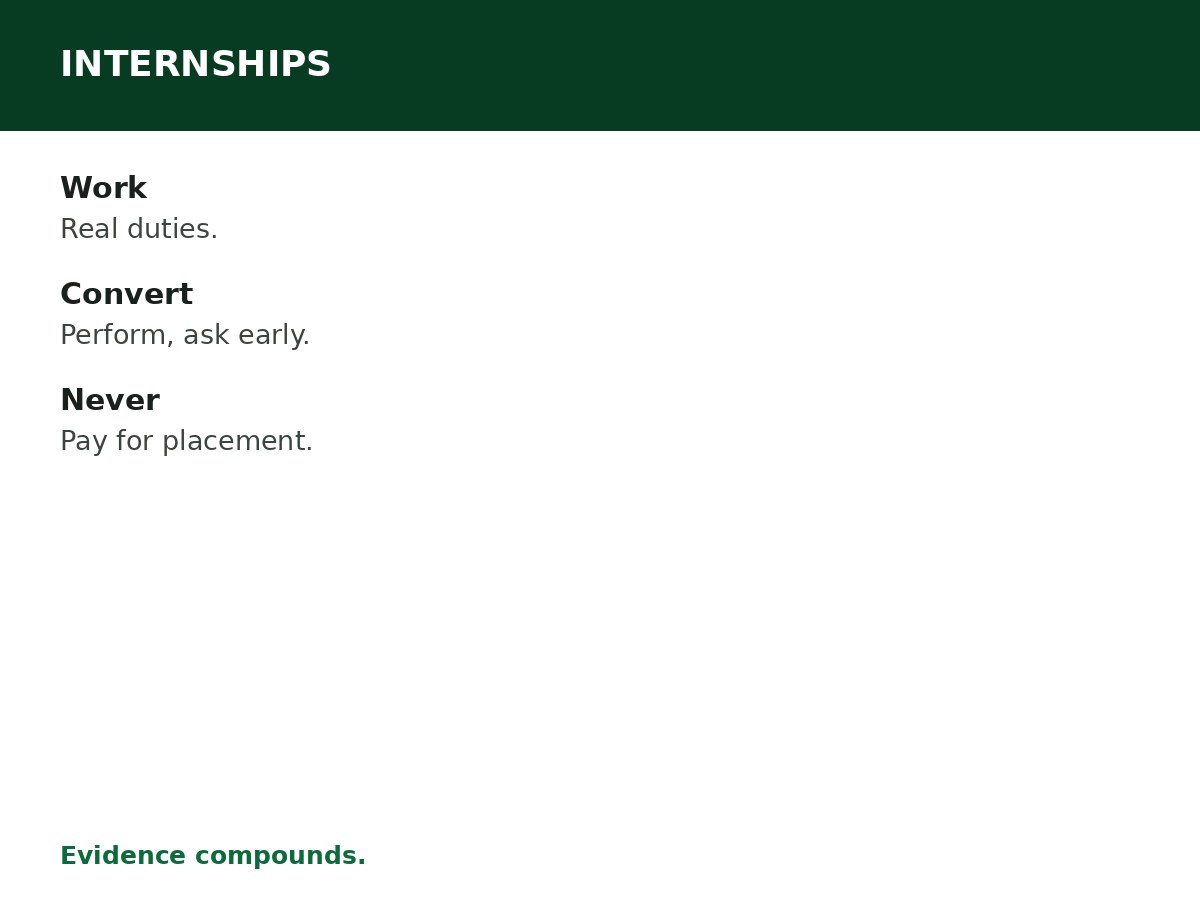
- Perform visibly — deliver work your supervisor can point to, and document it.
- Build relationships — your supervisor and team are your references and your internal advocates.
- Ask early — ask about conversion timelines and headcount before your internship ends, not after.
- Keep evidence — a portfolio of internship work is the strongest asset for your next application, converted or not.
Internship scams
- Placement fees — any internship charging for placement is a scam.
- Unpaid labour dressed as internship — an ‘internship’ with full-time duties, no supervisor, no learning, and no stipend is exploitation.
- Fake employers — verify the employer’s registration, office, and career page before starting.
Related Guides & Next Steps
- Graduate Jobs in Nigeria 2026
- Graduate Trainee Programmes in Nigeria
- Companies Hiring Fresh Graduates
- Work-from-Home Jobs in Nigeria
Frequently asked questions
What is a paid internship? A fixed-term (typically 3–12 months), paid work placement with real duties, a supervisor, and a stipend, run by companies, NGOs, and government agencies.
How long do paid internships last? Typically 3 to 12 months, as the employer states, with a defined role and supervisor.
Do paid internships lead to permanent jobs? Often, but not guaranteed — conversion depends on performance, headcount, and timing. Ask about conversion timelines before your internship ends.
Where do I find paid internships in Nigeria? Employer career pages, job boards filtered for internships, university career services and SIWES offices, and direct outreach with a specific offer.
Should I pay for an internship placement? No — any internship charging for placement is a scam. Real internships pay you or cost you nothing.
Sources and last update
- Job market conditions, salaries, and vacancy availability change constantly — no salary figure, vacancy count, or hiring outcome is asserted anywhere in this article, deliberately. Employer career pages and reputable job boards, checked at application time, govern.
- Scam patterns: application fees, training fees, payment to personal accounts, and guaranteed jobs are red flags — legitimate employers do not charge to apply.
- No job, internship, or trainee-place outcome is promised anywhere in this article.
Last updated: 24 October 2026. Guide — review every 3–6 months, and on major labour-market shifts.

Written by Olaitan Ilori
Olaitan Ilori is the founder and lead researcher at CareerMedal. He provides verified, practical guides on Nigerian tertiary admissions (JAMB, CAPS, Post-UTME), NELFUND student finance, NYSC service-year survival, and early-career job placement.
View all guides by Olaitan Ilori →