
Explaining a career gap in an interview means stating, honestly and briefly, what the gap was, what you did during it, and why you are ready now — without over-explaining, apologising excessively, or inventing cover stories. This guide covers career gaps specifically, distinct from the common-questions guide (which covers interview questions broadly) and the prepare-for-interview guide (which covers preparation).
What counts as a career gap
- Employment gaps — periods without paid work, between roles, after graduation, or after NYSC, as employers state.
- Study and training gaps — periods in study, training, or skill-building, which are productive gaps, not empty gaps, where explained with evidence.
- Personal gaps — health, family, and personal circumstances, which need brief, honest explanations, without excessive detail, as interviewers state.
- Gaps are common — gaps, honestly explained, are normal, as employers state. Unexplained gaps, or invented cover stories, raise questions, not gaps themselves.
How to explain a gap
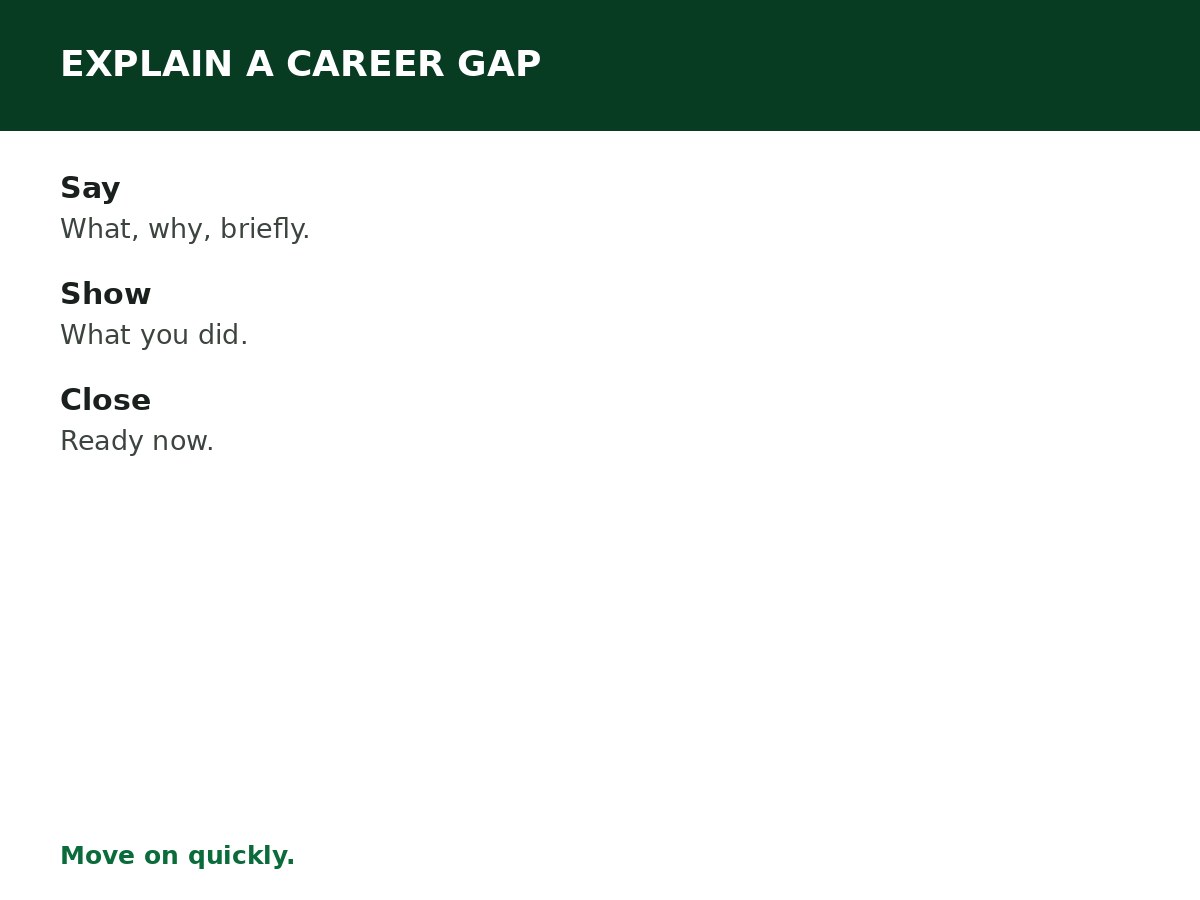
- Brief and honest — 2–3 sentences, on what the gap was, and why, honestly, without excessive detail or apology.
- What you did during the gap — study, training, projects, volunteer work, and skills, built during the gap, with evidence, for employer relevance.
- Why you are ready now — current skills, motivation, and fit, for this role, in 1–2 sentences, linking the gap to present readiness.
- Move on quickly — gap explanation, brief, then conversation moved to strengths and role fit, not dwelled on, as interviewers state.
Gap explanations by type (original, adaptable)
- Study gap — ‘After graduation, I spent [Period] building [Skill] through [Course/Project], before applying for roles where I can use it.’
- Job-search gap — ‘Since [NYSC/Graduation], I have been applying for entry-level roles, while building [Skill] through [Project], and I am now ready for [Role].’
- Personal gap — ‘I took [Period] for personal reasons, during which I [Study/Project, where relevant], and I am now ready to return to work.’
- Adapt honestly — examples are structures, not cover stories. Adapt wording to your gap, honestly, for every interview.
Gap mistakes
- Invented cover stories — invented jobs, courses, or employers, covering gaps, are fraud, and background checks expose them.
- Over-explaining — long, detailed gap stories, with excessive personal detail, diverting interviews from strengths and role fit.
- Excessive apology — repeated apologies, for gaps, signalling insecurity, as interviewers state. State briefly, honestly, then move on.
- Blaming past employers — criticising past employers, for gaps, signalling risk, as interviewers state. State facts neutrally, where asked.
Related Guides & Next Steps
- How to Write a CV With No Work Experience
- How to Follow Up After an Interview
- How to Negotiate Salary as a Graduate
- How to Answer Why Should We Hire You?
Frequently asked questions
How do I explain a career gap in an interview? Briefly and honestly, in 2–3 sentences: what the gap was, what you did during it (study, training, projects, skills, with evidence), and why you are ready now — then move on to strengths and role fit.
Should I invent a cover story for a gap? No — invented jobs, courses, or employers, covering gaps, are fraud, and background checks expose them.
How much detail should I give about a personal gap? Brief, honest detail, without excessive personal detail, as interviewers state. State what the gap was, what you did, and why you are ready now, then move on.
Are career gaps a problem for employers? Gaps, honestly explained, are normal, as employers state. Unexplained gaps, or invented cover stories, raise questions, not gaps themselves.
Should I apologise repeatedly for a gap? No — repeated apologies, for gaps, signal insecurity, as interviewers state. State briefly, honestly, then move on.
Sources and last update
- No salary figure, vacancy count, or hiring outcome is asserted anywhere in this article, deliberately — employer career pages and reputable boards, checked at application time, govern.
- No company is named as currently hiring anywhere in this article, deliberately — hiring windows open and close; employer career pages govern.
- Scam patterns: fees for jobs, payment to personal accounts, guaranteed jobs or shortlisting, and interview coaching selling fake experience are red flags — verify every employer on official channels before applying or paying anything.
- No job, shortlisting, salary, or hiring outcome is promised anywhere in this article.
Last updated: 24 October 2026. Guide — review every 6–12 months, and on every major hiring-platform change.

Written by Olaitan Ilori
Olaitan Ilori is the founder and lead researcher at CareerMedal. He provides verified, practical guides on Nigerian tertiary admissions (JAMB, CAPS, Post-UTME), NELFUND student finance, NYSC service-year survival, and early-career job placement.
View all guides by Olaitan Ilori →