

Choosing a final-year project topic means picking a researchable, feasible topic — interesting to you, acceptable to your department, and doable within time and resources. This guide covers topic selection, distinct from the proposal guide (which covers approval) and the full-project guide (which covers writing).
How to choose
- List interests — course topics, that interested you, listed, as the starting evidence, as students report.
- Check department areas — department research areas, and supervisor interests, checked, as departments state. Topics, outside department areas, harder to supervise.
- Test feasibility — data availability, time, and resources, tested, as supervisors state. Infeasible topics, unfinishable projects.
- Narrow to a gap — broad interests, narrowed to specific gaps, as the method states. Broad topics, unmanageable; narrow topics, doable.
- Discuss with supervisors — shortlisted topics, discussed with potential supervisors, before committing, as departments state.
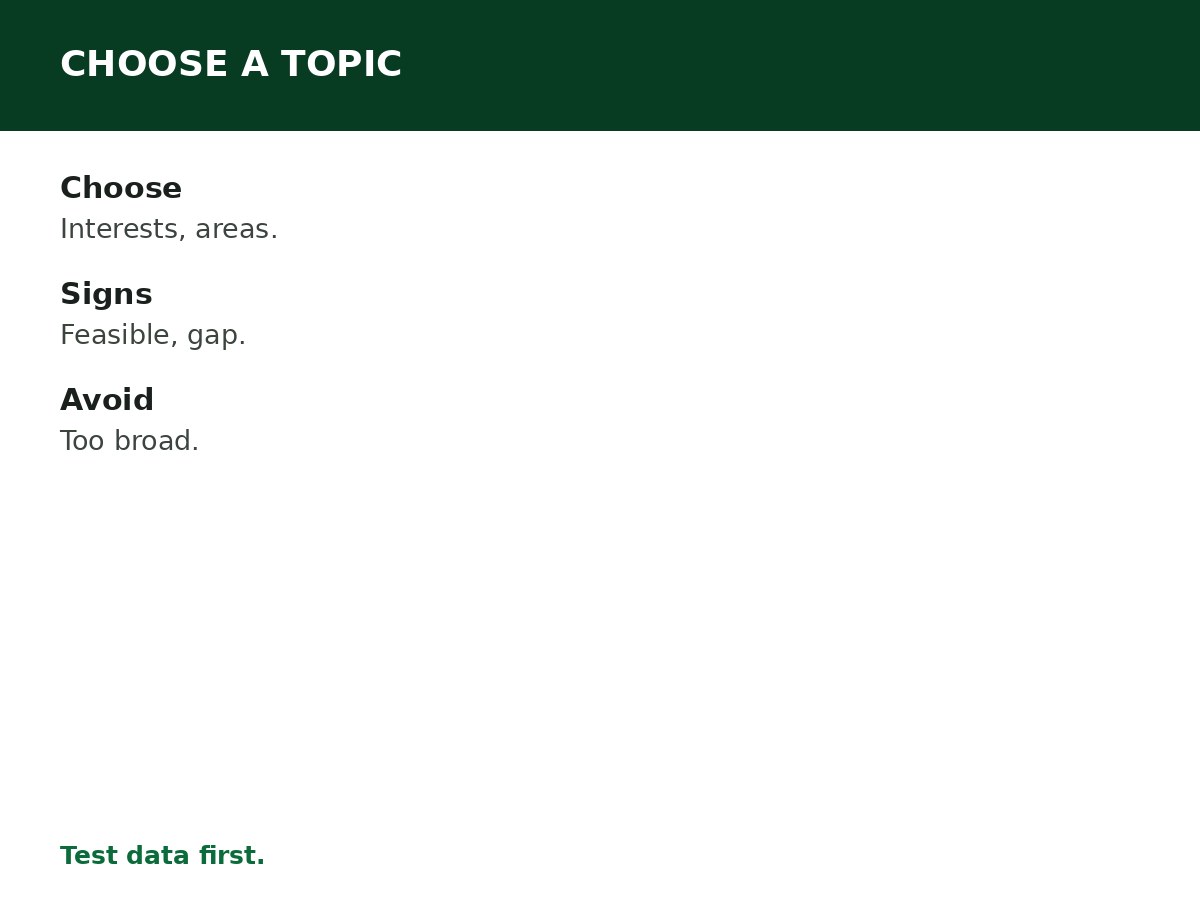
Good topic signs
- Researchable — questions, answerable with available data and methods, as supervisors state.
- Feasible — scope, doable within time and resources, as supervisors state.
- Department-acceptable — topics, within department areas, as departments state.
- Interesting to you — topics, sustaining months of work, as students report. Boring topics, abandoned effort.
Topic mistakes
- Too broad — broad topics, unmanageable within time, as supervisors state. Narrow, specifically.
- No data — topics, without available data, as supervisors state, unfinishable. Test data, before committing.
- Copying past topics — past topics, copied without new angles, as departments state, weak projects. New gaps, or new contexts, needed.
- No supervisor discussion — topics, chosen without supervisor input, as departments state, rejected or unsupported.
Related Guides & Next Steps
- Cost of Living for Nigerian University Students
- How to Defend a Final-Year Project
- How to Prepare for Oral Presentations
- How to Write a Final-Year Project
Frequently asked questions
How do I choose a final-year project topic? By listing interests, checking department areas and supervisor interests, testing feasibility (data, time, resources), narrowing to a specific gap, and discussing shortlisted topics with supervisors before committing.
What makes a good project topic? Researchable (answerable with available data), feasible (doable within time/resources), department-acceptable, and interesting enough to sustain months of work, as supervisors state.
Should I discuss topics with supervisors first? Yes — shortlisted topics, discussed with potential supervisors, before committing, as departments state. Topics chosen without supervisor input risk rejection.
What is the biggest topic mistake? Too-broad topics, unmanageable within time, or topics without available data, as supervisors state. Narrow specifically, and test data before committing.
Can I copy a past project topic? Not without a new angle — past topics, copied without new gaps or contexts, as departments state, make weak projects.
Sources and last update
- No grade, admission, or academic outcome is promised anywhere in this article — results depend on study, department standards, and assessment, as institutions state.
- No plagiarism, impersonation, or bought-work route is recommended anywhere in this article — copying without citation, and submitting bought work, risk discipline, as institutions state.
- Department notices, course outlines, and supervisor guidance govern for each course and project — this guide is general method, not department-specific requirements.
Last updated: 24 October 2026. Guide — review every 6–12 months, and at the start of each academic session.

Written by Olaitan Ilori
Olaitan Ilori is the founder and lead researcher at CareerMedal. He provides verified, practical guides on Nigerian tertiary admissions (JAMB, CAPS, Post-UTME), NELFUND student finance, NYSC service-year survival, and early-career job placement.
View all guides by Olaitan Ilori →