
Changing careers in Nigeria means moving, with evidence and planning, from one field to another — through transferable skills, new learning, and proof, not impulsive jumps. This guide covers career changes specifically, distinct from the choose-career guide (which covers initial choice) and the skill guides (which cover learning).
How to change careers
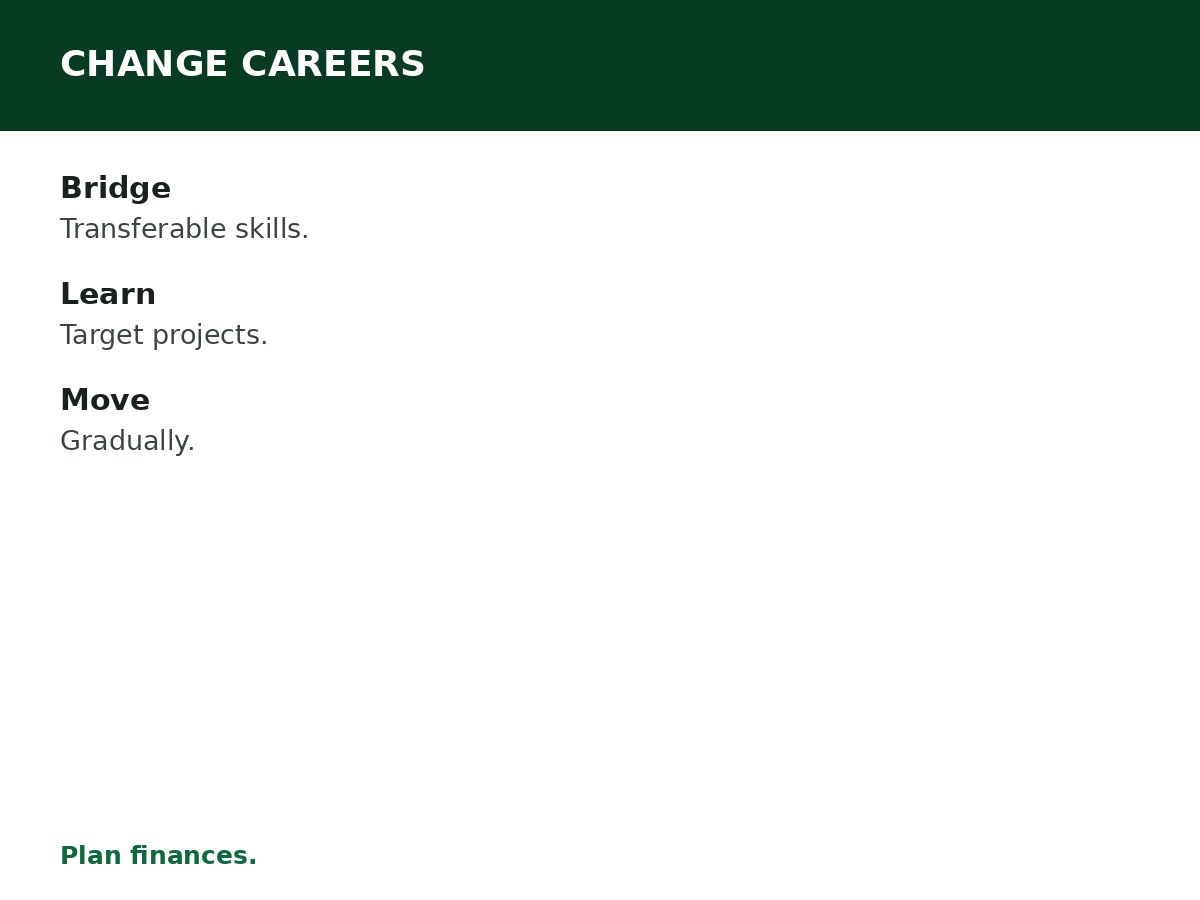
- Identify transferable skills — skills from your current field, valuable in the target field (communication, analysis, management, technical skills), as the starting bridge.
- Learn target-field skills — short courses with projects, building target-field skills with evidence, not certificates alone, as the skill guides cover.
- Build target-field proof — projects, freelance gigs, and volunteer work, in the target field, demonstrating skill, for employer trust, as the portfolio guide covers.
- Apply with tailored CVs — CVs highlighting transferable skills and target-field proof, not current-field history alone, as the CV guides cover.
- Transition gradually, where possible — side projects, part-time work, and internal moves, testing target fields, before full switches, where possible, as the market states.
Career change mistakes
- Impulsive jumps without proof — switches without transferable skills, learning, or proof, losing to proof-based applicants, as employers state.
- Starting from zero — discarding all current-field experience, instead of bridging transferable skills, wasting years, as the market states.
- No financial planning — switches without savings or income plans, risking income gaps, as the market states. Plan finances, before switching, where possible.
- Chasing trends without fit — trending fields, pursued without interest or aptitude, abandoned after months, as the market states.
If a career change is slow
- Keep building proof — projects, freelance, and volunteer work, in the target field, while applying, for stronger later applications.
- Seek mentorship — mentors, in the target field, for guidance and introductions, as the mentor guide covers.
- Review and adjust — progress, enjoyment, and market fit, reviewed regularly, with direction adjusted, where evidence points elsewhere.
Related Guides & Next Steps
- How to Write a CV With No Work Experience
- Workplace Skills Every Graduate Should Learn
- How to Choose a Career After University
Frequently asked questions
How do I change careers in Nigeria? By identifying transferable skills, learning target-field skills with projects, building target-field proof (projects, freelance, volunteer work), applying with tailored CVs, and transitioning gradually, where possible.
Should I discard my current-field experience when changing careers? No — discarding all current-field experience, instead of bridging transferable skills, wastes years, as the market states. Bridge transferable skills to the target field.
Should I plan finances before changing careers? Yes, where possible — switches without savings or income plans risk income gaps, as the market states. Plan finances, before switching.
Can I change careers gradually? Yes, where possible — side projects, part-time work, and internal moves, testing target fields, before full switches, as the market states.
What if my career change is slow? Keep building proof (projects, freelance, volunteer work), seek mentorship in the target field, and review progress, enjoyment, and market fit regularly, adjusting direction where evidence points elsewhere.
Sources and last update
- No salary figure, vacancy count, or hiring outcome is asserted anywhere in this article, deliberately — employer career pages and reputable boards, checked at application time, govern.
- No company is named as currently hiring anywhere in this article, deliberately — hiring windows open and close; employer career pages govern.
- Scam patterns: fees for jobs, payment to personal accounts, guaranteed jobs or placements, and career coaching selling fake credentials are red flags — verify every employer and programme on official channels before applying or paying anything.
- No job, salary, placement, or hiring outcome is promised anywhere in this article.
Last updated: 24 October 2026. Guide — review every 6–12 months, and on every major hiring-platform change.

Written by Olaitan Ilori
Olaitan Ilori is the founder and lead researcher at CareerMedal. He provides verified, practical guides on Nigerian tertiary admissions (JAMB, CAPS, Post-UTME), NELFUND student finance, NYSC service-year survival, and early-career job placement.
View all guides by Olaitan Ilori →