

Asking for a salary increase means making a calm, evidence-based case — results, market research, and timing — to your manager, not demanding, threatening, or apologising. This guide covers salary-increase requests specifically, distinct from the negotiate-salary guide (which covers negotiation after offers) and the expected-salary guide (which covers interview salary questions).
When to ask
- After results, not feelings — measurable results, completed projects, and expanded responsibilities, as the case basis, not tenure alone, as employers state.
- At review cycles, where possible — performance reviews, and budget cycles, as employers state, for timing, where known.
- After market research — typical pay, for the role and level, as the market states, through reputable salary surveys, job boards, and professional contacts, checked at request time.
- No figure asserted here — no specific salary figure is asserted in this guide, deliberately, since pay varies by role, sector, location, and experience. Research, at request time, governs.
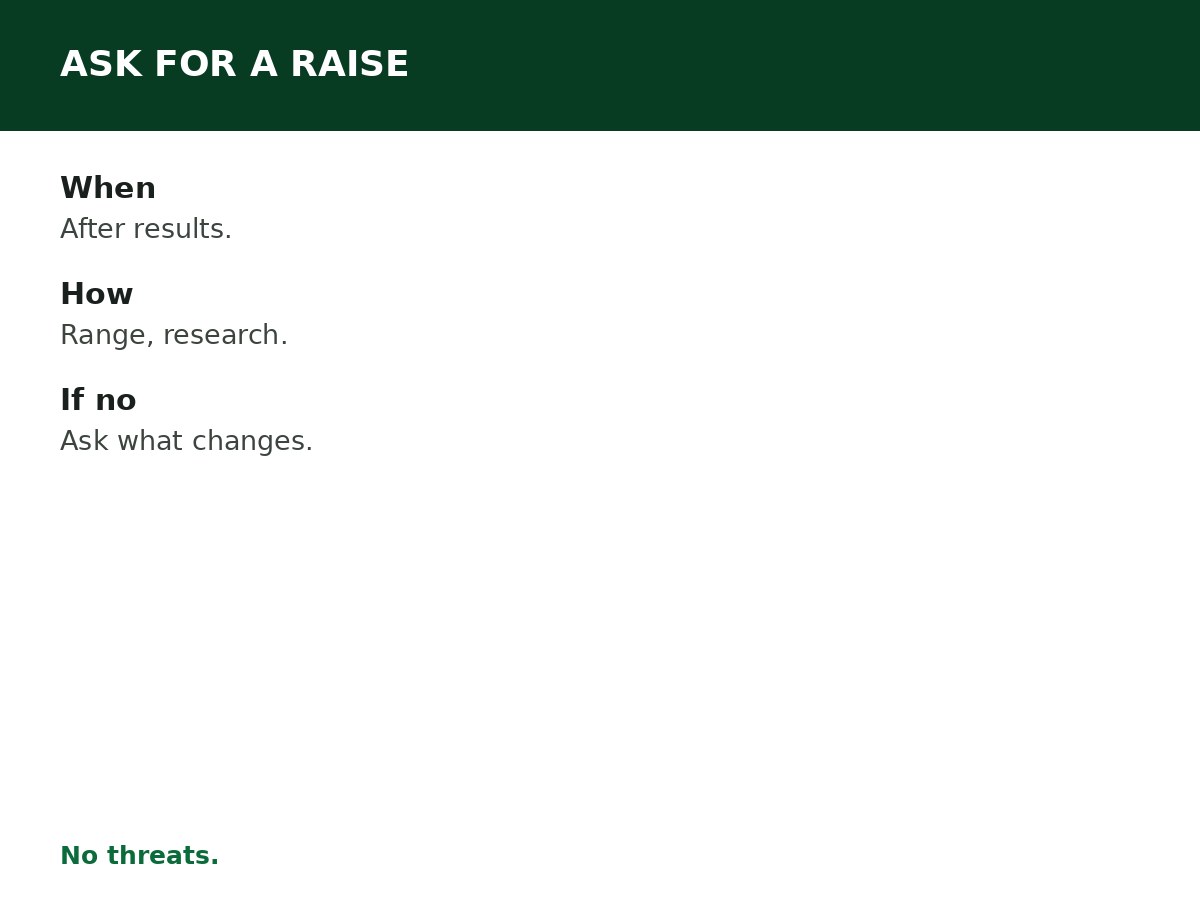
How to ask
- Request a meeting — a private meeting, with your manager, requested professionally, not a corridor demand.
- State results first — results, projects, and responsibilities, with evidence, before figures, for credibility.
- Cite market research briefly — role, level, and market research, cited briefly, for context, not bare demands.
- Propose a range, not a demand — a range, with your target near the top, showing flexibility, as employers state.
- Listen and consider — manager response, heard fully, before replying, for professional conduct.
If the answer is no
- Ask what would change it — results, skills, or timelines, that would support a future increase, as employers state, for a clear path.
- Consider package levers — training, certifications, reviews, and growth paths, negotiable where salary is fixed, as employers state.
- Decide calmly — stay, grow, or move, decided calmly, without threats or ultimatums, as the market states.
- Document the conversation — request, response, and agreed next steps, noted privately, for future reviews.
Mistakes to avoid
- Threats and ultimatums — ‘pay me or I leave’, harming relationships, as employers state, especially without alternatives.
- Comparing colleagues’ pay — colleagues’ pay, cited in requests, breaching confidentiality and trust, as employers state.
- Apologising for asking — salary discussion is normal, professional, and expected, as employers state. Ask calmly, without apology.
- Asking without evidence — requests without results or research, losing credibility, whatever the tenure.
Related Guides & Next Steps
- How to Write a CV With No Work Experience
- How to Write a Resignation Letter
- How to Write a Leave Request
- How to Negotiate Salary as a Graduate
Frequently asked questions
How do I ask for a salary increase? By requesting a private meeting, stating results first with evidence, citing market research briefly, proposing a flexible range, and listening fully — calmly, not demanding, threatening, or apologising.
When should I ask for a salary increase? After measurable results and expanded responsibilities, at review cycles where possible, and after market research — not on tenure alone, as employers state.
What salary increase should I ask for? No specific figure is asserted here, deliberately — pay varies by role, sector, location, and experience. Research, at request time, through reputable salary surveys, job boards, and professional contacts, governs.
What if my salary increase request is denied? Ask what would change it (results, skills, timelines), consider package levers (training, certifications, growth), document the conversation, and decide calmly — without threats or ultimatums.
Should I threaten to leave to get a raise? No — threats and ultimatums harm relationships, as employers state, especially without alternatives.
Sources and last update
- No salary figure, vacancy count, or hiring outcome is asserted anywhere in this article, deliberately — employer career pages and reputable boards, checked at application time, govern.
- No company is named as currently hiring anywhere in this article, deliberately — hiring windows open and close; employer career pages govern.
- Scam patterns: fees for jobs, payment to personal accounts, guaranteed jobs or placements, and mentorship or networking schemes selling access are red flags — verify every employer and programme on official channels before applying or paying anything.
- No job, salary, placement, or hiring outcome is promised anywhere in this article.
Last updated: 24 October 2026. Guide — review every 6–12 months, and on every major hiring-platform change.

Written by Olaitan Ilori
Olaitan Ilori is the founder and lead researcher at CareerMedal. He provides verified, practical guides on Nigerian tertiary admissions (JAMB, CAPS, Post-UTME), NELFUND student finance, NYSC service-year survival, and early-career job placement.
View all guides by Olaitan Ilori →