

Career options for arts students are careers where humanities, languages, history, and creative skills — writing, analysis, communication, and culture — are the core value, not a fallback. This guide groups arts careers by type, without ranking them, since ‘best’ depends on interests, skills, and markets, not on any official ranking.
Careers grouped by type
- Writing and media — journalism, content writing, editing, publishing, and broadcasting, as the market states, judged by portfolios and published work.
- Education and research — teaching, lecturing, and research, as institutions state, with TRCN registration where teaching requires it, as the Jobs cluster covers.
- Culture and heritage — museums, archives, tourism, and cultural organisations, as the market states, judged by knowledge and projects.
- Creative industries — film, theatre, music, design, and advertising, as the market states, judged by portfolios and reputation.
- Public service and NGOs — government, diplomacy, and NGO roles, as announcements state, judged by qualifications and experience.
- No ranking asserted — careers are grouped by type, not ranked. ‘Best’ depends on interests, skills, and markets, not on any official ranking.
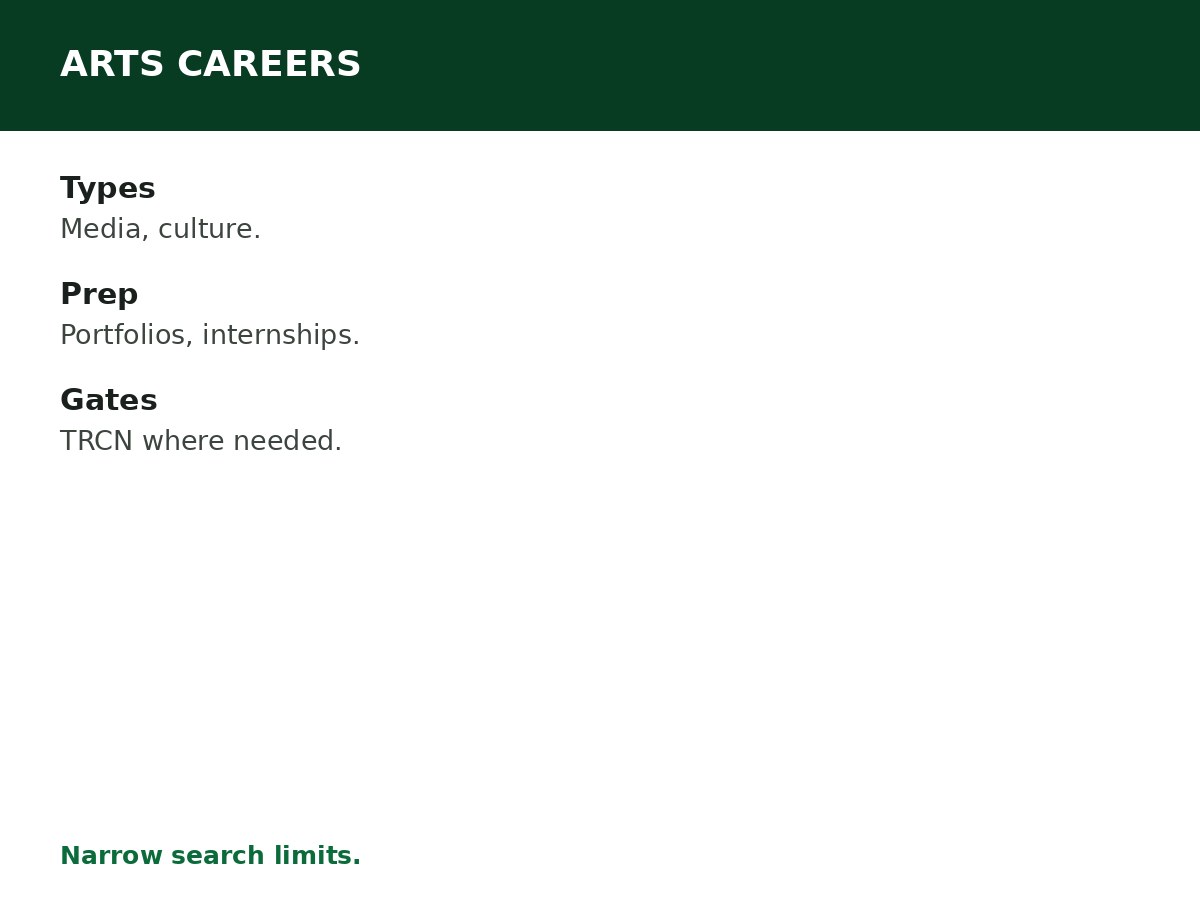
How arts students should prepare
- Build portfolios early — writing samples, published work, projects, and performances, demonstrating skill, for employer trust, as the portfolio guide covers.
- Internships and volunteer work — media houses, NGOs, schools, and cultural organisations, for workplace experience and references, as the market states.
- Digital skills alongside — content, social media, and digital tools, learned alongside arts degrees, for broader employability, as the digital guides cover.
- Professional gates where required — TRCN for teaching, and other professional registrations, where roles require them, as the relevant bodies state, checked before applying.
Arts career myths
- ‘Arts degrees have no jobs’ — arts graduates work across media, education, culture, creative industries, public service, and NGOs, as the market states. Narrow job searches, not arts degrees, limit options.
- ‘Arts careers pay poorly’ — pay varies by role, sector, location, and experience, as the market states. No specific pay figure is asserted here, deliberately.
- ‘Arts students should switch to tech’ — tech skills complement arts degrees, as the digital guides cover, but do not replace arts expertise, where arts careers are the goal.
Related Guides & Next Steps
- How to Write a CV With No Work Experience
- Career Options for Science Students
- Career Options for Commercial Students
- How to Transition From NYSC to Employment
Frequently asked questions
What career options do arts students have? Writing and media, education and research, culture and heritage, creative industries, and public service and NGOs — grouped by type, not ranked, since ‘best’ depends on interests, skills, and markets.
How should arts students prepare for careers? By building portfolios early, taking internships and volunteer work, learning digital skills alongside degrees, and meeting professional gates (TRCN for teaching) where roles require them.
Do arts degrees have no jobs? No — arts graduates work across media, education, culture, creative industries, public service, and NGOs, as the market states. Narrow job searches, not arts degrees, limit options.
Should arts students switch to tech? Tech skills complement arts degrees, as the digital guides cover, but do not replace arts expertise, where arts careers are the goal.
Do arts careers pay poorly? Pay varies by role, sector, location, and experience, as the market states. No specific pay figure is asserted here, deliberately.
Sources and last update
- No salary figure, vacancy count, or hiring outcome is asserted anywhere in this article, deliberately — employer career pages and reputable boards, checked at application time, govern.
- No company is named as currently hiring anywhere in this article, deliberately — hiring windows open and close; employer career pages govern.
- Scam patterns: fees for jobs, payment to personal accounts, guaranteed jobs or placements, and career coaching selling fake credentials are red flags — verify every employer and programme on official channels before applying or paying anything.
- No job, salary, placement, or hiring outcome is promised anywhere in this article.
Last updated: 24 October 2026. Guide — review every 6–12 months, and on every major hiring-platform change.

Written by Olaitan Ilori
Olaitan Ilori is the founder and lead researcher at CareerMedal. He provides verified, practical guides on Nigerian tertiary admissions (JAMB, CAPS, Post-UTME), NELFUND student finance, NYSC service-year survival, and early-career job placement.
View all guides by Olaitan Ilori →