

Remote jobs for Nigerians mean working for employers anywhere in the world, from Nigeria — international clients, global companies, and distributed teams, paid in foreign currency or naira, with location-independent duties. They are real, competitive, and skill-gated: the barrier is not location, it is proof of ability. This guide explains the remote market, the skills that win, and the scams that infest it.
What remote work looks like
- International freelance — writing, design, development, data, marketing, and virtual assistance, for clients abroad, through platforms and direct relationships.
- Distributed company roles — full-time or contract roles with global companies, working remotely from Nigeria.
- Outsourcing and BPO — customer support, data processing, and operations roles, run remotely for international clients.
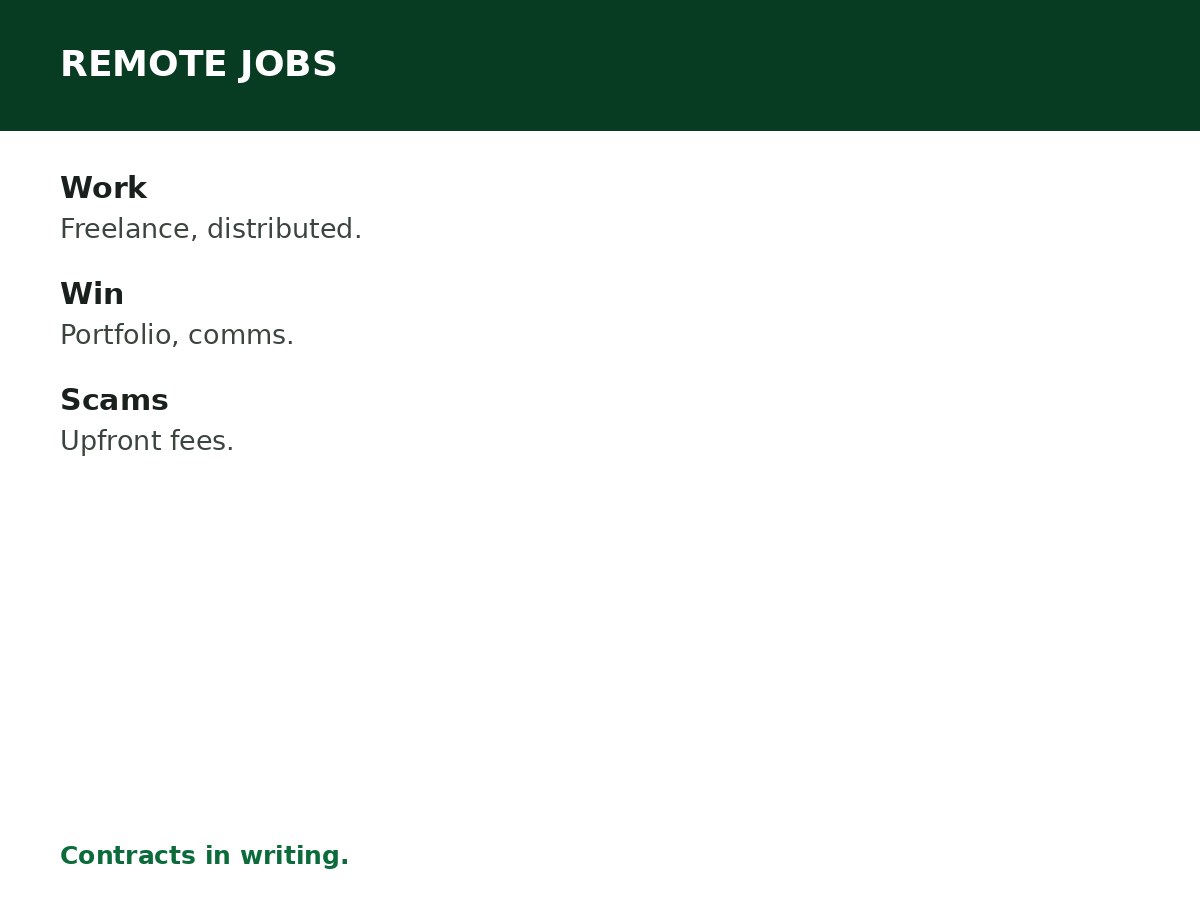
- Not location-free money — remote work still requires skills, delivery, deadlines, and communication. The location freedom is real; the effort freedom is not.
Skills that win remote roles
- Demonstrable output — a portfolio, a GitHub profile, published work, or client testimonials. Remote employers hire on proof, not certificates.
- Communication — clear written English, responsive messaging, and reliable video-call presence. Remote work is communication work.
- Reliable infrastructure — power backup, internet redundancy, and a working device. Remote employers drop unreliable contractors quickly.
- Time discipline — remote roles run on deadlines and time zones, not supervision. Self-management is the core skill.
Where to find remote work
- Freelance platforms — Upwork, Fiverr, and similar platforms, where profiles, portfolios, and ratings compound over time.
- Remote job boards — boards listing distributed roles, checked directly, not via forwarded links.
- Direct outreach — pitching companies and clients directly, with a portfolio and a specific offer, beats mass applications.
- Communities — Nigerian remote-work communities share leads, but verify every lead before committing.
Remote-work scams
- Upfront fees — any remote ‘job’ asking for registration, training, or equipment fees is a scam.
- Fake clients — clients who overpay and ask for refunds, or who ask for personal bank details, are running fraud.
- Unpaid trial work — trial tasks that become free labour. Cap trial work, and walk away from endless ‘tests’.
- Payment promises without contracts — agree rates, deliverables, and payment terms in writing before starting work.
Related Guides & Next Steps
- Graduate Jobs in Nigeria 2026
- Work-from-Home Jobs in Nigeria
- Paid Internships in Nigeria
- Jobs for University Students in Nigeria
Frequently asked questions
Can Nigerians work remotely for foreign companies? Yes — international freelance, distributed company roles, and outsourcing work are all open to Nigerians, gated by demonstrable skill, not location.
What skills do remote jobs require? Demonstrable output (portfolio, published work), clear communication, reliable power and internet, and time discipline — remote employers hire on proof.
Where do Nigerians find remote jobs? Freelance platforms, remote job boards, direct outreach with a portfolio, and vetted communities — verifying every lead before committing.
Do remote jobs pay in dollars? Some do, some pay in naira — agree currency, rate, deliverables, and payment terms in writing before starting work.
Are there fake remote jobs? Yes, extensively — upfront fees, fake clients, unpaid trial work, and payment promises without contracts are the red flags.
Sources and last update
- Job market conditions, salaries, and vacancy availability change constantly — no salary figure, vacancy count, or hiring outcome is asserted anywhere in this article, deliberately. Employer career pages and reputable job boards, checked at application time, govern.
- Scam patterns: application fees, training fees, payment to personal accounts, and guaranteed jobs are red flags — legitimate employers do not charge to apply.
- No job, internship, or trainee-place outcome is promised anywhere in this article.
Last updated: 24 October 2026. Guide — review every 3–6 months, and on major labour-market shifts.

Written by Olaitan Ilori
Olaitan Ilori is the founder and lead researcher at CareerMedal. He provides verified, practical guides on Nigerian tertiary admissions (JAMB, CAPS, Post-UTME), NELFUND student finance, NYSC service-year survival, and early-career job placement.
View all guides by Olaitan Ilori →