
Verifying a recruitment shortlist means confirming that a list claiming to be a shortlist is genuinely the recruiting agency’s publication — not a fake list designed to harvest fees, documents, or attendance at fake screenings. This guide covers fake-shortlist defence specifically, distinct from shortlist checking (how to find your name) and status checking (in-process applications).
How fake shortlists work
- Fabricated lists — names copied from applicants, or invented, circulated in groups and on fake sites, with payment demands for ‘confirmation’ or ‘screening’.
- Altered lists — genuine shortlists edited to add or remove names, circulated with altered instructions directing candidates to scammers.
- Fake screening invitations — invitations tied to fake lists, directing candidates to unofficial venues, or demanding payment for screening, documentation, or training.
- Fee extraction — every fake shortlist ends in a fee: confirmation, documentation, medical, training, or ‘processing’ fees, to personal accounts.
Verifying a shortlist
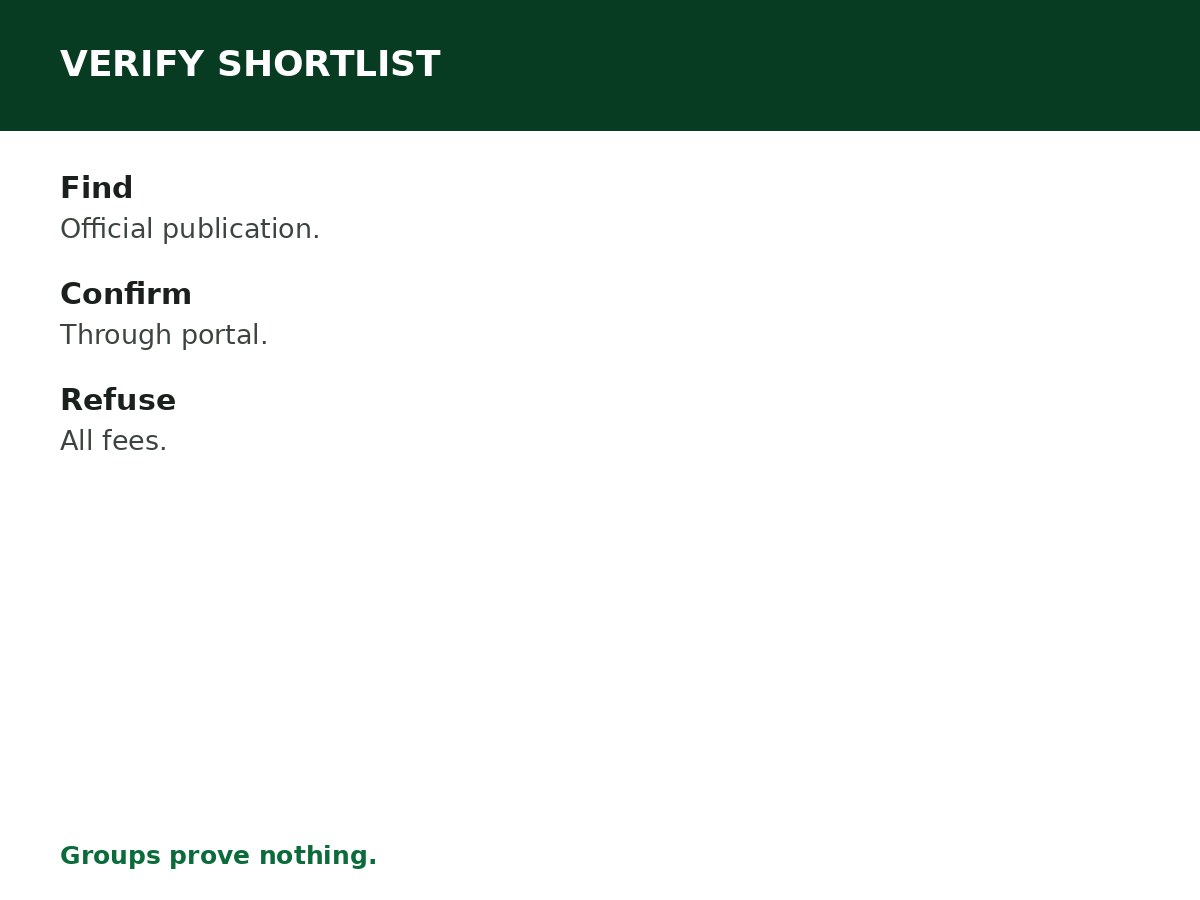
- Find the list on the agency’s official portal or channel, typed directly. A shortlist that exists only in groups, on fake sites, or in forwarded messages is unverified.
- Compare the publication — list format, stage, date, and instructions should match the agency’s official publication style and the recruitment announcement. Mismatches are red flags.
- Confirm your entry through the portal — log in to the official portal and confirm your status, rather than trusting a circulated list alone.
- Confirm screening instructions officially — venues, dates, documents, and dress requirements come from the official publication, not from group messages or callers.
- Refuse all fees — genuine shortlists never require payment for inclusion, confirmation, screening, or documentation. Any fee demand proves the list is fake.
If you acted on a fake shortlist
- Stop all payments and contact immediately — do not pay any further fee, whatever the threat or promise.
- Do not attend unofficial screenings — fake venues are used for extortion and, in some cases, physical risk. Attend only officially published venues.
- Report the fake list — report to the impersonated agency through its official contact, and to relevant authorities, so others are warned.
- Re-verify properly — check your genuine status on the official portal, typed directly, and follow official instructions only.
Related Guides & Next Steps
- Federal Government Recruitment 2026: How to Verify Openings
- Government Recruitment FAQs for Nigerian Applicants
- Government Recruitment Requirements Explained
- Common Government Recruitment Application Mistakes
- How to Check Recruitment Application Status
Frequently asked questions
How do I verify a recruitment shortlist? Find the list on the agency’s official portal or channel (typed directly), compare format, stage, date, and instructions with the official publication, confirm your entry through the portal, and refuse all fees — genuine shortlists never require payment.
Are shortlists in WhatsApp groups real? Not until confirmed — a shortlist existing only in groups, on fake sites, or in forwarded messages is unverified. Confirm on the agency’s official portal or channel.
Should I pay for shortlist confirmation? No — genuine shortlists never require payment for inclusion, confirmation, screening, or documentation. Any fee demand proves the list is fake.
What if a shortlist directs me to an unofficial venue? Do not attend — fake venues are used for extortion and physical risk. Attend only venues published on official channels.
What do I do if I acted on a fake shortlist? Stop all payments and contact immediately, do not attend unofficial screenings, report the fake list to the impersonated agency and relevant authorities, and re-verify on the official portal.
Sources and last update
- No agency is named as currently recruiting anywhere in this article, deliberately — recruitment windows open and close, and a frozen list misleads readers within months. Official portals and announcements, checked at application time, govern.
- No salary figure, vacancy count, or recruitment outcome is asserted anywhere in this article, deliberately. Official announcements and portals, checked at application time, govern.
- Scam patterns: ‘slot’ sellers, application fees, payment to personal accounts, and guaranteed appointments are red flags — government recruitment is free, and runs through official portals only.
- No appointment, shortlisting, or recruitment outcome is promised anywhere in this article.
Last updated: 24 October 2026. Guide — review every 3–6 months, and on every official recruitment announcement.

Written by Olaitan Ilori
Olaitan Ilori is the founder and lead researcher at CareerMedal. He provides verified, practical guides on Nigerian tertiary admissions (JAMB, CAPS, Post-UTME), NELFUND student finance, NYSC service-year survival, and early-career job placement.
View all guides by Olaitan Ilori →