
Following up after a job application means contacting the employer, once, politely, at the right time, to confirm your application’s status — not chasing, spamming, or demanding a decision. This guide covers timing, method, and wording, and when not to follow up at all.
When to follow up
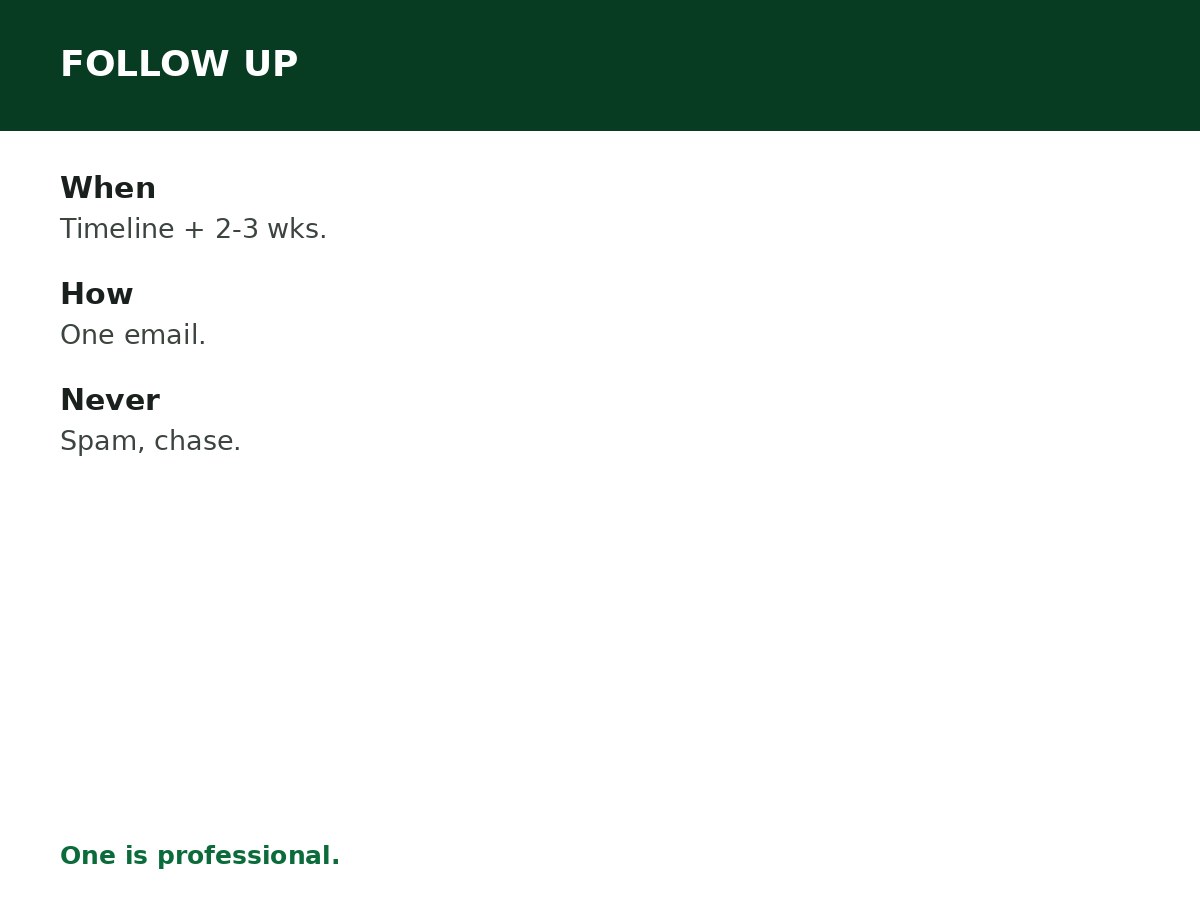
- After the stated timeline — if the employer stated a response timeline, wait until it passes, then follow up once.
- After 2–3 weeks of silence — if no timeline was stated, 2–3 weeks after application is a reasonable first follow-up point for structured pipelines.
- After an interview — a thank-you note within 24 hours, and a status check after the stated timeline, or after 1–2 weeks if none was stated.
- Never before the deadline — following up before the application deadline closes is premature. Employers review after deadlines, not during.
How to follow up
- One message, one channel — email to the employer’s official contact, or the portal’s messaging function, once. Not multiple channels, not repeated messages.
- Brief and polite — your name, the role, the date you applied, a reference number if you have one, and a single question: the status of your application.
- No demands, no guilt — do not demand a decision, complain about waiting, or imply the employer owes you a response. Politeness is the strategy.
- Accept silence — if one polite follow-up gets no response, the application has likely not progressed. Move on, and keep applying elsewhere.
When not to follow up
- Before the deadline or stated timeline — premature follow-ups irritate recruiters and do not speed decisions.
- Repeatedly — multiple follow-ups mark you as difficult, not keen. One follow-up is professional; five are not.
- Through personal contacts — do not contact employees personally to chase your application, unless they invited you to. Use official channels.
- After a rejection — accept rejections gracefully. A polite thank-you keeps the door open for future roles; arguing closes it.
Follow-up wording (template)
Subject: Application status — [Role title], applied [date]. Body: Dear [Recruitment team], I applied for [role title] on [date] (reference [number], if any). I would appreciate any update on the status of my application. Thank you for your consideration. Kind regards, [Your name, phone, email].
Related Guides & Next Steps
- Graduate Jobs in Nigeria 2026
- How to Find Graduate Trainee Opportunities
- Best Websites for Finding Jobs in Nigeria
- How to Apply for Jobs Online in Nigeria
Frequently asked questions
When should I follow up after a job application? After the employer’s stated timeline passes, or after 2–3 weeks of silence if none was stated — and after an interview, a thank-you within 24 hours, then a status check after the timeline or 1–2 weeks.
How do I follow up on a job application? One brief polite email to the employer’s official contact (or portal message): your name, role, application date, reference number if any, and a single question about status.
How many times should I follow up? Once — one polite follow-up is professional; repeated follow-ups mark you as difficult, not keen. If one follow-up gets no response, move on.
Should I follow up before the application deadline? No — employers review after deadlines, not during. Following up before the deadline is premature and does not speed decisions.
What should I do after a job rejection? Accept it gracefully — a polite thank-you keeps the door open for future roles; arguing closes it.
Sources and last update
- No company is named as currently hiring anywhere in this article, deliberately — hiring windows open and close, and a frozen company list misleads readers within months. Employer career pages, checked at application time, govern.
- No salary figure, vacancy count, or hiring outcome is asserted anywhere in this article, deliberately. Employer career pages and reputable job boards, checked at application time, govern.
- Scam patterns: application fees, training fees, payment to personal accounts, and guaranteed jobs are red flags — legitimate employers do not charge to apply.
- No job outcome is promised anywhere in this article.
Last updated: 24 October 2026. Guide — review every 3–6 months, and on major labour-market shifts.

Written by Olaitan Ilori
Olaitan Ilori is the founder and lead researcher at CareerMedal. He provides verified, practical guides on Nigerian tertiary admissions (JAMB, CAPS, Post-UTME), NELFUND student finance, NYSC service-year survival, and early-career job placement.
View all guides by Olaitan Ilori →