

Legitimate jobs in Nigeria are found through employer career pages, reputable job boards, and official recruitment channels — not through WhatsApp groups, repost accounts, and agents charging fees. This guide is the overview: where legitimate jobs live, how to search them, and the habits that keep you out of scams. The step-by-step verification checklist is in the verify-a-vacancy guide; the site-level red flags are in the fake-websites guide.
Where legitimate jobs live
- Employer career pages — the primary source. Every genuine opening from a structured employer is listed on its own career page, typed directly into your browser.
- Reputable job boards — boards that aggregate openings from employers, with employer verification, and that never charge applicants.
- Official recruitment channels — government recruitment through official portals and announcements (see the Government Recruitment cluster), and professional-body job boards where applicable.
- University career services — placement offices receiving employer notices, especially for trainee and internship pipelines.
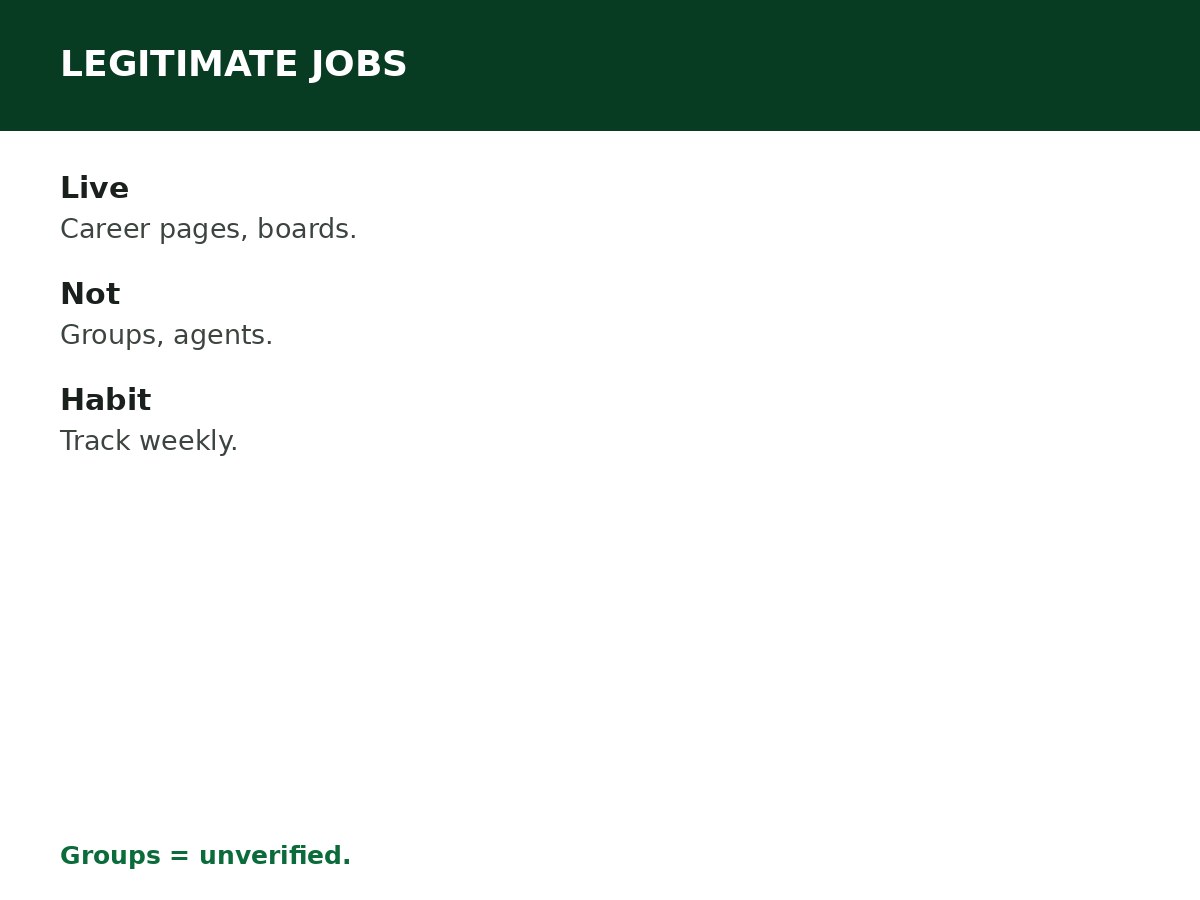
Where legitimate jobs do not live
- WhatsApp and Telegram groups alone — groups redistribute listings, including fakes, without verification. Treat any group listing as unverified until confirmed on the employer’s career page.
- Repost accounts — social media accounts copying job posts, often with altered contact details directing applicants to scammers.
- Agents charging fees — legitimate employers do not charge to apply, and do not hire through fee-charging agents for graduate roles.
- Personal contacts selling ‘slots’ — anyone selling a job slot is running a scam, whatever their claimed connection.
Search habits that work
- Bookmark career pages — the career pages of employers in your target sectors, checked weekly.
- Set board alerts — job alerts on reputable boards, filtered to your sectors and roles, checked daily.
- Verify before applying — every listing, every time, on the employer’s own page, before submitting personal details or documents.
- Track applications — a simple spreadsheet: employer, role, date applied, deadline, status. Organised applicants follow up better and miss fewer windows.
Related Guides & Next Steps
- Graduate Jobs in Nigeria 2026
- How to Verify a Job Vacancy Before Applying
- How to Avoid Fake Recruitment Websites
- Jobs Without Work Experience in Nigeria
Frequently asked questions
Where can I find legitimate jobs in Nigeria? Employer career pages, reputable job boards, official recruitment channels, and university career services — not WhatsApp groups, repost accounts, or fee-charging agents.
Are jobs on WhatsApp groups legitimate? Sometimes, but never trust a group listing alone — verify it on the employer’s own career page before applying or submitting personal details.
Should I pay an agent to find me a job? No — legitimate employers do not charge to apply, and do not hire through fee-charging agents for graduate roles. Anyone charging is running a scam.
How do I know a job board is reputable? It aggregates employer listings, verifies employers, never charges applicants, and links back to employer career pages. Boards charging applicants are suspect.
What is the best job search habit? Bookmarking employer career pages, checking them weekly, setting board alerts, and verifying every listing before applying.
Sources and last update
- No company is named as currently hiring anywhere in this article, deliberately — hiring windows open and close, and a frozen company list misleads readers within months. Employer career pages, checked at application time, govern.
- No salary figure, vacancy count, or hiring outcome is asserted anywhere in this article, deliberately. Employer career pages and reputable job boards, checked at application time, govern.
- Scam patterns: application fees, training fees, payment to personal accounts, and guaranteed jobs are red flags — legitimate employers do not charge to apply.
- No job outcome is promised anywhere in this article.
Last updated: 24 October 2026. Guide — review every 3–6 months, and on major labour-market shifts.

Written by Olaitan Ilori
Olaitan Ilori is the founder and lead researcher at CareerMedal. He provides verified, practical guides on Nigerian tertiary admissions (JAMB, CAPS, Post-UTME), NELFUND student finance, NYSC service-year survival, and early-career job placement.
View all guides by Olaitan Ilori →