
Choosing a career after university means matching degree, skills, interests, and markets — through exploration, trials, and evidence — not picking a lifelong label in one decision. This guide gives a method for post-university career choice, distinct from the skill-choice guide (which covers choosing a skill) and the career-options guides (which cover options by background).
The choice method
- List your degree strengths — subjects, projects, and skills, from your degree, that you enjoyed and performed well in, as the starting evidence.
- Explore career options — career-options guides, by background (arts, science, commercial), and by preference (introvert, technology, remote), for options, not one option.
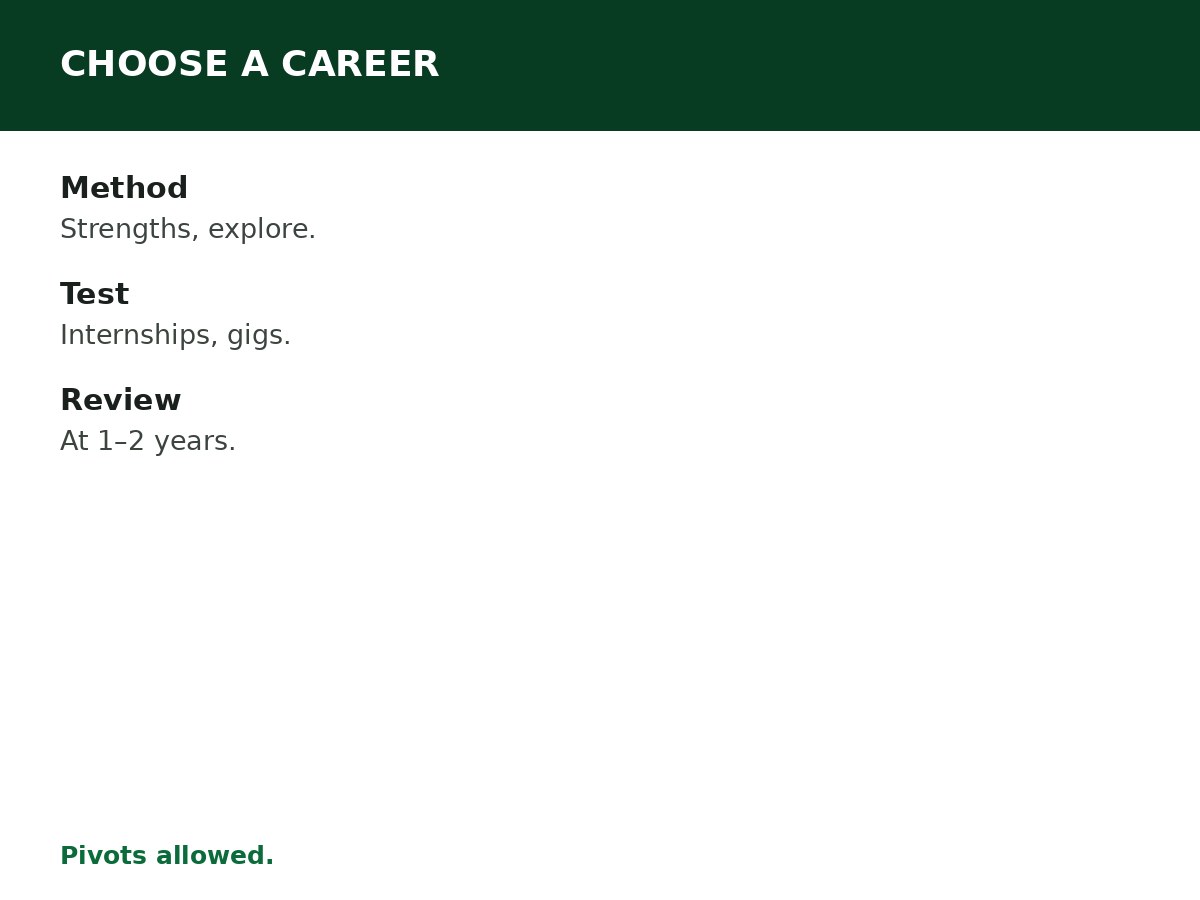
- Test cheaply — internships, volunteer work, freelance gigs, and short courses, testing careers, before committing years, as the market states.
- Check markets — demand, employers, and entry routes, for each candidate career, through job boards, employer pages, and professional contacts, as the market states.
- Commit to a direction, not a destiny — one career direction, pursued for 1–2 years, with review, not a lifelong label, decided once. Directions change; evidence accumulates.
Common choice mistakes
- Choosing by prestige alone — prestigious careers, pursued without interest or aptitude, abandoned after years, as the market states. Interest sustains careers, not prestige alone.
- Choosing by peer pressure — peers’, family’s, or society’s choices, followed without personal fit, leading to dissatisfaction, as the market states.
- Choosing without trials — careers chosen without internships, volunteer work, or trials, discovered as poor fits only after years, as the market states.
- Choosing without market checks — careers without local or remote markets, wasting years, as the market states. Check markets before committing.
After choosing
- Build career proof — internships, projects, and portfolios, for chosen directions, as the CV and portfolio guides cover.
- Review at 1–2 years — progress, enjoyment, and market fit, at 1–2 years, before committing further. Pivoting at 1–2 years costs little; persisting in poor fits costs years.
- Pivot honestly — career changes, made with evidence and planning, as the change-careers guide covers, not impulsive jumps, where possible.
Related Guides & Next Steps
- How to Write a CV With No Work Experience
- How to Change Careers in Nigeria
- Workplace Skills Every Graduate Should Learn
- Best Careers That Allow Remote Work
Frequently asked questions
How do I choose a career after university? By listing degree strengths, exploring career options, testing cheaply (internships, volunteer work, freelance, short courses), checking markets, and committing to a direction for 1–2 years, with review — not a lifelong label, decided once.
Should I choose a career by prestige? No — prestigious careers, pursued without interest or aptitude, are abandoned after years, as the market states. Interest sustains careers, not prestige alone.
Should I test careers before committing? Yes — internships, volunteer work, freelance gigs, and short courses, testing careers, before committing years, as the market states.
When should I review my career choice? At 1–2 years — progress, enjoyment, and market fit — before committing further. Pivoting at 1–2 years costs little; persisting in poor fits costs years.
Is a career choice for life? No — directions change, evidence accumulates, and career changes, made with evidence and planning, are normal, as the change-careers guide covers.
Sources and last update
- No salary figure, vacancy count, or hiring outcome is asserted anywhere in this article, deliberately — employer career pages and reputable boards, checked at application time, govern.
- No company is named as currently hiring anywhere in this article, deliberately — hiring windows open and close; employer career pages govern.
- Scam patterns: fees for jobs, payment to personal accounts, guaranteed jobs or placements, and career coaching selling fake credentials are red flags — verify every employer and programme on official channels before applying or paying anything.
- No job, salary, placement, or hiring outcome is promised anywhere in this article.
Last updated: 24 October 2026. Guide — review every 6–12 months, and on every major hiring-platform change.

Written by Olaitan Ilori
Olaitan Ilori is the founder and lead researcher at CareerMedal. He provides verified, practical guides on Nigerian tertiary admissions (JAMB, CAPS, Post-UTME), NELFUND student finance, NYSC service-year survival, and early-career job placement.
View all guides by Olaitan Ilori →